
African healthcare has long been grappling with challenges such as insufficient investment and operational difficulties. The dual impact of the COVID-19 pandemic and the debt crisis has further exacerbated the collapse of Africa's healthcare systems. Currently, local healthcare innovators in Africa are proposing localized solutions in an attempt to improve healthcare accessibility and provide more reliable 保障 for people's healthy lives.
Compiled by Social Enterprise Insights / Translated by: Wei Ho
When the COVID-19 pandemic erupted globally, it shocked everyone and tested the ability of governments around the world to respond to health crises. However, the pandemic had an especially severe impact on vulnerable and underserved communities in Africa, laying bare the harsh reality of the inefficiency of healthcare systems and supply chains across the continent.
At that time, in both bustling cities and smaller communities, the accessibility of various key medical products, from personal protective equipment (PPE) like masks and alcohol to COVID-19 vaccines, was fraught with uncertainty.
For a long time, Africa has faced challenges such as insufficient investment and operational difficulties. Under the influence of the COVID-19 pandemic and the debt crisis, the healthcare supply chain has further collapsed and deteriorated, highlighting the significant shortage in the distribution and accessibility of medical products.
Nearly half of the African population lives more than two hours away from the nearest medical facility. With the African population expected to grow by more than 30% in the next decade, reaching 1.7 billion by 2030, these figures underscore the urgent need to improve healthcare accessibility. Building a reliable, local, and technology-driven distribution system to deliver medical products to patients is a crucial issue that needs to be addressed currently.
Creating an Equal Healthcare Environment with Technology
Source: Images from the Internet, if there is any infringement, please contact the removal of
While African countries strive to make the most of their limited healthcare budgets, local health technology innovators are offering new solutions that meet local needs. These innovators are quietly transforming Africa's healthcare supply chain, enabling the public to access medical products more widely, quickly, and safely.
Data-driven new technology platforms can effectively manage the product inventory of clinics and pharmacies and will completely revolutionize the "last mile" distribution of medical products.
(Image: In addition to providing consumers with a safe channel to purchase medicines, Kasha also offers a platform for individuals to access health-related knowledge. Source: Kasha RWANDA)
Kasha, a leading healthcare platform in East Africa, is one of the important examples of Africa's healthcare transformation. Initially established in Rwanda, the platform has expanded across East and South Africa and plans to further expand to West and Central Africa by the end of 2024.
Kasha simplifies the process of purchasing medicines through its platform functions and enables pharmacies, clinics, and hospitals to restock remotely, effectively reducing the out-of-stock situation of medical products. In addition, it also assists healthcare providers with limited resources and guides pharmacies to avoid the riskier and unregulated open drug markets. Kasha is not only a reliable healthcare platform but also empowers people to access various health products and information, enabling them to make informed health choices.
Currently, nearly 50,000 pharmacies, clinics, and hospitals are using the Kasha platform. Through the digital inventory management system, these institutions can directly purchase high-quality medicines from distributors and manufacturers, helping to reduce the impact of supply chain fragmentation on prices and quality.
Conservatively estimated, assuming that each facility serves only 3 patients per day, more than 250,000 patients will receive better medical products and care. This is not just an innovation but a transformation of the healthcare system.
(Also Read: He once witnessed people dying while waiting for medicine. Now, he wants to establish a technology platform to ensure that every African has access to medicine)
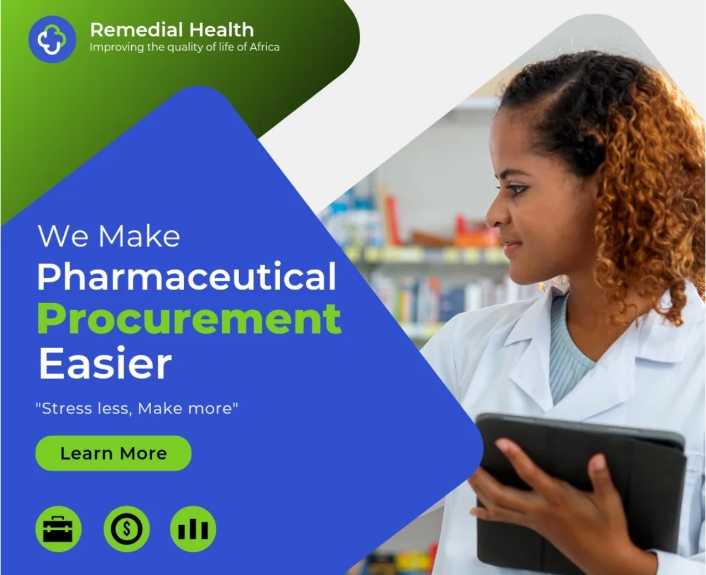
In addition to Kasha, there are other startups in Africa dedicated to improving the local healthcare system. For example, Remedial Health, a Nigerian pharmaceutical distribution company, has raised $12 million in funding and provides a digital procurement platform service for 4,000 local pharmacies, clinics, and hospitals. This digital platform not only makes it more convenient to manage the inventory of medical products but also further provides financing solutions for local pharmacies, ensuring a stable product supply in pharmacies across the country and improving people's access to genuine and reasonably priced medicines.
In Egypt, Yodawy, which raised $16 million in its Series B financing, originally an online pharmacy, has evolved into a pharmacy benefits management institution. It simplifies the process of accessing medical products through the health insurance system. Since its establishment in 2018, it has processed 4 million prescriptions and cooperated with 3,000 pharmacies and 15 insurance companies. In a country with historically low health insurance coverage, such innovation not only provides convenience but also promotes the wider use of health insurance, which is of great significance for improving public health.