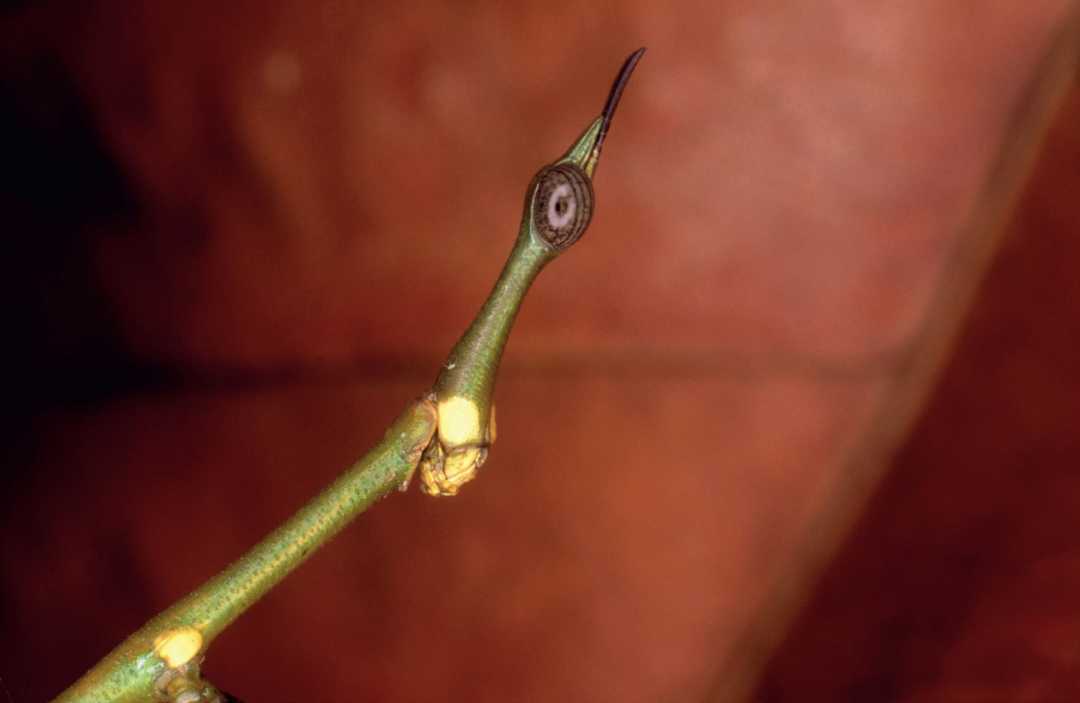
Cerapterus laceratus: Mozambique's Beetle Tricks Ants with Pheromone Mimicry and Scalding Defense
The adult and larval stages of Cerapterus laceratus, a rove beetle from Mozambique, have evolved a dual defense strategy that combines chemical trickery and fiery retaliation. By secreting compounds that mimic ant pheromones, these insects gain seamless integration into ant colonies, where they move freely without triggering aggression. This deceptive adaptation allows them to exploit ant resources while avoiding predation—a biological ruse rare in the insect world.
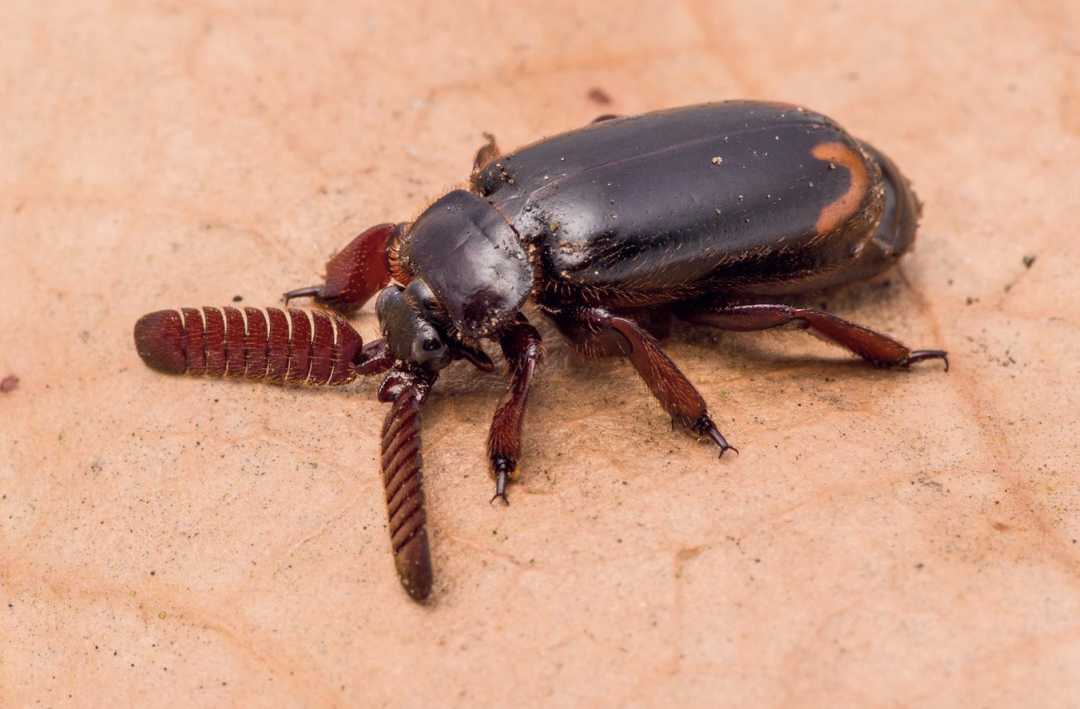
Motuweta isolata: New Zealand's Fanged Giant Weta Fights with Elaborate Tusks
Endemic to New Zealand’s Mercury Islands, the Motuweta isolata, a species of giant weta, lives up to its name with a rugged, imposing appearance. The most striking feature of the male is its elongated, curved tusks—resembling miniature fangs—that evolved for ritualized combat rather than predation. Far from conventionally beautiful, its robust exoskeleton and bulky form reflect a life shaped by survival in the harsh island environment.
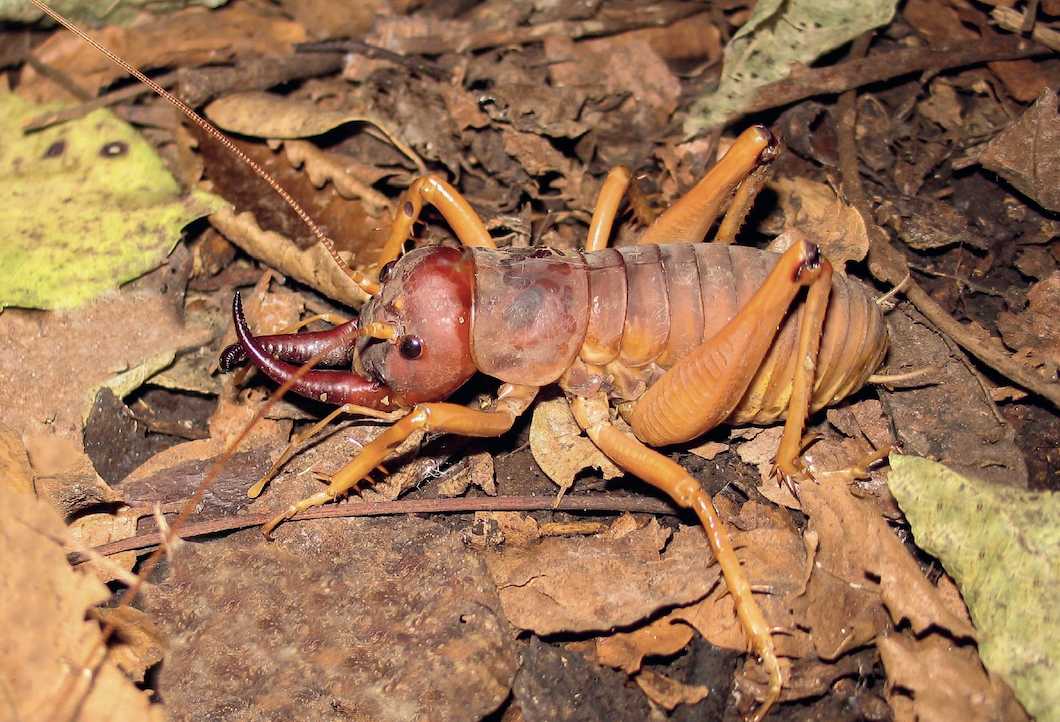
Spiky Larva of the False Ladybug Family Feeds on Fungi in Madagascar's Rainforests
In the lush rainforests of Madagascar, a larva covered in stiff, protruding spines catches the eye. Belonging to the false ladybug family (Endomychidae), this intriguing insect sports an armor of sharp projections, a striking adaptation that sets it apart in the tropical undergrowth. Far from its adult form’s resemblance to ladybugs, the larva’s spiky exterior serves both as protection and a unique identifier in the fungal-rich ecosystem.
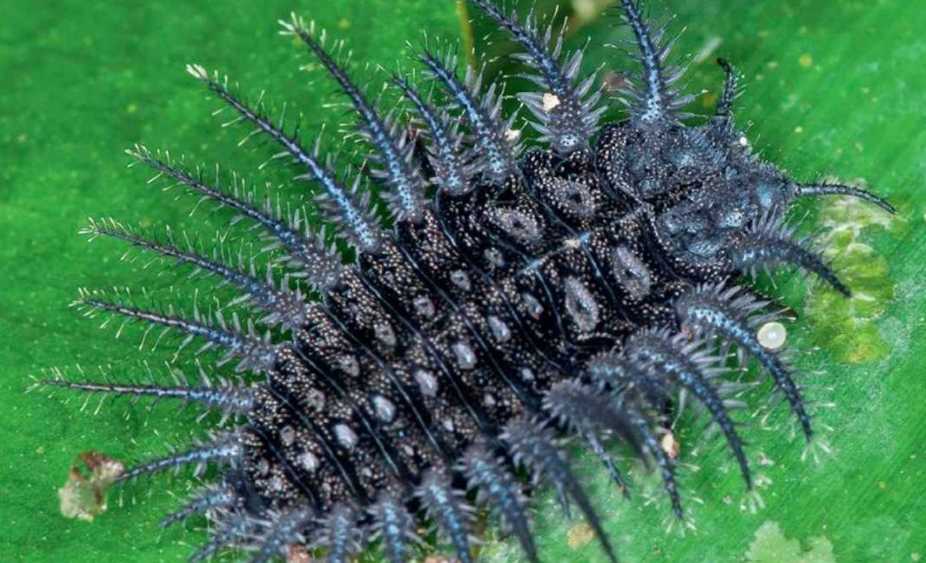
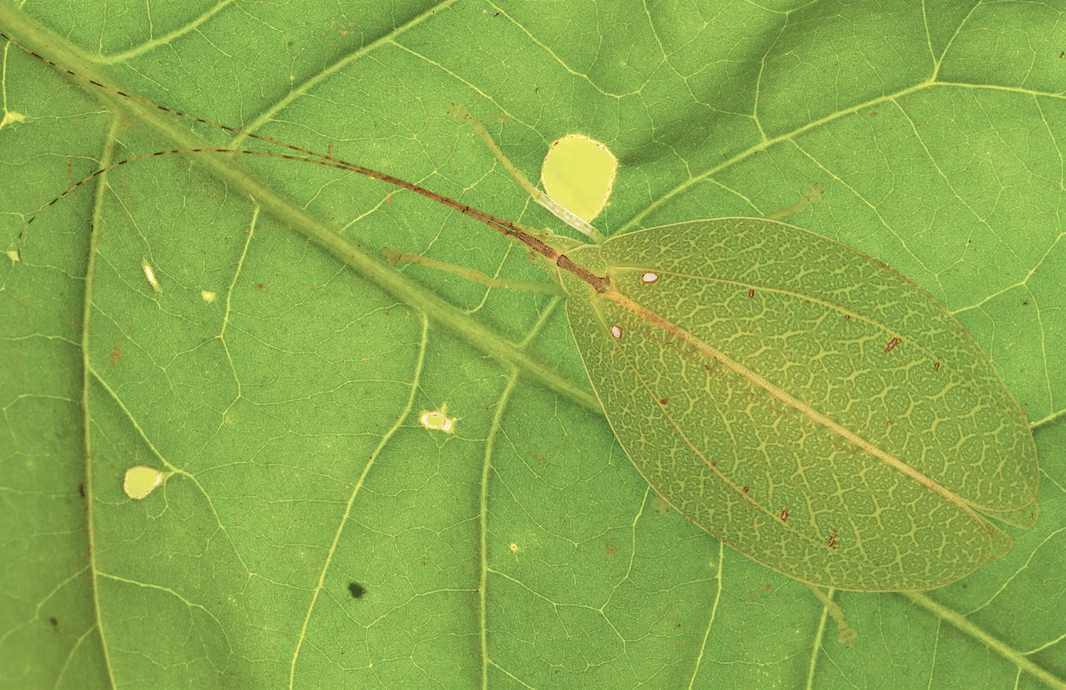
Acauloplax exigua: Mozambique's Leaf-Mimicking Katydid Blends Seamlessly with Foliage
Among the many insects that mimic leaves, the Mozambican katydid Acauloplax exigua stands out for its evolutionary mastery of camouflage. This tree-dwelling orthopteran boasts a flattened body so perfectly adapted to leaf mimicry that it vanishes against greenery, its veins and coloration mirroring the texture and hue of tropical foliage. The result is a living illusion—an insect that becomes one with its habitat at a glance.
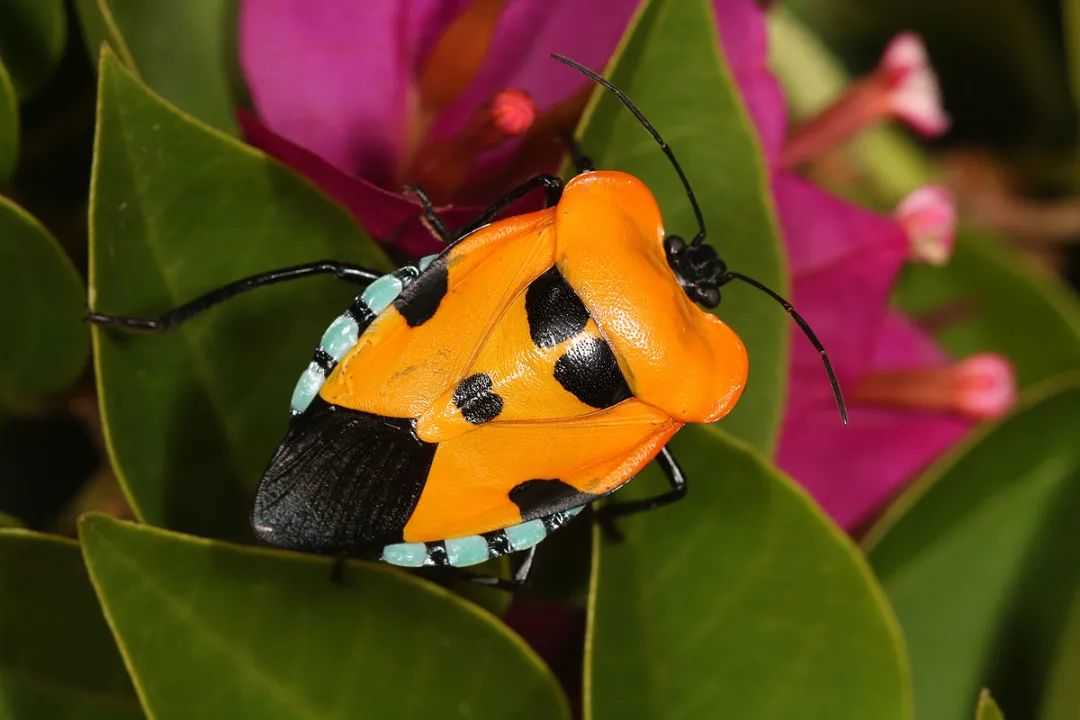
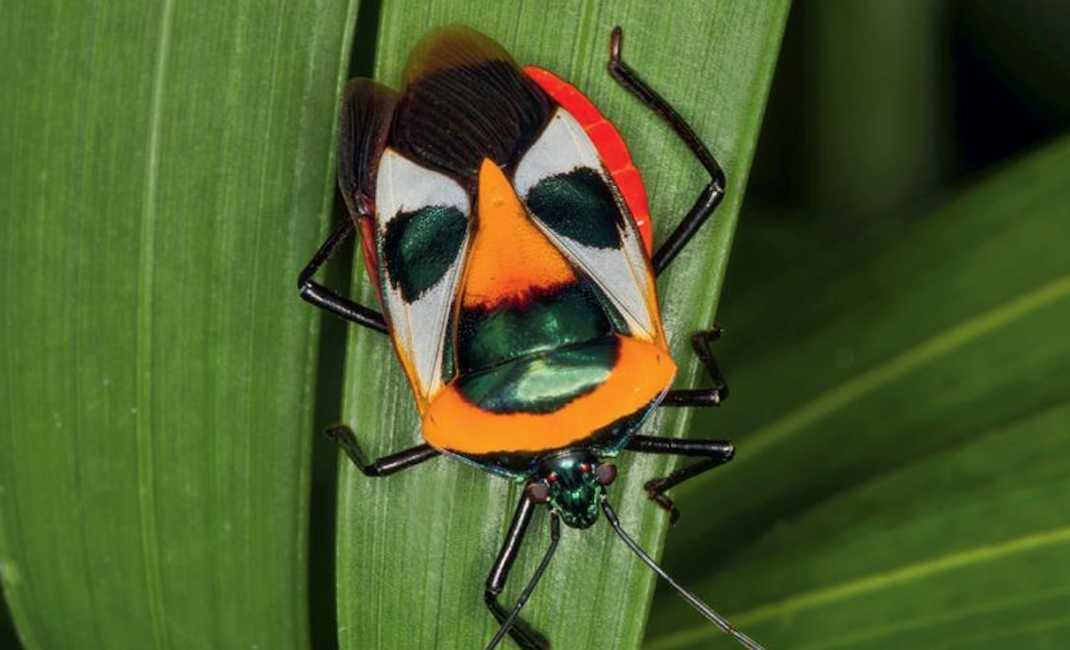
Catacanthus incarnatus: The Mesmerizing 'Human-Faced' Bug with Dazzling Patterns
Among stink bugs, Catacanthus incarnatus stands alone with its striking markings and uncanny mimicry of a human face. The insect’s thorax and abdomen feature a pattern resembling eyes, a nose, a mouth, and even a defined hairline, creating a surreal illusion that captivates and startles in equal measure. Its vivid red and black coloration only amplifies the effect, making it one of nature’s most extraordinary examples of mimicry.
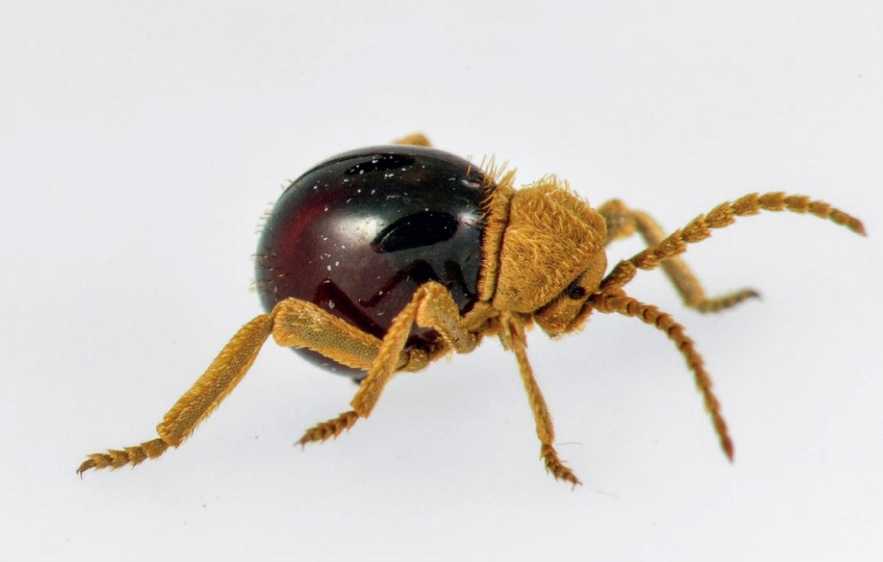
Mezium affine: America's Tiny Spider-Mimicking Beetle
Measuring just 3 mm in length, Mezium affine is a curious beetle from the Americas that lives up to its name through remarkable arachnid mimicry. This minuscule insect has evolved physical traits that closely resemble a spider, blurring the line between beetle and arachnid at first glance. Its body shape, leg structure, and even behavioral cues work in tandem to create a convincing illusion.
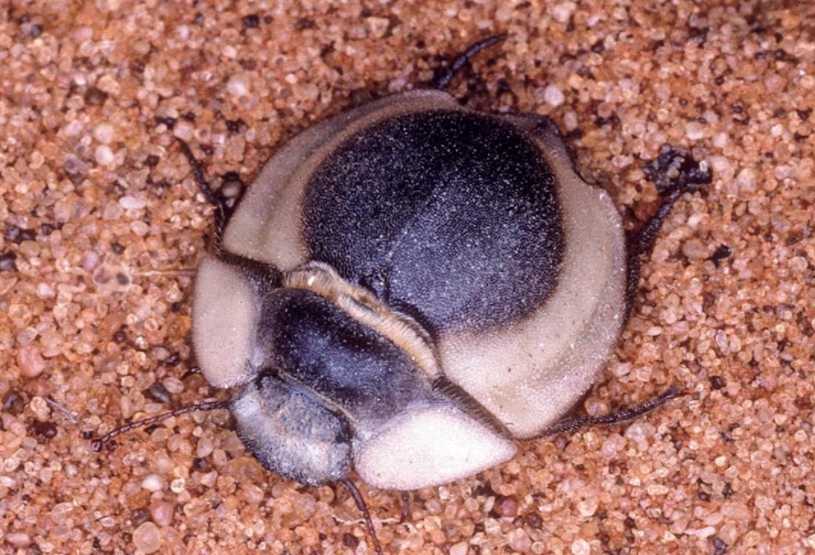
Lepidochora discoidalis: The Desert Beetle That Harvests Fog for Survival
As a master of arid adaptation, Lepidochora discoidalis thrives in desert environments by transforming its body and behavior into a living water collection system. This sleek, disc-shaped beetle, native to arid regions, has evolved a glossy exoskeleton that minimizes sand adhesion, allowing it to glide effortlessly across dunes in search of food scraps. But its most remarkable trait lies in its ability to harvest moisture from the air—a crucial skill in landscapes where rainfall is almost nonexistent.