Lytta nuttalli: North America's Most Dazzling Beetle Harbors a Toxic Secret


Insect Information
Lytta nuttalli: North America's Most Dazzling Beetle Harbors a Toxic Secret

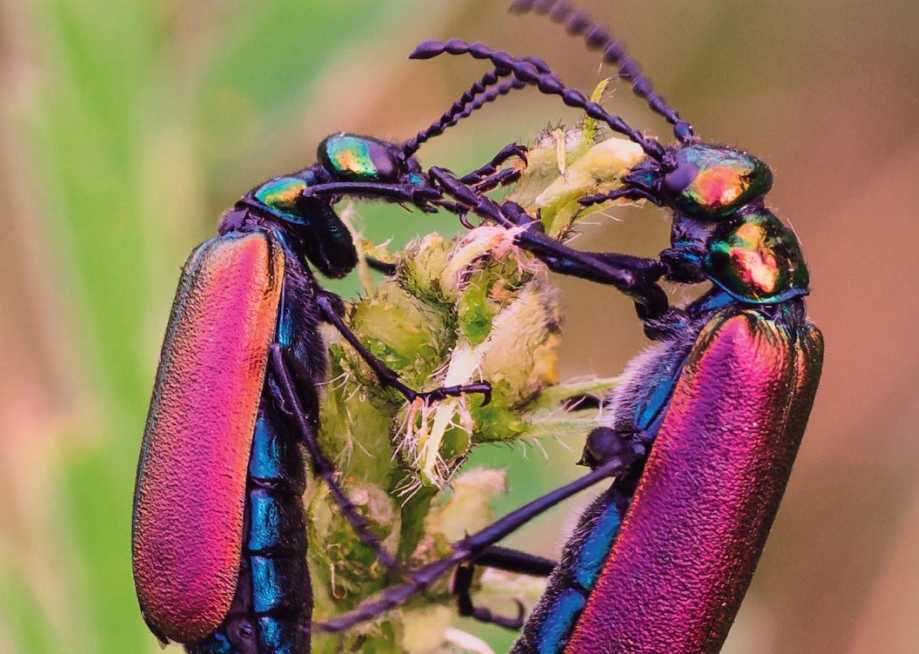
The Lytta nuttalli, or Nuttall's blister beetle, stands as a living jewel among North American insects, its iridescent exoskeleton shimmering in hues of emerald, bronze, and gold. Sunlight reflects off its elytra in a kaleidoscope of colors, making it a standout in meadows and prairies. Yet beneath this dazzling exterior lies a warning: this beetle’s beauty is paired with a potent defense mechanism.

When threatened, Lytta nuttalli secretes cantharidin, a toxic compound known as blister beetle toxin. Even a gentle touch can transfer this oily substance to human skin, causing painful blisters and irritation. The chemical serves as a natural deterrent against predators, from birds to small mammals, who learn to avoid the beetle’s vibrant coloration. Ironically, the same iridescence that attracts admiration also signals danger—a biological strategy known as aposematism.


Native to western North America, the beetle’s life cycle is tied to host plants like legumes, where adults feed and lay eggs. While its metallic sheen may tempt observers to reach out, entomologists stress caution: handling Lytta nuttalli or even brushing against it inadvertently can lead to skin reactions. This striking beetle exemplifies nature’s dual nature—where aesthetic marvels often coexist with survival strategies, reminding us to admire wildlife from a respectful distance.

Latest Stories
Travel News2 minute readNestled in the French Pre-Alps, the Plateau du Vercors stands as a testament to nature’s raw power and humanity’s indomitable spirit. Rising abruptly from the valleys of Isère, this limestone plateau—dominated by peaks like Grand Veymont (2,346 meters)—features sheer cliffs and labyrinthine gorges that earned it the nickname "the Natural Great Wall". Its dramatic landscapes, shaped over millennia by erosion, have not only sculpted a geological marvel but also forged a theater of historical significance.
Cultural News1 minute readSpain’s tomato-throwing "La Tomatina" is wildly popular, but for those who prefer hurling something tangier, head to Italy in February. At the Ivrea Carnival, thousands of ripe oranges are pelted in a juicy battle during the festival’s highlight.
Cultural News1 minute readIn Wuppertal, Germany, there’s a pedestrian bridge that looks like it’s built from giant Lego bricks. Though it’s actually a concrete structure, artists have painted it to mimic the iconic toy blocks, creating a playful optical illusion.
Feline News2 minute readThe European Burmese cat, a breed born from careful crossbreeding in mid-20th century Europe, has captivated cat enthusiasts with its elegant physique and affectionate nature. Originating from the American Burmese stock imported to the UK, European breeders sought to diversify the gene pool by introducing Siamese and British Shorthair bloodlines, resulting in a distinct feline with refined features. Recognized by major associations like the CFA since 2002, this breed stands out for its sleek, muscular build and striking golden or amber almond-shaped eyes, which contrast sharply with the rounde
Feline News2 minute readIn recent years, the Scottish Fold cat has become an internet sensation, celebrated for its distinctive folded ears and owl-like appearance. However, behind the adorable facade lies a dark reality rooted in genetic abnormality and ethical debate. This breed, born from a spontaneous mutation in a Scottish barn cat named Susie in 1961, has sparked global controversy over its health implications and breeding practices.
Feline News1 minute readOriginating from a spontaneous genetic mutation in 1950, the Cornish Rex emerged in Cornwall, England, when a cream-colored kitten named Kallibunker was born with a dense, wavy coat resembling a lamb’s fleece1. Recognizing its uniqueness, owner Nina Ennismore collaborated with geneticists to establish the breed. Due to the recessive nature of the mutation, breeding two Cornish Rex cats guarantees curly-coated offspring13.
Health News1 minute readOn June 30, FBI Deputy Director Dan Bongino announced the dismantling of the largest healthcare fraud case in U.S. history, with revised to $14.6 billion. The investigation covered all 50 federal districts, indicting 324 individuals—including 96 medical practitioners—and seizing $245 million in assets.