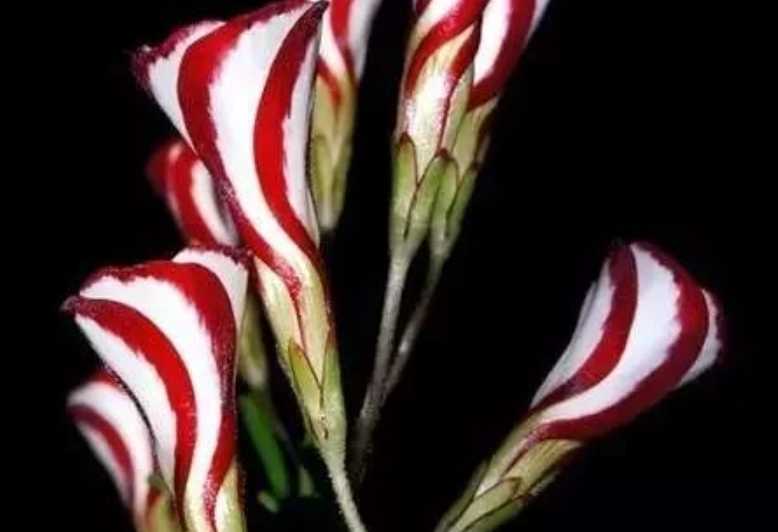
The Candy Cane Sorrel, scientifically known as Oxalis versicolor, is a captivating member of the Oxalidaceae family that has won the hearts of plant enthusiasts worldwide. Native to the sunny landscapes of South Africa, this perennial bulbous plant has made its mark in gardens and indoor spaces alike, thanks to its unique and eye - catching blooms.
A Visual Feast of Color and Form
The Candy Cane Sorrel earns its common name from its extraordinary flowers. Each bloom is a harmonious blend of white and red, creating a pattern that strikingly resembles a traditional candy cane. When the flower buds are in their early stages, they tightly coil, with the red edges wrapping around the white interior, presenting a spiral - like appearance. As the flowers unfurl, the five - petaled blooms (about 1 cm in diameter) open into a charming, funnel - shaped form. The white inner petals are delicately contrasted by the red - edged outer surfaces, which, when viewed together, form a swirling pattern reminiscent of a barbershop pole. This vivid color combination makes it stand out among other garden plants.
The plant itself is relatively compact, typically reaching a height of 8 - 20 centimeters, with a similar spread. Its foliage consists of light - green, compound leaves, each divided into three slender, elongated leaflets. These trifoliate leaves add to the plant's overall elegance, providing a fresh and vibrant backdrop to the more flamboyant flowers. The leaves' smooth texture and their arrangement on the stem, which grows upright from the underground bulbs, contribute to the plant's neat and attractive appearance.
Thriving Conditions and Adaptability
In its native South African habitats, the Candy Cane Sorrel thrives in well - drained, sandy soils under full sun to partial shade conditions. It has adapted to regions with distinct wet and dry seasons, entering a dormant phase during the hot, dry summer months when its above - ground parts wither away, conserving energy within its bulb. When the cooler, more humid seasons arrive, the plant springs back to life, sending up new shoots and flowers.
For gardeners looking to cultivate this beauty in their own plots, replicating these natural conditions is key. The soil should be loose, well - drained, and slightly acidic, with a pH range of 5.6 - 7.8 being ideal. It can be planted in garden beds, rockeries, or even containers, making it a versatile choice for different types of gardens. In cooler climates where frost is a concern, it can be grown as a potted plant and brought indoors during the winter months to protect the bulbs from freezing temperatures. The plant requires regular watering, especially during its active growth period, but care should be taken not to over - water, as this can lead to root rot. It also benefits from a balanced fertilizer application during the growing season to support healthy growth and abundant flowering.
Cultural Significance and Horticultural Appeal
In South African folklore, the Candy Cane Sorrel holds a special place, often associated with good luck and new beginnings. It is a symbol of hope, love, and the promise of a prosperous future. This cultural significance, combined with its stunning appearance, has led to its widespread popularity in horticulture. The Royal Horticultural Society in the UK has recognized its ornamental value by awarding it the prestigious Award of Garden Merit.
In modern gardens and landscapes, the Candy Cane Sorrel serves as a focal point in flower beds, adding a pop of color and a touch of whimsy. It can be planted in groups for a more dramatic effect, or used to edge pathways, creating a border of delightful, candy - colored blooms. In addition to its outdoor uses, it is also a favorite among indoor gardeners. Placed on windowsills or in well - lit rooms, it brightens up the interior space, bringing a bit of the outdoors inside. Its relatively small size and low - maintenance requirements make it an excellent choice for those new to gardening or with limited space. Whether admired for its cultural connotations, its aesthetic appeal, or its adaptability, the Candy Cane Sorrel continues to enchant plant lovers around the world, making it a truly remarkable addition to the botanical world.