Bat Moths: A Diverse and Prolific Insect Group


Insect Information
Bat Moths: A Diverse and Prolific Insect Group

Bat moths belong to the genus Hepialus in the family Hepialidae. They are a group of insects with remarkable reproductive capabilities. A female bat moth can lay more than 2,900 eggs, which is quite prolific among insects.


There are nearly 300 different species of bat moths globally, and they are distributed in various regions. These different species have adapted to their specific habitats, resulting in certain variations. In China, 82 species belonging to 7 genera have been found. These moths have a wide distribution range, and some species inhabit alpine areas above 3,000 meters above sea level.


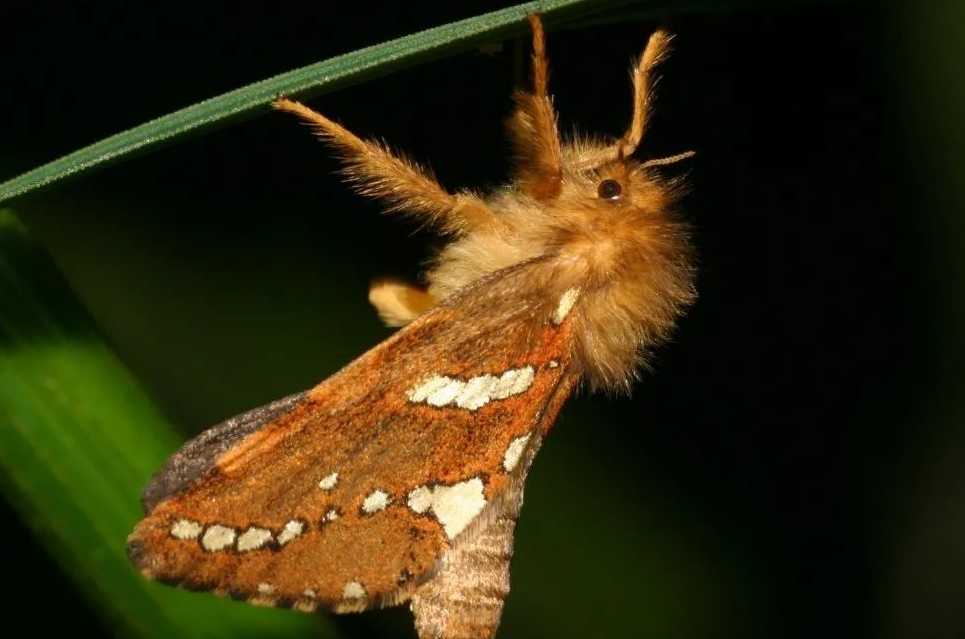
Bat moths have distinct morphological characteristics. The adult moths are brown - yellow in color, with long gray - yellow hairs on their bodies. Their antennae are short and thread - like. The front wings have a brown front edge, with a gray - yellow triangular spot and black spots in the middle. The hind wings are narrow and brown - black, and the patterns on the wings vary greatly. The female adults are generally dull - colored with obvious black spots, while the male adults are more brightly colored.


The life cycle of bat moths is complex. The larvae live underground for several years, feeding on the roots and stems of alpine plants such as Polygonum viviparum, P. capitatum, Rheum pumilum, and Potentilla fruticosa. After pupation in spring, the adults emerge. The adults do not have mouthparts and cannot feed. Their lifespan is extremely short, usually not exceeding a week. During this short period, their main task is to reproduce.


It is worth mentioning that bat moths are closely related to the well - known Chinese medicinal material, Cordyceps sinensis. Cordyceps sinensis is a dry complex of the stroma of the fungus Ophiocordyceps sinensis and the corpse of the larva of the bat moth. The fungus parasitizes the larvae of bat moths in alpine meadows and snow - capped grasslands above 3,000 meters above sea level in China. As the fungus grows, it fills the entire body of the larva, eventually leading to the death of the larva. The following spring and summer, the fungus germinates and grows out of the mouth or head of the bat moth larva, forming the Cordyceps sinensis that we see in the wild.

Latest Stories
Feline News2 minute readThe Oriental Longhair, a breed celebrated for its elegance and intelligence, traces its roots to mid-20th-century breeding programs aimed at expanding the color and pattern diversity of Siamese cats . Developed through crosses with breeds like Russian Blues and British Shorthairs, these cats gained recognition in the 1970s and were officially acknowledged by The International Cat Association (TICA) in 1979 and the Cat Fanciers' Association (CFA) in 1995 .
Feline News2 minute readThe Korat cat, originating from Thailand’s Nakhon Ratchasima province (formerly Korat), is a breed deeply rooted in history and cultural significance. Revered for centuries as a symbol of good luck and prosperity, these silver-blue felines have enchanted the world with their striking appearance and affectionate nature.
Feline News2 minute readA heartwarming tale of survival and companionship has thrust the Munchkin cat into the global spotlight, showcasing the breed’s unique charm and indomitable spirit. Mochi, an 8-month-old Munchkin rescued from a life-threatening illness, has become an international symbol of hope, embodying the resilience and playful nature that define these short-legged felines.
Travel News2 minute readPerched atop an 82-meter volcanic plug in Le Puy-en-Velay, France, the Chapelle Saint-Michel d’Aiguilhe stands as a testament to faith and engineering prowess. Built in 962 AD, this architectural marvel balances precariously on a basaltic rock formation, blending Romanesque austerity with Moorish-inspired ornamentation to create one of Europe’s most dramatic religious landmarks.
Feline News2 minute readRagamuffin cats, affectionately known as "muffins," have captured the hearts of cat lovers worldwide with their plush coats, docile personalities, and striking appearance. Originating in the United States in the 1990s, this breed emerged from a group of breeders seeking to expand the genetic diversity of Ragdoll cats. By crossing Ragdolls with Persians, Himalayans, and other long-haired breeds, they created a larger, more robust feline with a broader range of coat colors and patterns
Canine News2 minute readOriginating in the early 20th century, the American White Shepherd traces its lineage to the German Shepherd. Due to a recessive white coat gene, these dogs were long considered "flawed" in Germany and systematically culled from breeding programs12. However, North American breeders recognized their unique appeal and selectively developed them into a distinct breed, officially acknowledged by the United Kennel Club (UKC) in 199917
Canine News1 minute readAs the world's first operational vertical/short takeoff and landing (V/STOL) fighter jet, the British-developed Harrier, nicknamed the "Jump Jet," has left an indelible mark on aviation history through its groundbreaking design and combat prowess.