Chesapeake Bay Retriever: America’s Resilient Waterfowl Hunter and Loyal Companion


Canine News
Chesapeake Bay Retriever: America’s Resilient Waterfowl Hunter and Loyal Companion

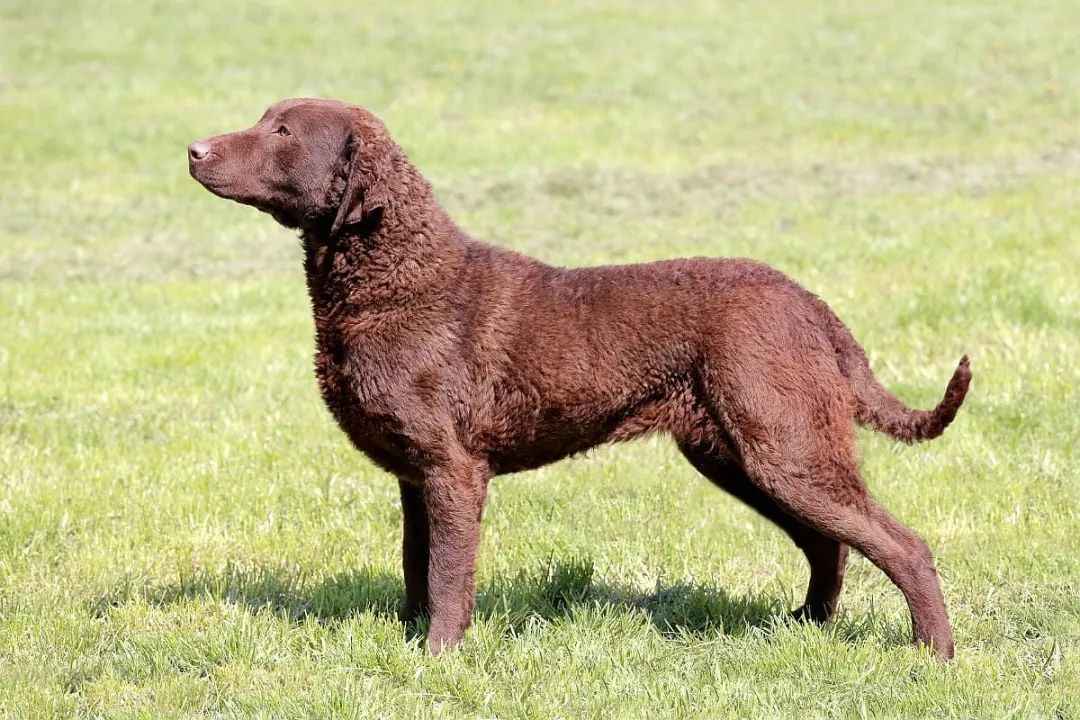
The Chesapeake Bay Retriever, affectionately known as the "Chessie," is a breed forged by nature and necessity along the rugged shores of Maryland’s Chesapeake Bay. Developed in the 19th century, these dogs emerged from a maritime legend: two shipwrecked Newfoundland puppies, "Sailor" and "Canton," rescued in 1807, became the foundation of this iconic breed 13. Bred to retrieve waterfowl in icy waters and harsh weather, Chessies quickly became indispensable to local hunters, capable of hauling 100–200 ducks daily from frigid bays 1

A Breed Built for Extremes

Standing 21–26 inches tall and weighing 55–80 pounds, Chessies are muscular yet agile. Their most striking feature is a dense, waterproof double coat—short, wavy, and oily outer fur paired with a woolly undercoat—that repels water and insulates against cold 59. Coat colors range from "dead grass" tan to deep "sedge" red, with small white markings on the chest or toes 46. Distinctive amber eyes and webbed feet further enhance their aquatic prowess 69.

Temperament: Loyalty with a Work Ethic

Chessies are renowned for their intelligence, loyalty, and protective instincts. While affectionate with family, they can be reserved with strangers, making them excellent watchdogs 46. Their independent streak requires consistent, positive training from 幼犬时期,though they thrive on structured routines and physical challenges 712. Enthusiasts praise their "quiet good sense" and ability to adapt to roles beyond hunting, including search-and-rescue and therapy work 46.

Health and Care

With a lifespan of 10–13 years, Chessies are generally robust but prone to hip dysplasia, progressive retinal atrophy, and hypothyroidism 812. Regular exercise—swimming, retrieving, or agility training—is vital to prevent obesity and maintain joint health 712. Grooming demands are moderate: weekly brushing to manage shedding and occasional bathing to control natural oils 56.

From Bay to Home: A Modern Legacy

Recognized by the AKC in 1885, Chessies remain a favorite among hunters for their tenacity and stamina. However, their versatility has endeared them to families seeking active, devoted companions 1011. Despite ranking 54th in AKC popularity, they excel in dual roles—winning titles in both conformation shows and hunting trials 1011. As one breeder notes, "A Chessie is not just a dog; it’s a partner who’ll stand by you in any storm" 11.


In the Chesapeake Bay’s windswept marshes, the Chessie’s legacy endures—a testament to the enduring bond between human ingenuity and canine resilience. Whether retrieving ducks or curling up by the fire, this breed embodies the spirit of the American working dog.

Latest Stories
Travel News2 minute readNestled in the French Pre-Alps, the Plateau du Vercors stands as a testament to nature’s raw power and humanity’s indomitable spirit. Rising abruptly from the valleys of Isère, this limestone plateau—dominated by peaks like Grand Veymont (2,346 meters)—features sheer cliffs and labyrinthine gorges that earned it the nickname "the Natural Great Wall". Its dramatic landscapes, shaped over millennia by erosion, have not only sculpted a geological marvel but also forged a theater of historical significance.
Cultural News1 minute readSpain’s tomato-throwing "La Tomatina" is wildly popular, but for those who prefer hurling something tangier, head to Italy in February. At the Ivrea Carnival, thousands of ripe oranges are pelted in a juicy battle during the festival’s highlight.
Cultural News1 minute readIn Wuppertal, Germany, there’s a pedestrian bridge that looks like it’s built from giant Lego bricks. Though it’s actually a concrete structure, artists have painted it to mimic the iconic toy blocks, creating a playful optical illusion.
Feline News2 minute readThe European Burmese cat, a breed born from careful crossbreeding in mid-20th century Europe, has captivated cat enthusiasts with its elegant physique and affectionate nature. Originating from the American Burmese stock imported to the UK, European breeders sought to diversify the gene pool by introducing Siamese and British Shorthair bloodlines, resulting in a distinct feline with refined features. Recognized by major associations like the CFA since 2002, this breed stands out for its sleek, muscular build and striking golden or amber almond-shaped eyes, which contrast sharply with the rounde
Feline News2 minute readIn recent years, the Scottish Fold cat has become an internet sensation, celebrated for its distinctive folded ears and owl-like appearance. However, behind the adorable facade lies a dark reality rooted in genetic abnormality and ethical debate. This breed, born from a spontaneous mutation in a Scottish barn cat named Susie in 1961, has sparked global controversy over its health implications and breeding practices.
Feline News1 minute readOriginating from a spontaneous genetic mutation in 1950, the Cornish Rex emerged in Cornwall, England, when a cream-colored kitten named Kallibunker was born with a dense, wavy coat resembling a lamb’s fleece1. Recognizing its uniqueness, owner Nina Ennismore collaborated with geneticists to establish the breed. Due to the recessive nature of the mutation, breeding two Cornish Rex cats guarantees curly-coated offspring13.
Health News1 minute readOn June 30, FBI Deputy Director Dan Bongino announced the dismantling of the largest healthcare fraud case in U.S. history, with revised to $14.6 billion. The investigation covered all 50 federal districts, indicting 324 individuals—including 96 medical practitioners—and seizing $245 million in assets.