Earwigs: The Insects with a Pincher-Tipped Surprise


Insect Information
Earwigs: The Insects with a Pincher-Tipped Surprise

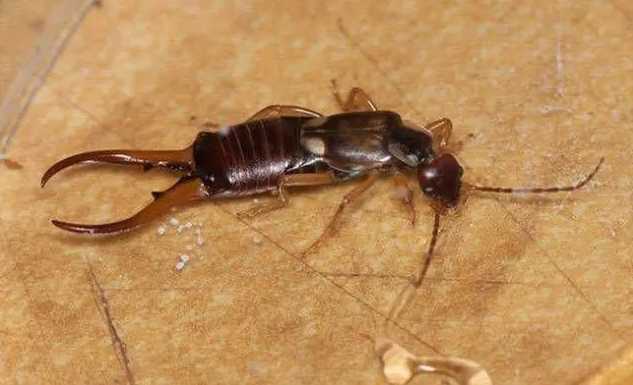
Often mistaken for other bugs, earwigs (order Dermaptera) stand out with a unique anatomical mix: a slender, rove beetle–like upper body that transitions to a pair of prominent forceps-like pincers at the abdomen’s tip. This distinctive design has fascinated and confused observers for centuries, blending subtlety with a bold defensive feature.


A Dual Anatomy: Subtlety Meets Strength
The earwig’s head and thorax resemble those of many small insects, with elongated antennae and a streamlined profile that allows easy movement through leaf litter or crevices. Its forewings are short, hardened elytra that protect the membranous hindwings, while the abdomen—often overlooked in the insect world—steals the show. The cerci, modified into curved or straight pincers, are the insect’s most iconic trait. These pincers, used to capture prey, defend against predators, or aid in mating, give the earwig an imposing appearance despite its small size (1–5 cm). Contrary to myths, the pincers are harmless to humans, though their snap can startle.


Behavior and Ecological Role
Found worldwide in moist habitats, earwigs are nocturnal scavengers, feasting on decaying plant matter, fungi, and small invertebrates. Females exhibit rare maternal care in the insect world, guarding eggs and nymphs until they mature—a behavior enabled by their pincers, which they use to fend off threats. While their pincers may seem aggressive, earwigs play a vital role in ecosystems as decomposers and pest controllers, preying on aphids and other garden nuisances. Misconceptions about them crawling into human ears persist, but they are harmless to mammals, seeking dark, damp spaces only for shelter.


For entomologists, earwigs exemplify nature’s pragmatic design: a blend of stealth for survival and specialized tools for defense. Their unique anatomy reminds us that even common insects hide remarkable adaptations, waiting to be noticed beyond outdated myths. As we overlook these tiny pincer-wielders in our gardens, they continue their quiet work—proof that in the insect world, function and form often unite in the most unexpected ways.

Latest Stories
Feline News2 minute readThe Oriental Longhair, a breed celebrated for its elegance and intelligence, traces its roots to mid-20th-century breeding programs aimed at expanding the color and pattern diversity of Siamese cats . Developed through crosses with breeds like Russian Blues and British Shorthairs, these cats gained recognition in the 1970s and were officially acknowledged by The International Cat Association (TICA) in 1979 and the Cat Fanciers' Association (CFA) in 1995 .
Feline News2 minute readThe Korat cat, originating from Thailand’s Nakhon Ratchasima province (formerly Korat), is a breed deeply rooted in history and cultural significance. Revered for centuries as a symbol of good luck and prosperity, these silver-blue felines have enchanted the world with their striking appearance and affectionate nature.
Feline News2 minute readA heartwarming tale of survival and companionship has thrust the Munchkin cat into the global spotlight, showcasing the breed’s unique charm and indomitable spirit. Mochi, an 8-month-old Munchkin rescued from a life-threatening illness, has become an international symbol of hope, embodying the resilience and playful nature that define these short-legged felines.
Travel News2 minute readPerched atop an 82-meter volcanic plug in Le Puy-en-Velay, France, the Chapelle Saint-Michel d’Aiguilhe stands as a testament to faith and engineering prowess. Built in 962 AD, this architectural marvel balances precariously on a basaltic rock formation, blending Romanesque austerity with Moorish-inspired ornamentation to create one of Europe’s most dramatic religious landmarks.
Feline News2 minute readRagamuffin cats, affectionately known as "muffins," have captured the hearts of cat lovers worldwide with their plush coats, docile personalities, and striking appearance. Originating in the United States in the 1990s, this breed emerged from a group of breeders seeking to expand the genetic diversity of Ragdoll cats. By crossing Ragdolls with Persians, Himalayans, and other long-haired breeds, they created a larger, more robust feline with a broader range of coat colors and patterns
Canine News2 minute readOriginating in the early 20th century, the American White Shepherd traces its lineage to the German Shepherd. Due to a recessive white coat gene, these dogs were long considered "flawed" in Germany and systematically culled from breeding programs12. However, North American breeders recognized their unique appeal and selectively developed them into a distinct breed, officially acknowledged by the United Kennel Club (UKC) in 199917
Canine News1 minute readAs the world's first operational vertical/short takeoff and landing (V/STOL) fighter jet, the British-developed Harrier, nicknamed the "Jump Jet," has left an indelible mark on aviation history through its groundbreaking design and combat prowess.