Majestic Birman Cats: A Timeless Breed with Royal Origins and Modern Appeal


Feline News
Majestic Birman Cats: A Timeless Breed with Royal Origins and Modern Appeal

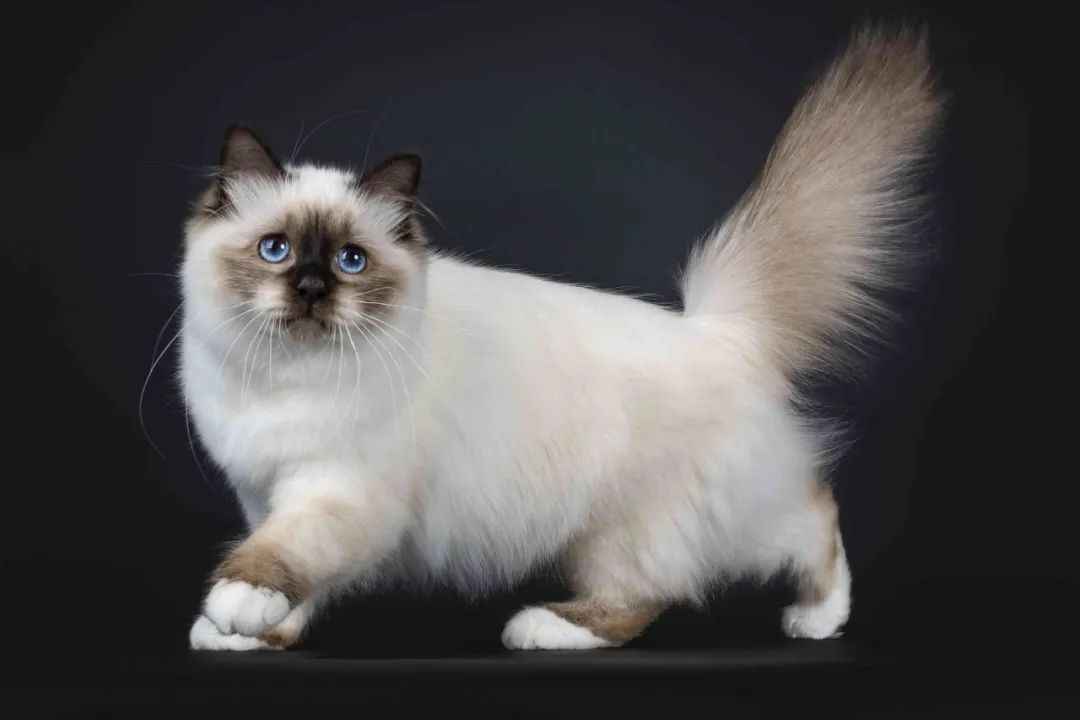
The Birman, often referred to as the "Sacred Cat of Burma," has captivated feline enthusiasts for centuries with its striking appearance and gentle demeanor. Originating from ancient Myanmar, this breed is steeped in legend, with stories of temple cats said to have guarded religious shrines alongside monks 312. While its exact origins remain shrouded in mystery, the modern Birman emerged in France during the early 20th century, where breeders refined its distinctive traits, including its semi-long, silky coat and piercing sapphire-blue eyes

Physical Elegance and Unique Markings

Birmans are medium to large cats with a muscular build and a luxurious coat that comes in four primary color variations: seal, blue, chocolate, and lilac points. Their most iconic feature is their "gloved" paws—pure white extremities that contrast vividly with their darker facial masks, ears, and tails 1213. This striking pattern, combined with their expressive eyes, gives them an air of regality, earning them comparisons to royalty in both appearance and demeanor.

A Gentle and Sociable Temperament

Known for their affectionate nature, Birmans thrive on human companionship and are often described as "dog-like" in their loyalty. They form deep bonds with their owners, seeking out interaction and even following them around the house 414. Unlike more aloof breeds, Birmans are adaptable and enjoy the company of children and other pets, making them ideal family companions 14. Their soft, melodious voices add to their charm, as they communicate with gentle chirps and purrs.

Health Considerations and Care

While generally robust, Birmans are prone to polycystic kidney disease (PKD), a hereditary condition that affects the kidneys. Responsible breeders now screen for PKD to reduce its prevalence, ensuring healthier bloodlines 56. Regular veterinary check-ups and a balanced diet are essential to maintain their well-being. Despite this, Birmans have an average lifespan of 12-16 years, with some living longer in loving homes 30.

Rising Popularity in the Global Pet Market

In recent years, Birmans have gained traction in international markets, driven by their regal appearance and affectionate personalities. Their presence in high-profile events, such as cat shows and social media, has amplified their appeal. Notably, Karl Lagerfeld’s Birman cat, Choupette, became a global icon with her own social media following and luxury lifestyle, highlighting the breed’s cultural cachet 1. Breeders in countries like the UK and the US report steady demand, with kittens often reserved months in advance 1011.

A Breed Rooted in History, Loved in the Present

The Birman’s enduring popularity stems from its unique blend of beauty, grace, and companionship. Whether lounging by the fireplace or playfully interacting with family members, these cats embody the perfect balance of elegance and warmth. As the global pet industry continues to grow—with cat-related spending projected to reach $484 billion by 2025 27—the Birman remains a timeless choice for those seeking a feline companion that is both a living legacy and a cherished friend.

Latest Stories
Travel News1 minute readA climate specialist stated that the May just concluded ranks as the second warmest May globally since meteorological record-keeping began. Over the past month, temperatures across Europe surged sharply from below-average levels to fuel one of the continent’s most ferocious heatwaves. This year’s heatwave arrived earlier than any previously documented, shattering dozens of May temperature benchmarks, with France, the United Kingdom, Ireland and Portugal bearing the brunt of the extreme heat.
Feline News1 minute readMinuet cats, also known as Napoleon cats, are a delightful and relatively new feline breed that have been winning the hearts of cat lovers around the world with their adorable appearance and friendly personalities.
Feline News1 minute readThe Balinese cat, also known as the Bali cat or Java cat, is a charming medium - sized long - haired cat. It originated in the United States and is a long - haired mutant of the Siamese cat. It is named the Balinese cat because its movements are 酷似 those of the native Balinese dancers.
Feline News2 minute readThe Exotic Shorthair, often dubbed the "lazy man’s Persian," has solidified its status as one of the most beloved cat breeds globally, blending the elegance of Persians with the low-maintenance charm of American Shorthairs. Developed in the 1960s by American breeders aiming to create a short-haired Persian variant, this breed has since captivated cat lovers with its round face, plush coat, and laid-back demeanor 28.
Travel News2 minute readNestled along the cliffs of the French Riviera (Côte d'Azur), the Trois Corniches de Nice—three coastal roads ascending from sea level to mountain heights—offer some of Europe’s most dramatic views. Stretching eastward from Nice, the Lower Corniche (Corniche Inférieure), Middle Corniche (Moyenne Corniche), and Upper Corniche (Grande Corniche) each provide a unique perspective of the Mediterranean, making them a pilgrimage for road-trippers and photographers alike.
Travel News2 minute readThe soul of Colmar lies in its half-timbered houses, dating back to the 16th century. These whimsical structures feature exposed wooden frames in geometric patterns, their facades painted in vibrant hues like buttercup yellow and sky blue. Flower-boxed windows and playful figurines adorn the facades, while their reflections dance on the Lauch River, creating the iconic Petite Venise (Little Venice) district. Here, fishermen pilot flower-decked boats, and riverside bistros serve Alsatian specialties like choucroute garnie, evoking scenes from Hayao Miyazaki’s Howl’s Moving Castle.
Feline News2 minute readThe Oriental Longhair, a breed celebrated for its elegance and intelligence, traces its roots to mid-20th-century breeding programs aimed at expanding the color and pattern diversity of Siamese cats . Developed through crosses with breeds like Russian Blues and British Shorthairs, these cats gained recognition in the 1970s and were officially acknowledged by The International Cat Association (TICA) in 1979 and the Cat Fanciers' Association (CFA) in 1995 .