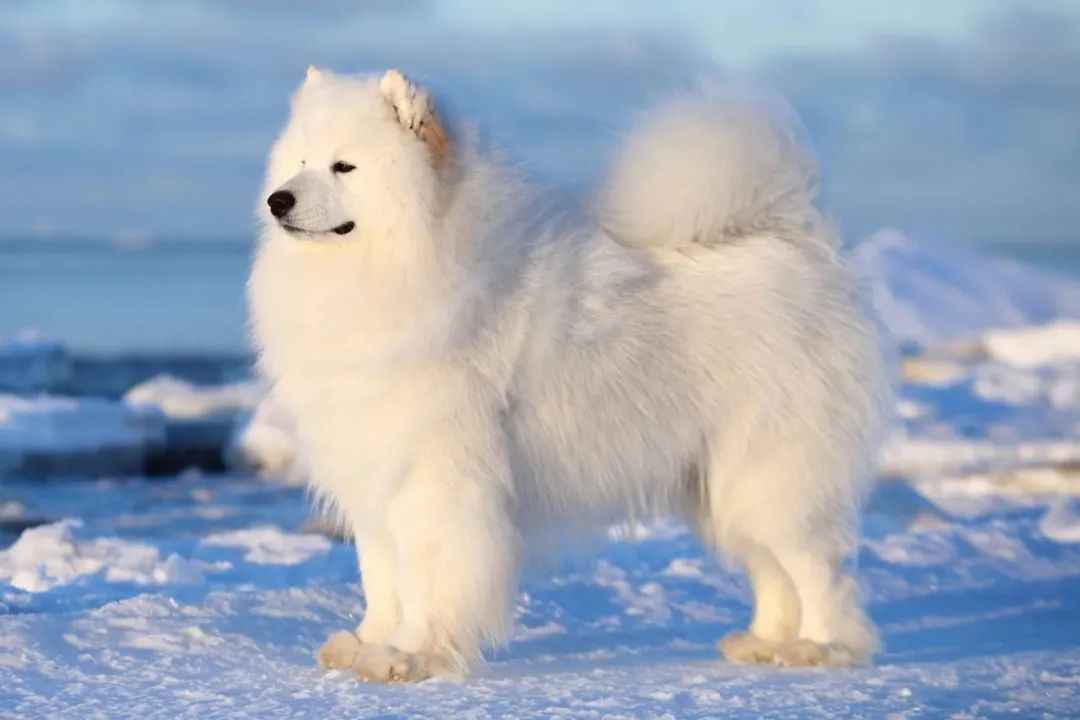
Meet the Samoyed: The Smiling Siberian Snow Angel


Canine News
Meet the Samoyed: The Smiling Siberian Snow Angel

The Samoyed, affectionately known as the "smiling Sammie," is a breed steeped in history and charm. Originating from the harsh Siberian tundra, these dogs were bred by the nomadic Samoyedic people to herd reindeer, pull sleds, and provide warmth during freezing nights 23. Their thick, double-layered white coat—a natural insulator against subzero temperatures—along with their distinctive upward-curved mouths, gives them an eternal "smile," making them one of the most recognizable and beloved breeds globally 36.

A Breed of Contrasts: Fluffy Companions with Working Dog Roots

Despite their angelic appearance, Samoyeds are robust working dogs. Males stand 21–23.5 inches tall, weighing 45–65 pounds, while females are slightly smaller at 19–21 inches and 35–50 pounds 2. Their intelligence and agility, honed through centuries of herding and sled-pulling, make them excel in activities like obedience trials and agility courses 7. However, their most defining trait is their sociable nature. Samoyeds thrive on human companionship, often forming deep bonds with families and greeting strangers with open paws 36.

Health and Care: A Labor of Love

While generally healthy, Samoyeds are prone to genetic conditions such as hip dysplasia, cataracts, and progressive retinal atrophy 4. Regular veterinary check-ups and a balanced diet rich in omega fatty acids are crucial to maintain their luxurious coat and overall well-being 7. Their dense fur requires daily brushing to manage shedding, which intensifies during seasonal molts 67. Additionally, these energetic dogs need 45–60 minutes of daily exercise to prevent restlessness and destructive behavior 7.
 

The Samoyed-Human Bond: A Tale of Mutual Healing

Beyond their practical roles, Samoyeds are emotional anchors. A viral story from 2024 highlights a rescued Samoyed who, after being abandoned twice, helped its depressed owner regain joy through playful antics and outdoor adventures. The pair even took up paragliding together, symbolizing the breed’s transformative loyalty . Such anecdotes underscore why Samoyeds are often called "therapy dogs in fur coats."

Is a Samoyed Right for You?

Prospective owners should weigh the breed’s needs. While their friendly demeanor and adaptability suit families, their high grooming demands and exercise requirements necessitate commitment. Puppies from reputable breeders cost $1,500–$2,500, with additional expenses for grooming tools and vet care 25. For those willing to invest time and love, the Samoyed offers a lifetime of companionship and joy.


In essence, the Samoyed is more than a pet—it’s a resilient, affectionate partner that bridges the gap between ancient working dog and modern-day family member. As Dr. Clare Guest of Medical Detection Dogs notes, "Their sensitivity and intelligence make them not just pets, but lifesavers in disguise" 1. Whether braving Siberian winters or brightening a suburban home, the Samoyed’s enduring smile is a testament to its timeless appeal.
Latest Stories
Travel News1 minute readA climate specialist stated that the May just concluded ranks as the second warmest May globally since meteorological record-keeping began. Over the past month, temperatures across Europe surged sharply from below-average levels to fuel one of the continent’s most ferocious heatwaves. This year’s heatwave arrived earlier than any previously documented, shattering dozens of May temperature benchmarks, with France, the United Kingdom, Ireland and Portugal bearing the brunt of the extreme heat.
Feline News1 minute readMinuet cats, also known as Napoleon cats, are a delightful and relatively new feline breed that have been winning the hearts of cat lovers around the world with their adorable appearance and friendly personalities.
Feline News1 minute readThe Balinese cat, also known as the Bali cat or Java cat, is a charming medium - sized long - haired cat. It originated in the United States and is a long - haired mutant of the Siamese cat. It is named the Balinese cat because its movements are 酷似 those of the native Balinese dancers.
Feline News2 minute readThe Exotic Shorthair, often dubbed the "lazy man’s Persian," has solidified its status as one of the most beloved cat breeds globally, blending the elegance of Persians with the low-maintenance charm of American Shorthairs. Developed in the 1960s by American breeders aiming to create a short-haired Persian variant, this breed has since captivated cat lovers with its round face, plush coat, and laid-back demeanor 28.
Travel News2 minute readNestled along the cliffs of the French Riviera (Côte d'Azur), the Trois Corniches de Nice—three coastal roads ascending from sea level to mountain heights—offer some of Europe’s most dramatic views. Stretching eastward from Nice, the Lower Corniche (Corniche Inférieure), Middle Corniche (Moyenne Corniche), and Upper Corniche (Grande Corniche) each provide a unique perspective of the Mediterranean, making them a pilgrimage for road-trippers and photographers alike.
Travel News2 minute readThe soul of Colmar lies in its half-timbered houses, dating back to the 16th century. These whimsical structures feature exposed wooden frames in geometric patterns, their facades painted in vibrant hues like buttercup yellow and sky blue. Flower-boxed windows and playful figurines adorn the facades, while their reflections dance on the Lauch River, creating the iconic Petite Venise (Little Venice) district. Here, fishermen pilot flower-decked boats, and riverside bistros serve Alsatian specialties like choucroute garnie, evoking scenes from Hayao Miyazaki’s Howl’s Moving Castle.
Feline News2 minute readThe Oriental Longhair, a breed celebrated for its elegance and intelligence, traces its roots to mid-20th-century breeding programs aimed at expanding the color and pattern diversity of Siamese cats . Developed through crosses with breeds like Russian Blues and British Shorthairs, these cats gained recognition in the 1970s and were officially acknowledged by The International Cat Association (TICA) in 1979 and the Cat Fanciers' Association (CFA) in 1995 .