Parargyrops microstoma: The Small-Mouthed Mojarra of Shallow Seas


Marine Biology
Parargyrops microstoma: The Small-Mouthed Mojarra of Shallow Seas

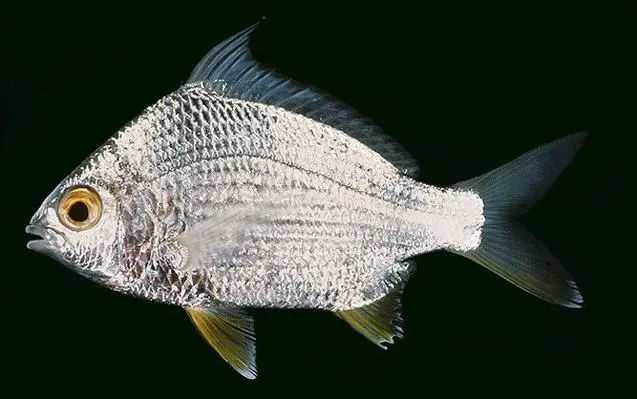
Parargyrops microstoma, a lesser-known yet ecologically significant species within the Gerreidae family, inhabits the warm coastal waters of the Indo-Pacific region. Named for its diminutive mouth, this fish is characterized by a sleek, laterally compressed body with a silvery-white hue, making it a subtle but vital component of shallow marine and estuarine ecosystems.


Growing up to 18 centimeters in length, the small-mouthed mojarra features a streamlined profile with a slightly concave forehead and large, reflective eyes adapted to low-light conditions in its preferred habitats. Its dorsal surface ranges from pale olive to golden, fading to a bright silver ventrally, with faint, often indistinct horizontal stripes that provide camouflage among sandy seabeds and seagrass meadows. The defining trait, its small protractile mouth, is specialized for sifting through sediment to feed on tiny invertebrates, such as copepods, amphipods, and small mollusks, which it detects using sensitive barbels around the lips.


Inhabiting sheltered bays, lagoons, and the lower reaches of estuaries, Parargyrops microstoma prefers waters less than 15 meters deep with soft, sandy substrates. It is a social species, often forming loose schools that forage during the day and seek refuge in deeper or more turbid waters at night. Breeding occurs in the warmer months, with females releasing pelagic eggs into the water column, which are fertilized externally and carried by currents until hatching. Juveniles rely on mangrove roots and tidal flats for protection, where the dense vegetation offers both shelter from predators and abundant microfauna to feed on.


While not targeted by commercial fisheries due to its small size, the small-mouthed mojarra plays a crucial role in coastal food webs as a prey species for larger fish, birds, and marine mammals. It also contributes to nutrient cycling by consuming benthic invertebrates and redistributing energy within shallow ecosystems. However, like many estuarine-dependent species, it faces threats from habitat degradation, including mangrove deforestation, pollution from agricultural runoff, and coastal urbanization. These activities reduce the availability of suitable feeding and breeding grounds, impacting both juvenile and adult populations. Conservation efforts focused on preserving and restoring mangrove and seagrass habitats, along with promoting sustainable land use practices, are essential to maintaining the health of Parargyrops microstoma and the fragile ecosystems it inhabits. As a quiet steward of shallow coastal waters, this species highlights the interconnectedness of all marine life and the need for holistic approaches to conservation.
Latest Stories
Travel News1 minute readA climate specialist stated that the May just concluded ranks as the second warmest May globally since meteorological record-keeping began. Over the past month, temperatures across Europe surged sharply from below-average levels to fuel one of the continent’s most ferocious heatwaves. This year’s heatwave arrived earlier than any previously documented, shattering dozens of May temperature benchmarks, with France, the United Kingdom, Ireland and Portugal bearing the brunt of the extreme heat.
Feline News1 minute readMinuet cats, also known as Napoleon cats, are a delightful and relatively new feline breed that have been winning the hearts of cat lovers around the world with their adorable appearance and friendly personalities.
Feline News1 minute readThe Balinese cat, also known as the Bali cat or Java cat, is a charming medium - sized long - haired cat. It originated in the United States and is a long - haired mutant of the Siamese cat. It is named the Balinese cat because its movements are 酷似 those of the native Balinese dancers.
Feline News2 minute readThe Exotic Shorthair, often dubbed the "lazy man’s Persian," has solidified its status as one of the most beloved cat breeds globally, blending the elegance of Persians with the low-maintenance charm of American Shorthairs. Developed in the 1960s by American breeders aiming to create a short-haired Persian variant, this breed has since captivated cat lovers with its round face, plush coat, and laid-back demeanor 28.
Travel News2 minute readNestled along the cliffs of the French Riviera (Côte d'Azur), the Trois Corniches de Nice—three coastal roads ascending from sea level to mountain heights—offer some of Europe’s most dramatic views. Stretching eastward from Nice, the Lower Corniche (Corniche Inférieure), Middle Corniche (Moyenne Corniche), and Upper Corniche (Grande Corniche) each provide a unique perspective of the Mediterranean, making them a pilgrimage for road-trippers and photographers alike.
Travel News2 minute readThe soul of Colmar lies in its half-timbered houses, dating back to the 16th century. These whimsical structures feature exposed wooden frames in geometric patterns, their facades painted in vibrant hues like buttercup yellow and sky blue. Flower-boxed windows and playful figurines adorn the facades, while their reflections dance on the Lauch River, creating the iconic Petite Venise (Little Venice) district. Here, fishermen pilot flower-decked boats, and riverside bistros serve Alsatian specialties like choucroute garnie, evoking scenes from Hayao Miyazaki’s Howl’s Moving Castle.
Feline News2 minute readThe Oriental Longhair, a breed celebrated for its elegance and intelligence, traces its roots to mid-20th-century breeding programs aimed at expanding the color and pattern diversity of Siamese cats . Developed through crosses with breeds like Russian Blues and British Shorthairs, these cats gained recognition in the 1970s and were officially acknowledged by The International Cat Association (TICA) in 1979 and the Cat Fanciers' Association (CFA) in 1995 .