Rediscovering the Past: From Vision to Reality


Travel News
Rediscovering the Past: From Vision to Reality

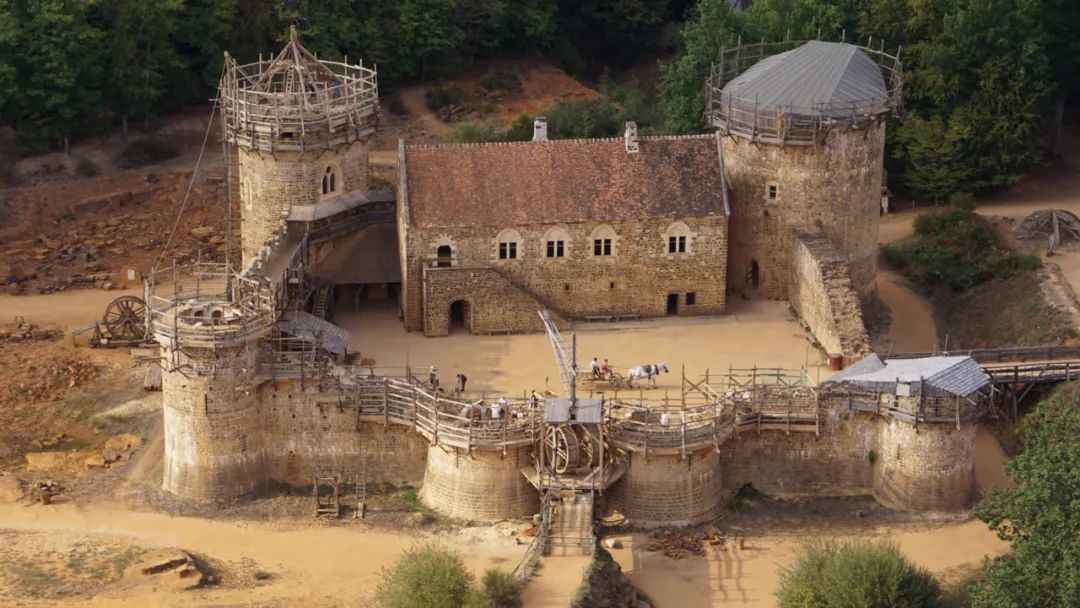
Launched in 1997 by French entrepreneur Michel Guyot and Maryline Martin, the project aims to replicate a 13th-century fortress through “experimental archaeology,” exploring how medieval artisans built without modern tools. Situated in an abandoned sandstone quarry, the site offers stone, timber, and water—ideal for recreating medieval construction conditions.


Launched in 1997 by French entrepreneur Michel Guyot and Maryline Martin, the project aims to replicate a 13th-century fortress through “experimental archaeology,” exploring how medieval artisans built without modern tools. Situated in an abandoned sandstone quarry, the site offers stone, timber, and water—ideal for recreating medieval construction conditions.


Craftsmen adhere strictly to historical documents and surviving castles. Stonecutters split sandstone by hand, blacksmiths forge iron nails in traditional furnaces, and carpenters shape oak beams with axes and chisels. The project even follows a “historical timeline,” assuming construction began in 1228, so 2025 corresponds to “1253,” guiding architectural progress and decor 风格.

Technical Challenges and Innovations

The team has overcome numerous hurdles. For instance, a medieval-style “treadwheel crane” was recreated to lift 1-ton stones: two workers walk inside a wooden wheel to power the winch, hoisting blocks to dizzying heights. Roof tiles, fired locally with medieval glazing techniques, mirror those found in Loire Valley castles.


Eco-sustainability is central: all materials are sourced locally, relying on human/animal labor and water mills, achieving near-zero carbon footprint. Gardens grow medieval crops, kitchens use open hearths, and dyes come from forest ochre and plants.

A Bridge Between Education and Cultural Heritage

Guédelon Castle is more than a construction site—it’s the world’s largest “living medieval museum.” Drawing 300,000+ visitors annually, it offers workshops in stonemasonry and pottery, plus “knight training” for children. Partnering with universities, it has trained hundreds of traditional craftsmen, hailed as a “Noah’s Ark of craftsmanship”.


“We’re not building a museum piece but a living history,” says project leader Maryline Martin. “Every stone carries ancient wisdom, inspiring modern architecture to coexist with nature.”

Conclusion: A Gift of Time

By 2025, as the final sandstone block is laid on the eastern curtain wall, Guédelon Castle will stand complete. Spanning nearly three decades, this feat proves that in an age of rapid tech advancement, humanity can still breathe life into history through patience and skill. As The Telegraph notes, “Guédelon is one of the maddest, most inspiring collective efforts of our time.”

Latest Stories
Feline News2 minute readThe Oriental Longhair, a breed celebrated for its elegance and intelligence, traces its roots to mid-20th-century breeding programs aimed at expanding the color and pattern diversity of Siamese cats . Developed through crosses with breeds like Russian Blues and British Shorthairs, these cats gained recognition in the 1970s and were officially acknowledged by The International Cat Association (TICA) in 1979 and the Cat Fanciers' Association (CFA) in 1995 .
Feline News2 minute readThe Korat cat, originating from Thailand’s Nakhon Ratchasima province (formerly Korat), is a breed deeply rooted in history and cultural significance. Revered for centuries as a symbol of good luck and prosperity, these silver-blue felines have enchanted the world with their striking appearance and affectionate nature.
Feline News2 minute readA heartwarming tale of survival and companionship has thrust the Munchkin cat into the global spotlight, showcasing the breed’s unique charm and indomitable spirit. Mochi, an 8-month-old Munchkin rescued from a life-threatening illness, has become an international symbol of hope, embodying the resilience and playful nature that define these short-legged felines.
Travel News2 minute readPerched atop an 82-meter volcanic plug in Le Puy-en-Velay, France, the Chapelle Saint-Michel d’Aiguilhe stands as a testament to faith and engineering prowess. Built in 962 AD, this architectural marvel balances precariously on a basaltic rock formation, blending Romanesque austerity with Moorish-inspired ornamentation to create one of Europe’s most dramatic religious landmarks.
Feline News2 minute readRagamuffin cats, affectionately known as "muffins," have captured the hearts of cat lovers worldwide with their plush coats, docile personalities, and striking appearance. Originating in the United States in the 1990s, this breed emerged from a group of breeders seeking to expand the genetic diversity of Ragdoll cats. By crossing Ragdolls with Persians, Himalayans, and other long-haired breeds, they created a larger, more robust feline with a broader range of coat colors and patterns
Canine News2 minute readOriginating in the early 20th century, the American White Shepherd traces its lineage to the German Shepherd. Due to a recessive white coat gene, these dogs were long considered "flawed" in Germany and systematically culled from breeding programs12. However, North American breeders recognized their unique appeal and selectively developed them into a distinct breed, officially acknowledged by the United Kennel Club (UKC) in 199917
Canine News1 minute readAs the world's first operational vertical/short takeoff and landing (V/STOL) fighter jet, the British-developed Harrier, nicknamed the "Jump Jet," has left an indelible mark on aviation history through its groundbreaking design and combat prowess.