In the heart of Southeast Asia's lush rainforests lies a botanical marvel that has intrigued and bewildered observers for centuries - the Rafflesia. This extraordinary plant is a genus within the Rafflesiaceae family, with around 42 species, each one a testament to nature's eccentricity.
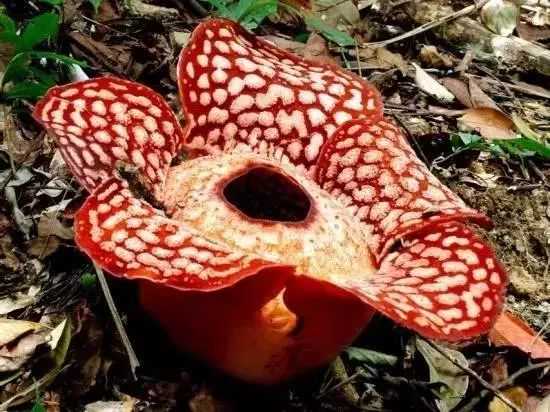
The Rafflesia is perhaps best known for its colossal flowers. The star of the show, Rafflesia arnoldii, flaunts the title of having the world's largest individual flower. These behemoths can reach up to a staggering 1 meter in diameter and tip the scales at around 11 kilograms. Their appearance is as striking as it is peculiar. Five thick, leathery petals, usually in hues of reddish - brown and adorned with white, wart - like spots, surround a central, bowl - shaped structure. The flower's interior often features a diaphragm - like formation, adding to its otherworldly look.
What truly sets the Rafflesia apart, however, is its pungent odor. Nicknamed the "corpse flower" or "meat flower," it emits a stench that closely mimics the smell of rotting flesh. This putrid aroma is no accident; it's a brilliant evolutionary adaptation. The Rafflesia's main pollinators are carrion - feeding flies. By mimicking the scent of decay, the flower lures these insects, which unwittingly transfer pollen as they explore the flower in search of a meal. Some species even go a step further, generating heat to enhance the illusion of decomposition, making the deception all the more convincing for their pollinator visitors.
Adding to its mystery, the Rafflesia has a highly unusual lifestyle. It is an endoparasite, meaning it has no roots, stems, or leaves in the traditional sense. Instead, it spends most of its life hidden within the tissues of its host, the Tetrastigma vine, which belongs to the grape family (Vitaceae). The Rafflesia exists as a network of thread - like filaments, leaching nutrients and water from the vine. Only when it's time to bloom does the plant make its presence known, emerging from the host as a bud that gradually develops into the massive flower.
The discovery of the Rafflesia was a momentous event in the world of botany. In 1818, an exploration party in Sumatra, led by Sir Stamford Raffles and including Dr. Joseph Arnold, stumbled upon this extraordinary plant. Dr. Arnold was the first to document it, and later, in 1820, Robert Brown named the genus Rafflesia in honor of Raffles, and the species Rafflesia arnoldii after Arnold.
Sadly, the Rafflesia is under threat. Deforestation, driven by logging and land - use changes, is destroying its rainforest habitat. Additionally, the illegal collection of the flowers for their supposed medicinal properties further endangers these rare plants. As of now, many Rafflesia species are considered rare, and some, like Rafflesia philippensis, are critically endangered according to the IUCN Red List. Conservation efforts are crucial to safeguard these botanical wonders, ensuring that future generations can also marvel at the Rafflesia's unique beauty and strange allure.