The Regal Puya raimondii: Queen of the Andes' Botanical Realm


Plant Information
The Regal Puya raimondii: Queen of the Andes' Botanical Realm

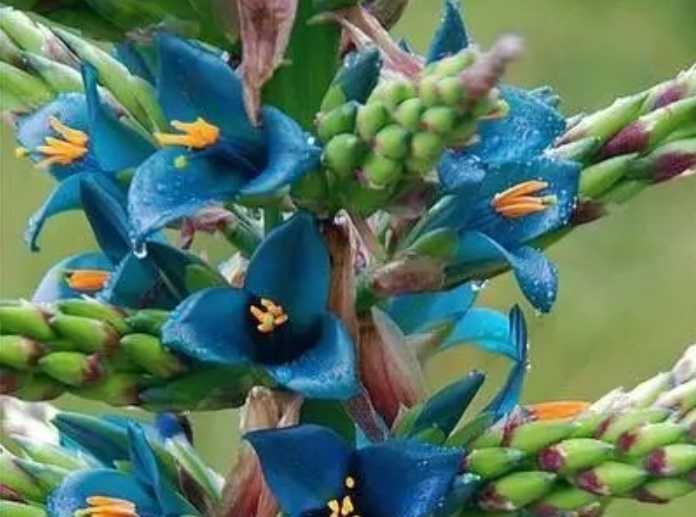
The Puya raimondii, commonly known as the Queen of the Andes, stands as a botanical marvel, captivating scientists and nature enthusiasts with its imposing size and unique life cycle. Native to the high - altitude regions of the Andes Mountains in Peru and Bolivia, this giant bromeliad reigns supreme in the harsh, arid landscapes it calls home.

A Majestic Monocarpic Wonder

This colossal plant defies conventional notions of bromeliads, reaching heights of up to 10 meters when in full bloom. Its base consists of a rosette of thick, spiny - edged leaves, each stretching over 2 meters long and arranged in a tight, circular formation. The leaves' gray - green hue and waxy texture serve as adaptations to the extreme sun exposure and limited water availability at altitudes of 3,200 to 4,800 meters. After a staggering 80 to 150 years of growth—a lifespan that makes it one of the world’s longest - living monocarpic plants—it enters its final, dramatic phase. A towering inflorescence emerges from the center, laden with thousands of small, pale green to yellow flowers. This spectacular bloom, which can take several months to fully develop, attracts pollinators such as hummingbirds and insects before the plant withers and dies, leaving behind only its seeds to continue the cycle.

Ecological Significance and Conservation Challenges

In its native alpine habitats, the Queen of the Andes plays a vital role in ecosystem dynamics. Its large leaves collect and retain moisture, creating microhabitats that support various organisms, from insects to small amphibians. However, the species faces grave threats. Overgrazing by livestock, climate change - induced droughts, and illegal collection for horticulture have decimated wild populations. Conservationists have launched initiatives to protect remaining colonies, including habitat restoration and captive breeding programs. As a symbol of the Andes’ resilience and vulnerability, the Puya raimondii not only commands awe for its majestic presence but also serves as a poignant reminder of the urgent need to safeguard Earth’s most extraordinary botanical treasures.
Latest Stories
Feline News2 minute readThe Oriental Longhair, a breed celebrated for its elegance and intelligence, traces its roots to mid-20th-century breeding programs aimed at expanding the color and pattern diversity of Siamese cats . Developed through crosses with breeds like Russian Blues and British Shorthairs, these cats gained recognition in the 1970s and were officially acknowledged by The International Cat Association (TICA) in 1979 and the Cat Fanciers' Association (CFA) in 1995 .
Feline News2 minute readThe Korat cat, originating from Thailand’s Nakhon Ratchasima province (formerly Korat), is a breed deeply rooted in history and cultural significance. Revered for centuries as a symbol of good luck and prosperity, these silver-blue felines have enchanted the world with their striking appearance and affectionate nature.
Feline News2 minute readA heartwarming tale of survival and companionship has thrust the Munchkin cat into the global spotlight, showcasing the breed’s unique charm and indomitable spirit. Mochi, an 8-month-old Munchkin rescued from a life-threatening illness, has become an international symbol of hope, embodying the resilience and playful nature that define these short-legged felines.
Travel News2 minute readPerched atop an 82-meter volcanic plug in Le Puy-en-Velay, France, the Chapelle Saint-Michel d’Aiguilhe stands as a testament to faith and engineering prowess. Built in 962 AD, this architectural marvel balances precariously on a basaltic rock formation, blending Romanesque austerity with Moorish-inspired ornamentation to create one of Europe’s most dramatic religious landmarks.
Feline News2 minute readRagamuffin cats, affectionately known as "muffins," have captured the hearts of cat lovers worldwide with their plush coats, docile personalities, and striking appearance. Originating in the United States in the 1990s, this breed emerged from a group of breeders seeking to expand the genetic diversity of Ragdoll cats. By crossing Ragdolls with Persians, Himalayans, and other long-haired breeds, they created a larger, more robust feline with a broader range of coat colors and patterns
Canine News2 minute readOriginating in the early 20th century, the American White Shepherd traces its lineage to the German Shepherd. Due to a recessive white coat gene, these dogs were long considered "flawed" in Germany and systematically culled from breeding programs12. However, North American breeders recognized their unique appeal and selectively developed them into a distinct breed, officially acknowledged by the United Kennel Club (UKC) in 199917
Canine News1 minute readAs the world's first operational vertical/short takeoff and landing (V/STOL) fighter jet, the British-developed Harrier, nicknamed the "Jump Jet," has left an indelible mark on aviation history through its groundbreaking design and combat prowess.