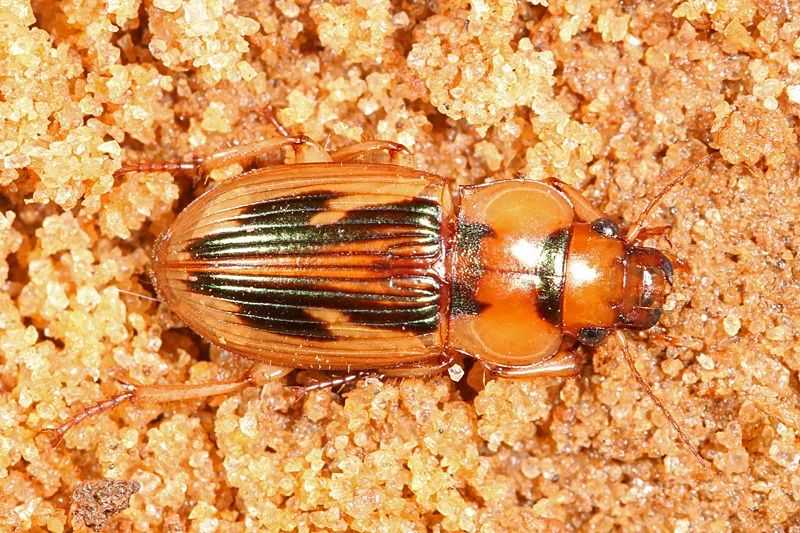
Tiger beetles, members of the family Cicindelidae, are renowned for their dazzling iridescence, aggressive predatory behavior, and unmatched speed—making them some of the most captivating insects in the animal kingdom. These beetles combine stunning aesthetics with remarkable adaptations, thriving in diverse habitats from sandy beaches to forest floors.
- Vibrant Coloration: Most tiger beetles sport metallic green, blue, or purple exoskeletons, often with intricate patterns. This coloration arises from structural pigments that refract light, giving them a jewel-like sheen.
- Elongated Body: Their streamlined bodies and long, spiny legs are optimized for rapid movement.
- Massive Mandibles: Adults possess large, curved jaws lined with sharp teeth, ideal for seizing and devouring prey like ants, spiders, and other insects.
- Compound Eyes: Prominent, bulbous eyes provide excellent vision, aiding in tracking fast-moving prey.
Tiger beetles are legendary for their speed, capable of running up to 5.6 mph (9 km/h)—relative to body length, this is equivalent to a human sprinting at 480 mph (772 km/h). To put this in perspective:
- Their rapid pace creates a visual blur, and they often pause mid-chase to reorient, as their eyes can’t process images fast enough to keep up with their movement.
- This agility helps them ambush prey and evade predators like birds and lizards.
- Egg & Larval Stage: Females lay eggs in the soil, and larvae hatch to construct vertical burrows (up to 12 inches deep). Larvae have a flattened "hump" on their backs with hooks, which they use to anchor themselves in the burrow.
- Ambush Predators: Larvae wait at burrow entrances, grabbing passing insects with their strong mandibles. They pupate in the burrow before emerging as adults.
- Adult Behavior: Adults are diurnal, active hunters that patrol open spaces, using their speed and vision to chase down prey.
- Top Predators: Tiger beetles help control insect populations, playing a key role in ecosystem balance.
- Habitat Specialization: Some species thrive in specific environments:
- Beach tiger beetles (e.g., Cicindela dorsalis) inhabit sandy shores, their pale coloration providing camouflage.
- Forest species may have darker hues to blend with leaf litter.
- Thermoregulation: In hot environments, they stand on their tiptoes ("stilting") to reduce contact with scorching surfaces, or orient themselves perpendicularly to the sun to minimize heat absorption.
Many tiger beetle species face threats from habitat loss, sand dune development, and pollution. For example:
- The American tiger beetle (Cicindela americana) is endangered due to coastal erosion and human activity.
- Conservation efforts focus on protecting their nesting sites and maintaining natural habitats.
- Ancient Egyptians revered tiger beetles, associating their iridescence with the sun god Ra.
- Their scientific name, Cicindela, means "little glowworm" in Latin, referencing their shimmering appearance.
- Some cultures view them as symbols of perseverance and speed, admired for their ability to thrive in harsh conditions.
From their dazzling armor to their record-breaking sprints, tiger beetles embody nature’s perfect blend of beauty and brutality, standing as a testament to the incredible adaptations that define the insect world.