Afghan Hound: The Graceful and Resilient Hunting Aristocrat


Canine News
Afghan Hound: The Graceful and Resilient Hunting Aristocrat

The Afghan Hound, an ancient breed from the Central Asian highlands, has captivated the world with its flowing silken coat and regal demeanor, earning the title of "Noble of Dogs." At the 2024 National Dog Show in the U.S., a female Afghan Hound named Zida claimed Reserve Best in Show, showcasing the breed's enduring allure in the competitive arena.


Origins and History: A Millennium-Old Hunting Legacy

One of the oldest surviving dog breeds, the Afghan Hound traces its roots back 4,000 years to the mountains of Afghanistan89. Its ancestor, the "Tazi," hunted gazelles, wolves, and even snow leopards, relying on keen eyesight and explosive speed in rugged terrain. Introduced to Europe by British officers in the 19th century, it was officially recognized by the American Kennel Club (AKC) in 1926, evolving from a hunting companion to a symbol of fashion and status68. Notably, "Snuppy," the world's first cloned dog in 2005, was an Afghan Hound, cementing its scientific legacy38.

Appearance and Temperament: A Living Work of Art

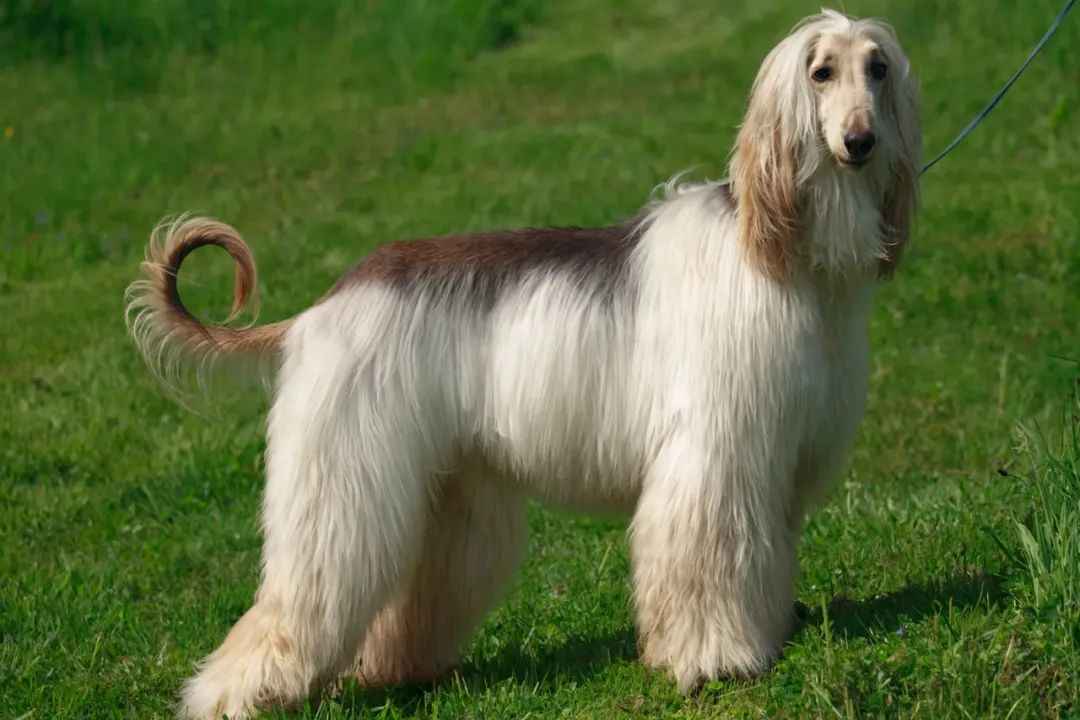
The Afghan Hound’s defining feature is its floor-length, silky coat, except for the "saddle" of shorter hair on the back, which ripples like liquid gold in motion28. Its almond-shaped eyes, aquiline nose, and curled tail tip create an "exotic Eastern expression"28. Adult males stand 68-74 cm tall, weighing 20-25 kg, with a gait described as "effortless elasticity," earning them the nickname "moving sculptures"89. A Minnesota Afghan named Roman went viral for his 超长 "hair," often mistaken for a human from behind, sparking social media fascination1.

Personality and Care: The High-Maintenance Elegance

Beneath their glamorous exterior, Afghan Hounds retain hunting instincts—independent yet loyal. Reserved with strangers, they thrive on patient, positive reinforcement training due to their problem-solving intelligence rather than obedience-driven mindset611. Grooming demands are intense: weekly brushing to prevent matting and professional styling, making them one of the most high-maintenance breeds67. Health concerns include hip dysplasia, hypothyroidism, and skin allergies, with a lifespan of 12-14 years457. However, their cold tolerance and athleticism shine in snowy or open landscapes, ideal for active households710.

Cultural Icon: From Royal Courts to Silver Screens

The Afghan Hound’s elegance has transcended into fashion and art. In 1945, one graced the cover of Life magazine, symbolizing post-war American sophistication6. The character Rita in Oliver & Company was modeled after them, while British royalty historically kept them as pets38. Today, they remain show ring icons, embodying "the union of speed and beauty" with every stride.


From Afghan hunters to global celebrities, the Afghan Hound has spent four millennia weaving a tale of grace and resilience. As the AKC standard states: "He is the incarnation of dignity and aloofness, a king 坚守传统"2. This breed, blending wild instinct with aristocratic poise, continues to enchant as an irreplaceable cultural symbol in human civilization.
Latest Stories
Travel News1 minute readA climate specialist stated that the May just concluded ranks as the second warmest May globally since meteorological record-keeping began. Over the past month, temperatures across Europe surged sharply from below-average levels to fuel one of the continent’s most ferocious heatwaves. This year’s heatwave arrived earlier than any previously documented, shattering dozens of May temperature benchmarks, with France, the United Kingdom, Ireland and Portugal bearing the brunt of the extreme heat.
Feline News1 minute readMinuet cats, also known as Napoleon cats, are a delightful and relatively new feline breed that have been winning the hearts of cat lovers around the world with their adorable appearance and friendly personalities.
Feline News1 minute readThe Balinese cat, also known as the Bali cat or Java cat, is a charming medium - sized long - haired cat. It originated in the United States and is a long - haired mutant of the Siamese cat. It is named the Balinese cat because its movements are 酷似 those of the native Balinese dancers.
Feline News2 minute readThe Exotic Shorthair, often dubbed the "lazy man’s Persian," has solidified its status as one of the most beloved cat breeds globally, blending the elegance of Persians with the low-maintenance charm of American Shorthairs. Developed in the 1960s by American breeders aiming to create a short-haired Persian variant, this breed has since captivated cat lovers with its round face, plush coat, and laid-back demeanor 28.
Travel News2 minute readNestled along the cliffs of the French Riviera (Côte d'Azur), the Trois Corniches de Nice—three coastal roads ascending from sea level to mountain heights—offer some of Europe’s most dramatic views. Stretching eastward from Nice, the Lower Corniche (Corniche Inférieure), Middle Corniche (Moyenne Corniche), and Upper Corniche (Grande Corniche) each provide a unique perspective of the Mediterranean, making them a pilgrimage for road-trippers and photographers alike.
Travel News2 minute readThe soul of Colmar lies in its half-timbered houses, dating back to the 16th century. These whimsical structures feature exposed wooden frames in geometric patterns, their facades painted in vibrant hues like buttercup yellow and sky blue. Flower-boxed windows and playful figurines adorn the facades, while their reflections dance on the Lauch River, creating the iconic Petite Venise (Little Venice) district. Here, fishermen pilot flower-decked boats, and riverside bistros serve Alsatian specialties like choucroute garnie, evoking scenes from Hayao Miyazaki’s Howl’s Moving Castle.
Feline News2 minute readThe Oriental Longhair, a breed celebrated for its elegance and intelligence, traces its roots to mid-20th-century breeding programs aimed at expanding the color and pattern diversity of Siamese cats . Developed through crosses with breeds like Russian Blues and British Shorthairs, these cats gained recognition in the 1970s and were officially acknowledged by The International Cat Association (TICA) in 1979 and the Cat Fanciers' Association (CFA) in 1995 .