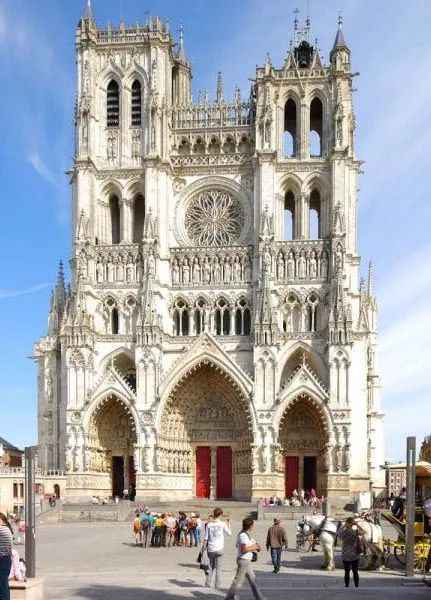
Amiens Cathedral (Cathédrale d'Amiens), located on the banks of the Somme River in Amiens, Somme, France, stands as the largest Gothic cathedral in the country. Its grand scale and exquisite craftsmanship rank it among the wonders of medieval architectural art. Built over nearly two centuries, this cathedral is not only a core symbol of French cultural heritage but also inscribed as a UNESCO World Heritage Site in 1981.
Source: Images from the Internet, if there is any infringement, please contact the removal of
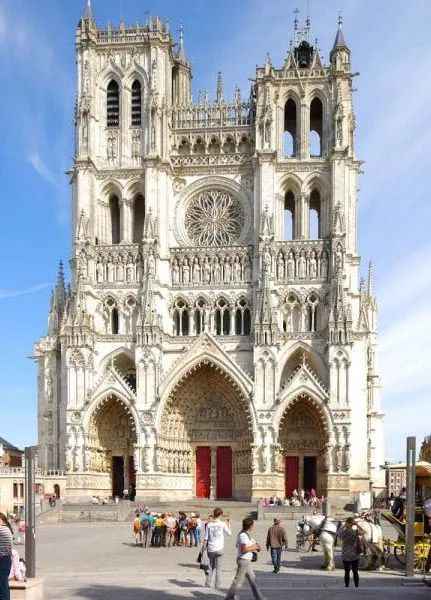
Amiens Cathedral (Cathédrale d'Amiens), located on the banks of the Somme River in Amiens, Somme, France, stands as the largest Gothic cathedral in the country. Its grand scale and exquisite craftsmanship rank it among the wonders of medieval architectural art. Built over nearly two centuries, this cathedral is not only a core symbol of French cultural heritage but also inscribed as a UNESCO World Heritage Site in 1981.
Construction of Amiens Cathedral began in 1220, initiated by Bishop Evrard de Fouilloy. The main structure was completed in just over 60 years, showcasing the efficiency and collaboration of medieval craftsmen. Unlike other Gothic cathedrals with mixed styles, its architectural design remains highly unified, earning it the title of a "pure Gothic" masterpiece. Stretching 145 meters in length, the cathedral’s nave vaults soar to 43 meters, with an internal volume of 200,000 cubic meters—equivalent to three ordinary churches and twice the size of Notre-Dame de Paris. The West Facade, featuring three pointed-arch portals, along with the 67-meter North Tower and 62-meter South Tower, forms a striking skyline.
Adorned with over 4,000 medieval sculptures, the cathedral is known as the "Amiens Bible." The "Beautiful God" sculpture on the central tympanum of the West Facade, with its majestic yet serene demeanor, has become an icon of Gothic art. Carvings on the South Portal depict the life of the Virgin Mary, while the North Portal features statues of martyrs, conveying religious teachings to illiterate believers through narrative scenes. The 110 wooden choir stalls and the labyrinth design on the floor both serve dual purposes of religious ritual and spiritual enlightenment.
The cathedral is celebrated for its "transparency," with 12-meter-tall stained glass panels covering nearly the entire side walls. Sunlight filtering through the rose windows creates a sacred atmosphere. Launched in 2020 to mark the 800th anniversary of its founding, the "Chroma" light show uses audio-visual technology to revisit the cathedral’s history, becoming an annual cultural highlight. Visitors can enjoy this free performance on summer evenings, witnessing the perfect fusion of architecture and art.
- Opening Hours: Open daily from April to September; open Wednesday to Monday from October to March. Specific hours vary by season.
- Special Note: Closed for maintenance from January 13 to 31, 2025. Some areas are inaccessible during religious ceremonies.
- Admission: €6 for adults, €3 for children, and €15 for groups. Multilingual audio guides are available, with a dedicated children’s version exploring playful elements like "weeping angels."
- Transportation Tips: Located in central Amiens, accessible by public transport or on foot. Paid parking is available nearby. A wheelchair-accessible entrance is situated at the Cormont Street entrance on the cathedral’s south side.
More than just an architectural masterpiece, Amiens Cathedral is a symbol of French spirit. Its towering spires and timeless sculptures continue to narrate the faith and glory of the Middle Ages.