Exploring the History, Characteristics, and Role of Finland’s Beloved Reindeer Herding Dog


Canine News
Exploring the History, Characteristics, and Role of Finland’s Beloved Reindeer Herding Dog

Nestled in the Arctic Circle, the Finnish Lapphund has served as a loyal companion and working partner to the Sami people for centuries. Originating from Lapland—a region spanning northern Finland, Sweden, and Norway—this breed’s history is deeply intertwined with the harsh yet breathtaking landscapes it calls home. Developed initially for hunting wild reindeer, the Finnish Lapphund evolved into a versatile herding dog as reindeer domestication took hold in the 17th century28. By the mid-20th century, breed standards were formalized, and today, it stands as a symbol of resilience and adaptabil


Physical Characteristics and Temperament

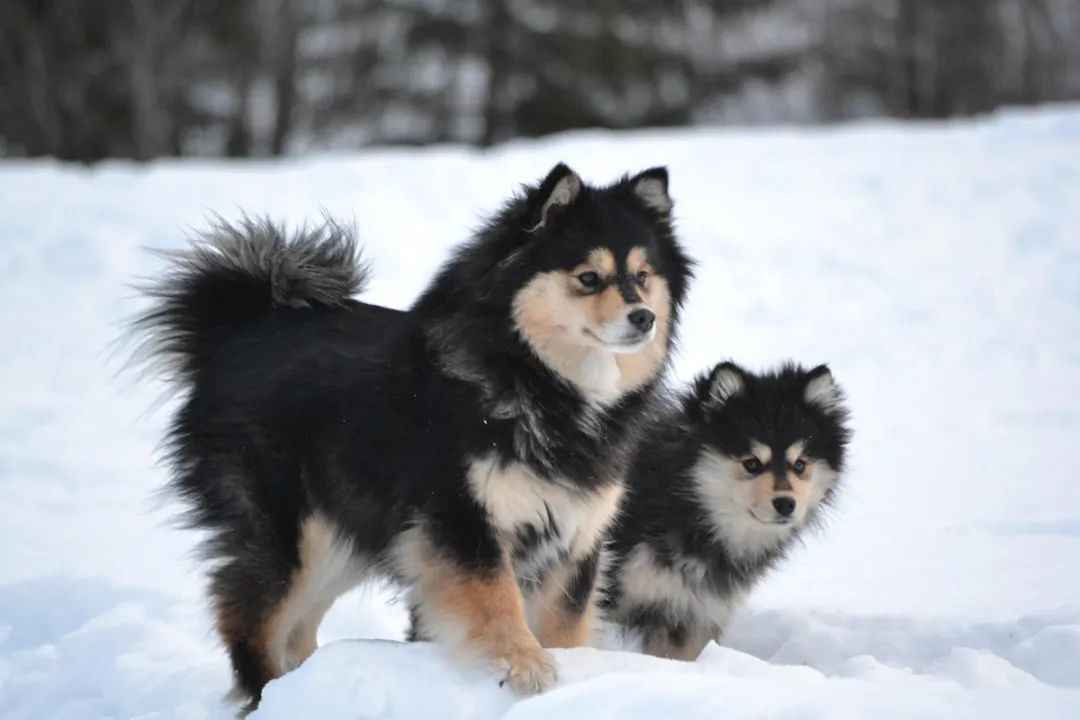
A medium-sized breed with a robust build, the Finnish Lapphund boasts a thick double coat designed to withstand subzero temperatures. Its outer coat is coarse and weather-resistant, while the dense undercoat provides insulation. Common colors include black, brown, sable, and gray, often accented with white markings34. Distinctive features include triangular upright ears and expressive oval eyes, sometimes framed by “spectacle” markings3.


Known for their friendly and outgoing nature, Finnish Lapphunds are affectionate family dogs, thriving on human companionship. Their high intelligence and eagerness to please make them highly trainable, excelling in obedience and agility. However, their strong herding instincts mean they require regular mental and physical stimulation to prevent restlessness47.

Historical Significance and Modern Adaptation

For centuries, the Sami people relied on Finnish Lapphunds to manage reindeer herds, a task that demanded agility and quick reflexes to navigate stubborn reindeer and rugged terrain. Even today, some dogs still work alongside herders, though their role has expanded to include search-and-rescue, therapy work, and beloved family pets12.


The breed’s journey to global recognition was marked by milestones: it was first introduced to the U.S. in 1987 and gained full AKC recognition in 201169. Despite its growing popularity, the Finnish Lapphund remains relatively rare outside Scandinavia, cherished for its versatility and unique “Lapphund gaze”—a soulful expression that reflects its deep bond with humans413.

Health and Care

With a lifespan of 12–15 years, the Finnish Lapphund is generally robust but prone to hereditary conditions like hip dysplasia and progressive retinal atrophy. Regular veterinary checkups, genetic testing, and a balanced diet are essential for their well-being47. Grooming involves weekly brushing to manage shedding, especially during seasonal coat changes4.

Cultural Legacy

Beyond its practical roles, the Finnish Lapphund holds cultural significance in Finland, where it ranks among the top 15 most popular breeds. Its portrayal in folklore and art underscores its status as a national icon. Whether herding reindeer under the Northern Lights or curling up by the hearth, this breed embodies the harmony between nature and humanity in the Arctic realm11.


As the world increasingly embraces the Finnish Lapphund’s charm, its legacy endures—a testament to the enduring partnership between humans and their canine companions in one of Earth’s most unforgiving yet beautiful environments.
Latest Stories
Feline News2 minute readThe Oriental Longhair, a breed celebrated for its elegance and intelligence, traces its roots to mid-20th-century breeding programs aimed at expanding the color and pattern diversity of Siamese cats . Developed through crosses with breeds like Russian Blues and British Shorthairs, these cats gained recognition in the 1970s and were officially acknowledged by The International Cat Association (TICA) in 1979 and the Cat Fanciers' Association (CFA) in 1995 .
Feline News2 minute readThe Korat cat, originating from Thailand’s Nakhon Ratchasima province (formerly Korat), is a breed deeply rooted in history and cultural significance. Revered for centuries as a symbol of good luck and prosperity, these silver-blue felines have enchanted the world with their striking appearance and affectionate nature.
Feline News2 minute readA heartwarming tale of survival and companionship has thrust the Munchkin cat into the global spotlight, showcasing the breed’s unique charm and indomitable spirit. Mochi, an 8-month-old Munchkin rescued from a life-threatening illness, has become an international symbol of hope, embodying the resilience and playful nature that define these short-legged felines.
Travel News2 minute readPerched atop an 82-meter volcanic plug in Le Puy-en-Velay, France, the Chapelle Saint-Michel d’Aiguilhe stands as a testament to faith and engineering prowess. Built in 962 AD, this architectural marvel balances precariously on a basaltic rock formation, blending Romanesque austerity with Moorish-inspired ornamentation to create one of Europe’s most dramatic religious landmarks.
Feline News2 minute readRagamuffin cats, affectionately known as "muffins," have captured the hearts of cat lovers worldwide with their plush coats, docile personalities, and striking appearance. Originating in the United States in the 1990s, this breed emerged from a group of breeders seeking to expand the genetic diversity of Ragdoll cats. By crossing Ragdolls with Persians, Himalayans, and other long-haired breeds, they created a larger, more robust feline with a broader range of coat colors and patterns
Canine News2 minute readOriginating in the early 20th century, the American White Shepherd traces its lineage to the German Shepherd. Due to a recessive white coat gene, these dogs were long considered "flawed" in Germany and systematically culled from breeding programs12. However, North American breeders recognized their unique appeal and selectively developed them into a distinct breed, officially acknowledged by the United Kennel Club (UKC) in 199917
Canine News1 minute readAs the world's first operational vertical/short takeoff and landing (V/STOL) fighter jet, the British-developed Harrier, nicknamed the "Jump Jet," has left an indelible mark on aviation history through its groundbreaking design and combat prowess.