Measles: High Contagion and the Critical Role of Vaccination


Health News
Measles: High Contagion and the Critical Role of Vaccination

Measles is an acute rash-causing respiratory infection caused by the measles virus. It spreads primarily through respiratory droplets and eye conjunctiva contact, making it one of the most contagious diseases. Typical symptoms include fever, runny nose, cough, tearing, photophobia, and maculopapular rashes. A small number of patients may develop complications such as pneumonia, laryngitis, otitis media, myocarditis, or encephalitis, with severe cases potentially leading to death.


While there is no specific treatment for measles, vaccination offers effective prevention. Administered as the Measles-Mumps-Rubella (MMR) vaccine, two doses can prevent over 97% of measles infections. Globally, measles vaccines are estimated to have averted 31.7 million deaths over the past 20 years, underscoring their life-saving impact.


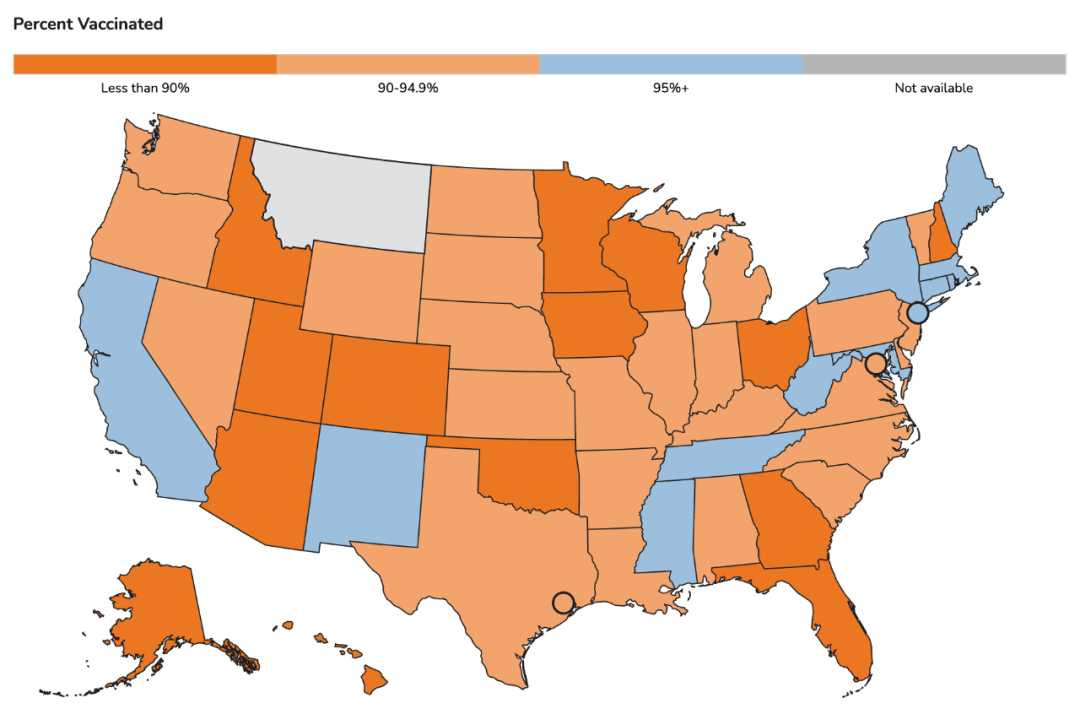
However, large-scale measles outbreaks often occur in regions with subpar vaccination rates. Herd immunity—where over 95% of a community is vaccinated—provides protection for most people. In the U.S., kindergarten vaccination rates have failed to reach this threshold for over four years; in the 2023–2024 school year, the rate dropped to 92.7%, leaving approximately 280,000 kindergarteners at risk of infection.


This gap highlights the urgency of maintaining high vaccination coverage. As measles remains highly transmissible, even small drops in vaccination rates can trigger outbreaks, threatening unvaccinated individuals—especially children and those with weakened immune systems. Public health experts emphasize that sustained vaccination efforts are key to preventing resurgences and protecting vulnerable populations.
Latest Stories
Feline News2 minute readThe Oriental Longhair, a breed celebrated for its elegance and intelligence, traces its roots to mid-20th-century breeding programs aimed at expanding the color and pattern diversity of Siamese cats . Developed through crosses with breeds like Russian Blues and British Shorthairs, these cats gained recognition in the 1970s and were officially acknowledged by The International Cat Association (TICA) in 1979 and the Cat Fanciers' Association (CFA) in 1995 .
Feline News2 minute readThe Korat cat, originating from Thailand’s Nakhon Ratchasima province (formerly Korat), is a breed deeply rooted in history and cultural significance. Revered for centuries as a symbol of good luck and prosperity, these silver-blue felines have enchanted the world with their striking appearance and affectionate nature.
Feline News2 minute readA heartwarming tale of survival and companionship has thrust the Munchkin cat into the global spotlight, showcasing the breed’s unique charm and indomitable spirit. Mochi, an 8-month-old Munchkin rescued from a life-threatening illness, has become an international symbol of hope, embodying the resilience and playful nature that define these short-legged felines.
Travel News2 minute readPerched atop an 82-meter volcanic plug in Le Puy-en-Velay, France, the Chapelle Saint-Michel d’Aiguilhe stands as a testament to faith and engineering prowess. Built in 962 AD, this architectural marvel balances precariously on a basaltic rock formation, blending Romanesque austerity with Moorish-inspired ornamentation to create one of Europe’s most dramatic religious landmarks.
Feline News2 minute readRagamuffin cats, affectionately known as "muffins," have captured the hearts of cat lovers worldwide with their plush coats, docile personalities, and striking appearance. Originating in the United States in the 1990s, this breed emerged from a group of breeders seeking to expand the genetic diversity of Ragdoll cats. By crossing Ragdolls with Persians, Himalayans, and other long-haired breeds, they created a larger, more robust feline with a broader range of coat colors and patterns
Canine News2 minute readOriginating in the early 20th century, the American White Shepherd traces its lineage to the German Shepherd. Due to a recessive white coat gene, these dogs were long considered "flawed" in Germany and systematically culled from breeding programs12. However, North American breeders recognized their unique appeal and selectively developed them into a distinct breed, officially acknowledged by the United Kennel Club (UKC) in 199917
Canine News1 minute readAs the world's first operational vertical/short takeoff and landing (V/STOL) fighter jet, the British-developed Harrier, nicknamed the "Jump Jet," has left an indelible mark on aviation history through its groundbreaking design and combat prowess.