Leiognathus brevirostris: The Short-Snouted Ponyfish of Shallow Seas


Marine Biology
Leiognathus brevirostris: The Short-Snouted Ponyfish of Shallow Seas

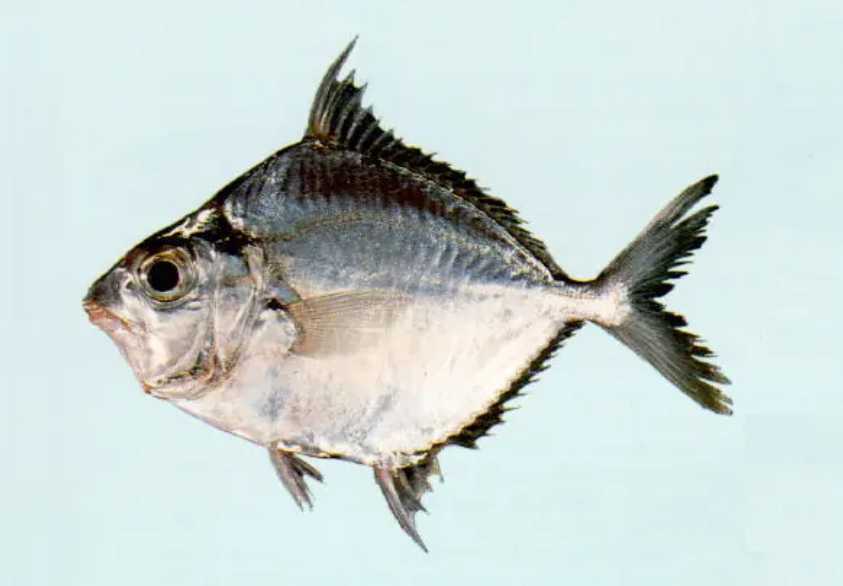
Leiognathus brevirostris, commonly known as the short-snouted ponyfish, is a diminutive yet distinctive species within the Leiognathidae family. Inhabiting the warm, shallow waters of the Indo-Pacific region, this fish is celebrated for its unique physical characteristics and ecological significance in coastal and estuarine ecosystems.


Growing up to 15 centimeters in length, the short-snouted ponyfish features a laterally compressed, oval-shaped body with a silvery hue. Its most defining trait is the short, rounded snout, significantly shorter than the diameter of its large, reflective eyes. The body is adorned with a smooth layer of small scales, and a faint, dark spot often appears at the base of the pectoral fins, adding to its distinctive appearance. The dorsal fin is divided into two sections: a spiny anterior part and a soft-rayed posterior part, which work in tandem to enable agile swimming among seagrass beds and sandy substrates. The mouth is small and protractile, perfectly adapted for sifting through sediment to feed on tiny invertebrates, such as copepods, amphipods, and small crustacean larvae.


Native to sheltered bays, lagoons, and the lower reaches of estuaries, Leiognathus brevirostris thrives in waters less than 15 meters deep. It is a highly social species, often forming dense schools that move in synchronized patterns, using their lateral lines to detect changes in water pressure and coordinate movements. By day, the schools seek refuge in the shade of mangrove roots or among submerged vegetation, emerging at night to forage actively. During the breeding season, typically in the warmer months, females release pelagic eggs into the water column, which are fertilized externally and carried by currents until hatching. Juveniles rely on the protective habitats of seagrass meadows, where the dense vegetation provides both shelter from predators and abundant food sources.


While not a major target for commercial fisheries due to its small size, the short-snouted ponyfish plays a crucial role in coastal food webs as a primary prey species for larger fish, birds, and marine mammals. It also contributes to the overall health of shallow ecosystems by consuming benthic invertebrates and aiding in nutrient cycling. However, like many estuarine-dependent species, it faces threats from habitat degradation, including mangrove deforestation, pollution from agricultural runoff, and coastal urbanization. These activities reduce the availability of suitable feeding and breeding grounds, impacting both juvenile and adult populations. Conservation efforts focused on preserving and restoring estuarine habitats, along with promoting sustainable land use practices, are essential to maintaining the delicate balance of coastal ecosystems and ensuring the long-term survival of Leiognathus brevirostris.
Latest Stories
Travel News2 minute readNestled in the French Pre-Alps, the Plateau du Vercors stands as a testament to nature’s raw power and humanity’s indomitable spirit. Rising abruptly from the valleys of Isère, this limestone plateau—dominated by peaks like Grand Veymont (2,346 meters)—features sheer cliffs and labyrinthine gorges that earned it the nickname "the Natural Great Wall". Its dramatic landscapes, shaped over millennia by erosion, have not only sculpted a geological marvel but also forged a theater of historical significance.
Cultural News1 minute readSpain’s tomato-throwing "La Tomatina" is wildly popular, but for those who prefer hurling something tangier, head to Italy in February. At the Ivrea Carnival, thousands of ripe oranges are pelted in a juicy battle during the festival’s highlight.
Cultural News1 minute readIn Wuppertal, Germany, there’s a pedestrian bridge that looks like it’s built from giant Lego bricks. Though it’s actually a concrete structure, artists have painted it to mimic the iconic toy blocks, creating a playful optical illusion.
Feline News2 minute readThe European Burmese cat, a breed born from careful crossbreeding in mid-20th century Europe, has captivated cat enthusiasts with its elegant physique and affectionate nature. Originating from the American Burmese stock imported to the UK, European breeders sought to diversify the gene pool by introducing Siamese and British Shorthair bloodlines, resulting in a distinct feline with refined features. Recognized by major associations like the CFA since 2002, this breed stands out for its sleek, muscular build and striking golden or amber almond-shaped eyes, which contrast sharply with the rounde
Feline News2 minute readIn recent years, the Scottish Fold cat has become an internet sensation, celebrated for its distinctive folded ears and owl-like appearance. However, behind the adorable facade lies a dark reality rooted in genetic abnormality and ethical debate. This breed, born from a spontaneous mutation in a Scottish barn cat named Susie in 1961, has sparked global controversy over its health implications and breeding practices.
Feline News1 minute readOriginating from a spontaneous genetic mutation in 1950, the Cornish Rex emerged in Cornwall, England, when a cream-colored kitten named Kallibunker was born with a dense, wavy coat resembling a lamb’s fleece1. Recognizing its uniqueness, owner Nina Ennismore collaborated with geneticists to establish the breed. Due to the recessive nature of the mutation, breeding two Cornish Rex cats guarantees curly-coated offspring13.
Health News1 minute readOn June 30, FBI Deputy Director Dan Bongino announced the dismantling of the largest healthcare fraud case in U.S. history, with revised to $14.6 billion. The investigation covered all 50 federal districts, indicting 324 individuals—including 96 medical practitioners—and seizing $245 million in assets.