Majestic Highlanders: The Enigmatic Highlander Cat Breed


Feline News
Majestic Highlanders: The Enigmatic Highlander Cat Breed

The Highlander cat, also known as the Highland Lynx, is a captivating feline breed celebrated for its wild appearance and affectionate demeanor. Developed in the early 2000s through careful crossbreeding of the Desert Lynx and Jungle Curl, this breed was intentionally crafted to mimic the robust build of wildcats while retaining a domesticated, sociable nature. Recognized by The International Cat Association (TICA) in 2008 as a Preliminary New Breed, it has since gained traction among cat enthusiasts globally.

Distinctive Features

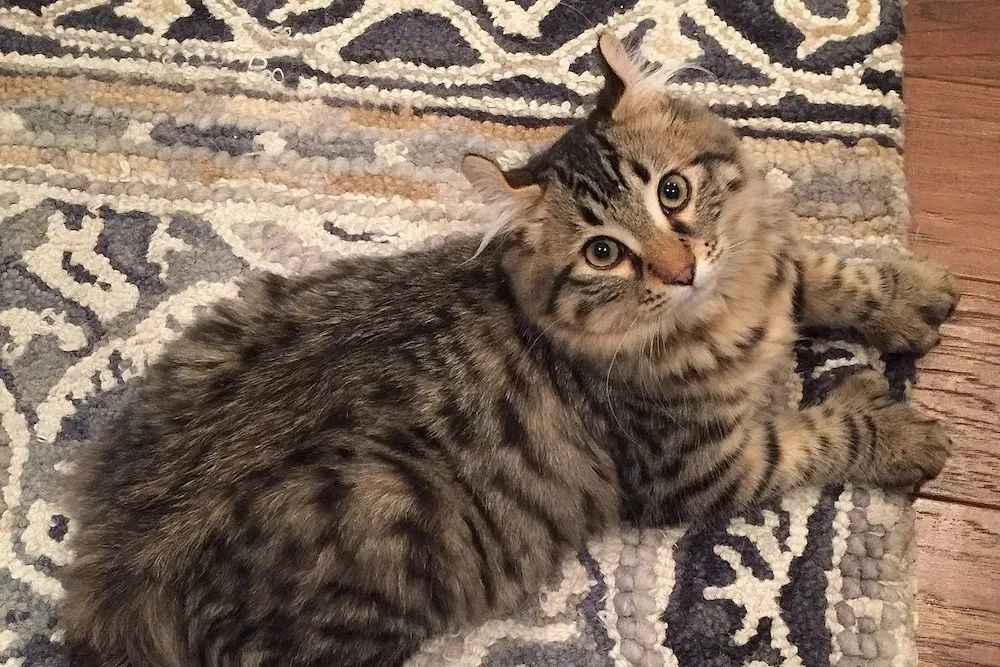
Highlanders are instantly recognizable for their curled ears—a genetic trait that begins to manifest in kittens around two weeks old—and naturally short, bobbed tails, which range from 2 to 6 inches in length. Their muscular, medium-to-large frames (males weigh 15–20 pounds, females 10–14 pounds) and polydactyl paws (extra toes) add to their unique charm. Coats can be short or long, with colors spanning tabby, solid, and ticked patterns, often featuring dense, silky textures.

Personality and Temperament

Despite their fierce appearance, Highlanders are known for their playful, dog-like personalities. They thrive on human interaction, often greeting owners at the door and seeking attention. Their intelligence makes them highly trainable, and they enjoy puzzle toys and interactive games. Notably, Highlanders are one of the few cat breeds that love water, with many recorded swimming in pools alongside their owners.

Health and Care

Generally healthy, Highlanders may be prone to hip dysplasia and ear infections due to their curled ear structure, necessitating regular cleaning. Lifespan ranges from 12 to 16 years with proper care, including a high-protein diet and daily exercise to maintain muscle tone. Grooming requirements are moderate: short-haired varieties need weekly brushing, while long-haired ones benefit from biweekly sessions to prevent matting.

Breeding and Recognition

The breed’s development began in 2004, with the name “Highlander” adopted in 2005 to differentiate it from its foundation stock. While TICA currently classifies it as an Advanced New Breed, breeders continue to refine standards for potential championship status. Highlanders remain rare but can be found through TICA-registered breeders, with kittens often priced in the mid-to-high hundreds of dollars.

A Breed for the Modern Household

Ideal for active families, Highlanders adapt well to indoor environments but require mental stimulation to prevent boredom. Their loyalty and sociability make them excellent companions, while their striking appearance ensures they remain the center of attention. As one breeder noted, “They’re the perfect blend of wild allure and domestic devotion”.


For those seeking a feline companion that stands out both in looks and personality, the Highlander cat offers a unique blend of strength, intelligence, and charm—a true testament to the art of modern cat breeding.
Latest Stories
Travel News2 minute readNestled in the French Pre-Alps, the Plateau du Vercors stands as a testament to nature’s raw power and humanity’s indomitable spirit. Rising abruptly from the valleys of Isère, this limestone plateau—dominated by peaks like Grand Veymont (2,346 meters)—features sheer cliffs and labyrinthine gorges that earned it the nickname "the Natural Great Wall". Its dramatic landscapes, shaped over millennia by erosion, have not only sculpted a geological marvel but also forged a theater of historical significance.
Cultural News1 minute readSpain’s tomato-throwing "La Tomatina" is wildly popular, but for those who prefer hurling something tangier, head to Italy in February. At the Ivrea Carnival, thousands of ripe oranges are pelted in a juicy battle during the festival’s highlight.
Cultural News1 minute readIn Wuppertal, Germany, there’s a pedestrian bridge that looks like it’s built from giant Lego bricks. Though it’s actually a concrete structure, artists have painted it to mimic the iconic toy blocks, creating a playful optical illusion.
Feline News2 minute readThe European Burmese cat, a breed born from careful crossbreeding in mid-20th century Europe, has captivated cat enthusiasts with its elegant physique and affectionate nature. Originating from the American Burmese stock imported to the UK, European breeders sought to diversify the gene pool by introducing Siamese and British Shorthair bloodlines, resulting in a distinct feline with refined features. Recognized by major associations like the CFA since 2002, this breed stands out for its sleek, muscular build and striking golden or amber almond-shaped eyes, which contrast sharply with the rounde
Feline News2 minute readIn recent years, the Scottish Fold cat has become an internet sensation, celebrated for its distinctive folded ears and owl-like appearance. However, behind the adorable facade lies a dark reality rooted in genetic abnormality and ethical debate. This breed, born from a spontaneous mutation in a Scottish barn cat named Susie in 1961, has sparked global controversy over its health implications and breeding practices.
Feline News1 minute readOriginating from a spontaneous genetic mutation in 1950, the Cornish Rex emerged in Cornwall, England, when a cream-colored kitten named Kallibunker was born with a dense, wavy coat resembling a lamb’s fleece1. Recognizing its uniqueness, owner Nina Ennismore collaborated with geneticists to establish the breed. Due to the recessive nature of the mutation, breeding two Cornish Rex cats guarantees curly-coated offspring13.
Health News1 minute readOn June 30, FBI Deputy Director Dan Bongino announced the dismantling of the largest healthcare fraud case in U.S. history, with revised to $14.6 billion. The investigation covered all 50 federal districts, indicting 324 individuals—including 96 medical practitioners—and seizing $245 million in assets.