Majestic Leonberger: The Gentle Giant with a Royal Heritage


Canine News
Majestic Leonberger: The Gentle Giant with a Royal Heritage

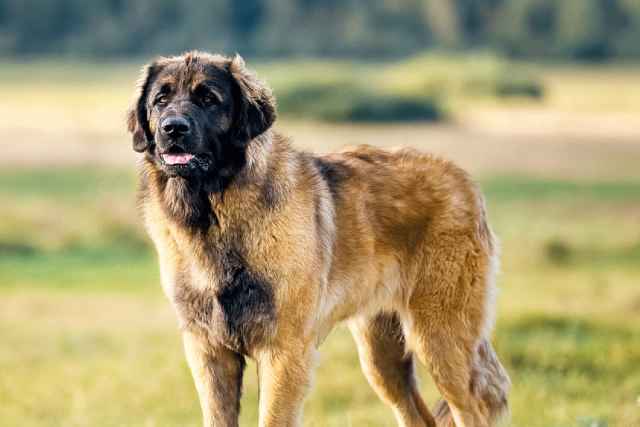
Originating in the 19th century in Leonberg, Germany, the Leonberger was meticulously bred by Mayor Heinrich Essig through crossing St. Bernards, Newfoundlands, and Pyrenean Mountain Dogs to resemble the lion on the town’s crest38. Nearly extinct after both World Wars, the breed was revived by dedicated breeders and officially recognized by the AKC in 201035.


As a giant working breed, males stand 72–80 cm tall and weigh 59–77 kg, while females exhibit comparable majesty at 65–74 cm and 45–59 kg36. Their iconic double coat—water-resistant and ranging from lion-yellow to red-brown—adorns a muscular frame with a striking black mask and a mane-like ruff, earning them the nickname "gentle lions"39. Despite their imposing size, Leonbergers are renowned for their calm, affectionate demeanor, excelling as devoted family companions with exceptional patience toward children711.


Historically used for carting, water rescue, and military transport, modern Leonbergers thrive in roles such as search-and-rescue and therapy work, leveraging their webbed paws and waterproof coat for aquatic missions8. However, their dense fur requires daily grooming to manage seasonal shedding, while health concerns like hip dysplasia (14.1% prevalence) and polyneuropathy necessitate proactive veterinary care311. Recent 2025 research identifies three genetic mutations (LPN1, LPN2, LPPN3) linked to neuromuscular disorders, with LPN1 affecting 8% of the breed and causing severe symptoms by age three21.


With a lifespan of 8–10 years, Leonbergers remain cherished for their loyalty and intelligence, though their global population remains under 10,000, preserving their status as a rare gem11. Notable in 2025, a high-profile incident in London involving a Leonberger in a pack attack underscored the importance of early socialization, despite such cases being statistically uncommon17. While the breed did not win accolades at the 2025 Westminster Kennel Club Show, their regal presence continues to captivate audiences worldwide
Latest Stories
Feline News2 minute readThe Oriental Longhair, a breed celebrated for its elegance and intelligence, traces its roots to mid-20th-century breeding programs aimed at expanding the color and pattern diversity of Siamese cats . Developed through crosses with breeds like Russian Blues and British Shorthairs, these cats gained recognition in the 1970s and were officially acknowledged by The International Cat Association (TICA) in 1979 and the Cat Fanciers' Association (CFA) in 1995 .
Feline News2 minute readThe Korat cat, originating from Thailand’s Nakhon Ratchasima province (formerly Korat), is a breed deeply rooted in history and cultural significance. Revered for centuries as a symbol of good luck and prosperity, these silver-blue felines have enchanted the world with their striking appearance and affectionate nature.
Feline News2 minute readA heartwarming tale of survival and companionship has thrust the Munchkin cat into the global spotlight, showcasing the breed’s unique charm and indomitable spirit. Mochi, an 8-month-old Munchkin rescued from a life-threatening illness, has become an international symbol of hope, embodying the resilience and playful nature that define these short-legged felines.
Travel News2 minute readPerched atop an 82-meter volcanic plug in Le Puy-en-Velay, France, the Chapelle Saint-Michel d’Aiguilhe stands as a testament to faith and engineering prowess. Built in 962 AD, this architectural marvel balances precariously on a basaltic rock formation, blending Romanesque austerity with Moorish-inspired ornamentation to create one of Europe’s most dramatic religious landmarks.
Feline News2 minute readRagamuffin cats, affectionately known as "muffins," have captured the hearts of cat lovers worldwide with their plush coats, docile personalities, and striking appearance. Originating in the United States in the 1990s, this breed emerged from a group of breeders seeking to expand the genetic diversity of Ragdoll cats. By crossing Ragdolls with Persians, Himalayans, and other long-haired breeds, they created a larger, more robust feline with a broader range of coat colors and patterns
Canine News2 minute readOriginating in the early 20th century, the American White Shepherd traces its lineage to the German Shepherd. Due to a recessive white coat gene, these dogs were long considered "flawed" in Germany and systematically culled from breeding programs12. However, North American breeders recognized their unique appeal and selectively developed them into a distinct breed, officially acknowledged by the United Kennel Club (UKC) in 199917
Canine News1 minute readAs the world's first operational vertical/short takeoff and landing (V/STOL) fighter jet, the British-developed Harrier, nicknamed the "Jump Jet," has left an indelible mark on aviation history through its groundbreaking design and combat prowess.