Majestic Scottish Deerhound: A Legacy of Grace and Courage


Canine News
Majestic Scottish Deerhound: A Legacy of Grace and Courage

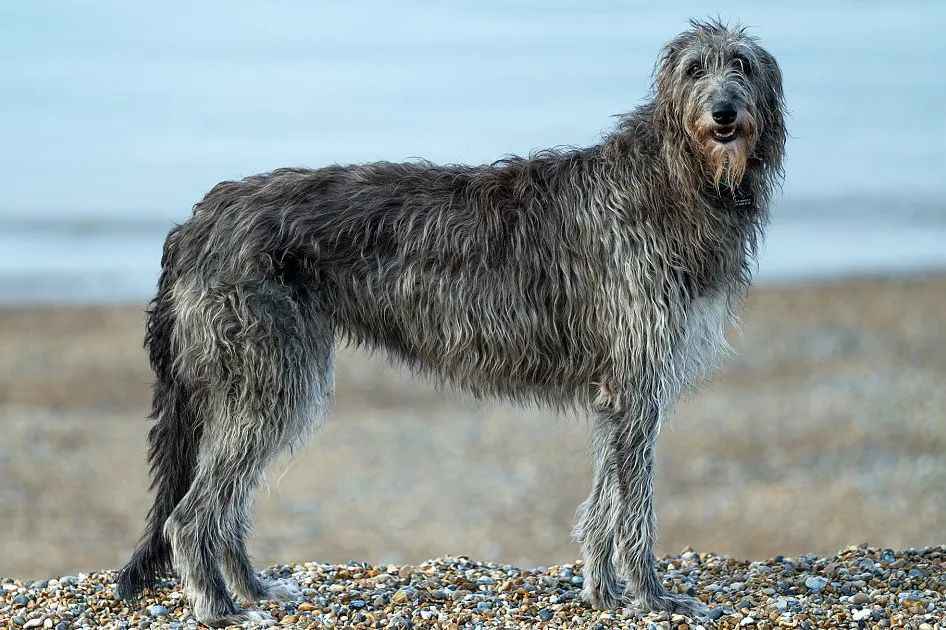
The Scottish Deerhound, often hailed as the "Royal Dog of Scotland," is a breed steeped in history and revered for its noble lineage. Originating in ancient Scotland, these regal hounds were meticulously bred to hunt the mighty red deer in the rugged Highlands, where their speed, agility, and unwavering courage made them indispensable to Scottish nobility. Medieval records reveal that only those of could own a Deerhound, and their value was so profound that three of these dogs could even secure a death-row noble’s reprieve1.


A Storied Past

By the 16th century, the breed’s role expanded beyond hunting, symbolizing power and prestige. However, their numbers dwindled drastically in the 18th century due to political upheavals like the Jacobite Rebellion and the rise of firearms, which reduced reliance on hunting dogs. A revival began in the 19th century when breeders like Duncan McNeill championed their preservation, restoring the Deerhound’s former glory14.

Distinctive Appearance and Temperament

Standing at 28–32 inches tall and weighing 75–110 pounds, the Deerhound is a towering presence with a wiry, weather-resistant coat in shades of gray, blue, or brindle. Their long, lean physique and deep chest reflect their ancestry as sighthounds, built for explosive speed. Despite their imposing stature, they are known for their gentle, affectionate nature, thriving as loyal companions in modern households468.

Health and Care

While the Deerhound’s lifespan averages 8–11 years, they face genetic health risks, including dilated cardiomyopathy, osteosarcoma (bone cancer), and gastric dilation-volvulus (bloat). Responsible breeders prioritize health screenings, such as cardiac exams and DNA tests for coagulation disorders, to mitigate these risks. Daily exercise—at least an hour of brisk activity—is essential to keep them physically and mentally stimulated, though they adapt well to a calm indoor lifestyle69.

Modern Relevance

Today, the Scottish Deerhound remains a rare breed, listed as "vulnerable" by the Kennel Club. While hunting is no longer their primary role, they excel in dog shows and as devoted family pets. Their intelligence and independent streak require patient training, but their serene demeanor makes them ideal for households seeking a dignified, low-key companion48.


In essence, the Scottish Deerhound embodies a perfect blend of ancient heritage and modern charm. From the misty Highlands to contemporary homes, this breed continues to captivate with its grace, resilience, and timeless allure.
Latest Stories
Travel News2 minute readNestled in the French Pre-Alps, the Plateau du Vercors stands as a testament to nature’s raw power and humanity’s indomitable spirit. Rising abruptly from the valleys of Isère, this limestone plateau—dominated by peaks like Grand Veymont (2,346 meters)—features sheer cliffs and labyrinthine gorges that earned it the nickname "the Natural Great Wall". Its dramatic landscapes, shaped over millennia by erosion, have not only sculpted a geological marvel but also forged a theater of historical significance.
Cultural News1 minute readSpain’s tomato-throwing "La Tomatina" is wildly popular, but for those who prefer hurling something tangier, head to Italy in February. At the Ivrea Carnival, thousands of ripe oranges are pelted in a juicy battle during the festival’s highlight.
Cultural News1 minute readIn Wuppertal, Germany, there’s a pedestrian bridge that looks like it’s built from giant Lego bricks. Though it’s actually a concrete structure, artists have painted it to mimic the iconic toy blocks, creating a playful optical illusion.
Feline News2 minute readThe European Burmese cat, a breed born from careful crossbreeding in mid-20th century Europe, has captivated cat enthusiasts with its elegant physique and affectionate nature. Originating from the American Burmese stock imported to the UK, European breeders sought to diversify the gene pool by introducing Siamese and British Shorthair bloodlines, resulting in a distinct feline with refined features. Recognized by major associations like the CFA since 2002, this breed stands out for its sleek, muscular build and striking golden or amber almond-shaped eyes, which contrast sharply with the rounde
Feline News2 minute readIn recent years, the Scottish Fold cat has become an internet sensation, celebrated for its distinctive folded ears and owl-like appearance. However, behind the adorable facade lies a dark reality rooted in genetic abnormality and ethical debate. This breed, born from a spontaneous mutation in a Scottish barn cat named Susie in 1961, has sparked global controversy over its health implications and breeding practices.
Feline News1 minute readOriginating from a spontaneous genetic mutation in 1950, the Cornish Rex emerged in Cornwall, England, when a cream-colored kitten named Kallibunker was born with a dense, wavy coat resembling a lamb’s fleece1. Recognizing its uniqueness, owner Nina Ennismore collaborated with geneticists to establish the breed. Due to the recessive nature of the mutation, breeding two Cornish Rex cats guarantees curly-coated offspring13.
Health News1 minute readOn June 30, FBI Deputy Director Dan Bongino announced the dismantling of the largest healthcare fraud case in U.S. history, with revised to $14.6 billion. The investigation covered all 50 federal districts, indicting 324 individuals—including 96 medical practitioners—and seizing $245 million in assets.