Meet the Donskoy: Russia’s Enigmatic Hairless Cat Breed


Feline News
Meet the Donskoy: Russia’s Enigmatic Hairless Cat Breed

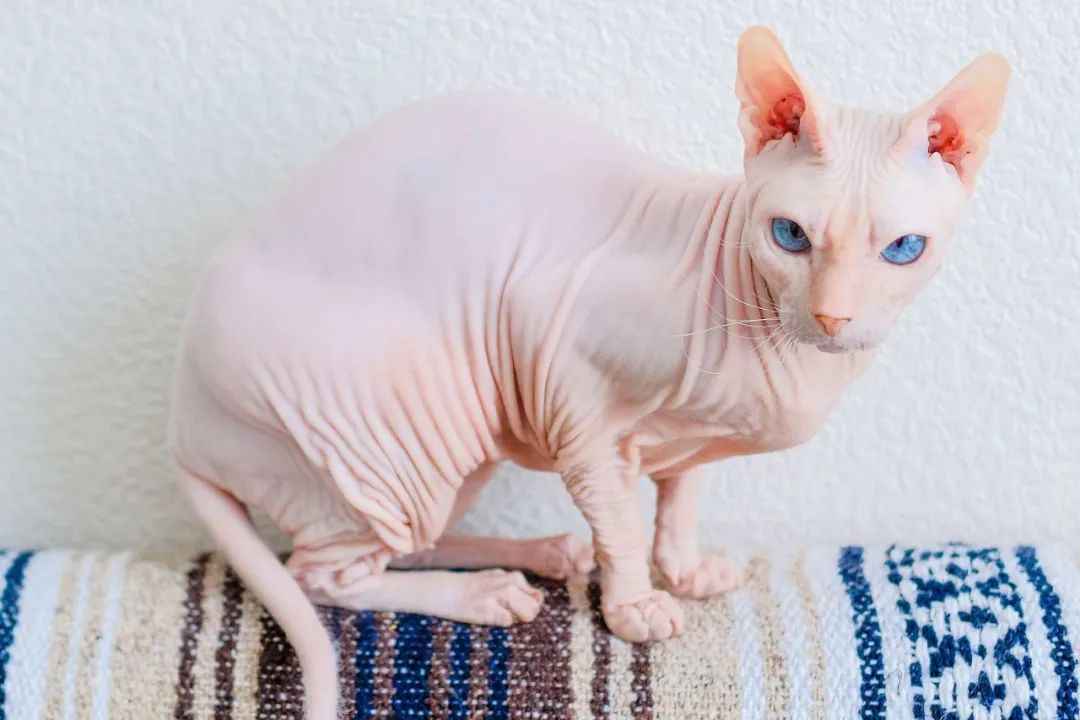
Originating from the city of Rostov-on-Don in Russia, the Donskoy cat, also known as the Don Sphynx, has captivated feline enthusiasts worldwide with its unique appearance and affectionate demeanor. First discovered in 1987 when Professor Elena Kovaleva rescued a hairless kitten named Varvara, the breed emerged from a natural genetic mutation that resulted in a lack of fur. Varvara’s subsequent litters produced both haired and hairless kittens, leading breeder Irina Nemykina to develop the Donskoy through selective breeding with European Shorthairs. Recognized by The International Cat Associat

A Spectrum of Coat Types

Contrary to the fully bald Sphynx, Donskoy cats exhibit four distinct coat variations: Rubber Bald (completely hairless), Flocked (fine, peach-like fuzz), Velour (woolly coat with bald patches), and Brush (sparse, wiry hair). Even hairless Donskoys may grow short, velvety fur in colder months, though it offers little insulation. Their skin, described as  (a suede-like hot water bottle), feels warm to the touch and requires daily wiping to remove excess oils.

Personality and Care

Donskoys are renowned for their dog-like loyalty and playful energy. They thrive on human interaction, often greeting visitors with head-butts and following owners like shadows. Despite their hairless exterior, they are highly active and agile, enjoying climbing and puzzle toys. However, their lack of fur makes them vulnerable to temperature extremes, requiring indoor living, heated beds in winter, and sunscreen during outdoor exposure. Regular baths (once or twice monthly) and dental care are essential to prevent skin infections and gum disease.
 

Source: Images from the Internet, if there is any infringement, please contact the removal of


Health Considerations

While generally robust, Donskoys may inherit hypertrophic cardiomyopathy (thickened heart muscles) and ectodermal dysplasia, a condition linked to dental issues and reduced sweat gland function. Responsible breeders screen for these genetic predispositions. Their high metabolism also necessitates a protein-rich diet to maintain body heat.

Distinguishing Features from Sphynx Cats

Unlike the Canadian Sphynx, which is uniformly bald, Donskoys display more coat diversity and a slightly smaller frame (females: 4–10 lbs; males: 6–12 lbs). Their almond-shaped eyes come in various colors, while Sphynx cats often have vivid, monochromatic eye hues. Both breeds share a hypoallergenic reputation, but Donskoys are noted for their higher energy levels and adaptability to multi-pet households.


Today, the Donskoy’s popularity extends beyond Russia, with breeders in the U.S., Europe, and Asia championing its unique traits. For those seeking a devoted, unconventional companion, this enigmatic hairless breed offers a blend of warmth, intelligence, and striking beauty.
Latest Stories
Travel News2 minute readNestled in the French Pre-Alps, the Plateau du Vercors stands as a testament to nature’s raw power and humanity’s indomitable spirit. Rising abruptly from the valleys of Isère, this limestone plateau—dominated by peaks like Grand Veymont (2,346 meters)—features sheer cliffs and labyrinthine gorges that earned it the nickname "the Natural Great Wall". Its dramatic landscapes, shaped over millennia by erosion, have not only sculpted a geological marvel but also forged a theater of historical significance.
Cultural News1 minute readSpain’s tomato-throwing "La Tomatina" is wildly popular, but for those who prefer hurling something tangier, head to Italy in February. At the Ivrea Carnival, thousands of ripe oranges are pelted in a juicy battle during the festival’s highlight.
Cultural News1 minute readIn Wuppertal, Germany, there’s a pedestrian bridge that looks like it’s built from giant Lego bricks. Though it’s actually a concrete structure, artists have painted it to mimic the iconic toy blocks, creating a playful optical illusion.
Feline News2 minute readThe European Burmese cat, a breed born from careful crossbreeding in mid-20th century Europe, has captivated cat enthusiasts with its elegant physique and affectionate nature. Originating from the American Burmese stock imported to the UK, European breeders sought to diversify the gene pool by introducing Siamese and British Shorthair bloodlines, resulting in a distinct feline with refined features. Recognized by major associations like the CFA since 2002, this breed stands out for its sleek, muscular build and striking golden or amber almond-shaped eyes, which contrast sharply with the rounde
Feline News2 minute readIn recent years, the Scottish Fold cat has become an internet sensation, celebrated for its distinctive folded ears and owl-like appearance. However, behind the adorable facade lies a dark reality rooted in genetic abnormality and ethical debate. This breed, born from a spontaneous mutation in a Scottish barn cat named Susie in 1961, has sparked global controversy over its health implications and breeding practices.
Feline News1 minute readOriginating from a spontaneous genetic mutation in 1950, the Cornish Rex emerged in Cornwall, England, when a cream-colored kitten named Kallibunker was born with a dense, wavy coat resembling a lamb’s fleece1. Recognizing its uniqueness, owner Nina Ennismore collaborated with geneticists to establish the breed. Due to the recessive nature of the mutation, breeding two Cornish Rex cats guarantees curly-coated offspring13.
Health News1 minute readOn June 30, FBI Deputy Director Dan Bongino announced the dismantling of the largest healthcare fraud case in U.S. history, with revised to $14.6 billion. The investigation covered all 50 federal districts, indicting 324 individuals—including 96 medical practitioners—and seizing $245 million in assets.