Nausicaä Aquarium: Europe's Largest Marine Wonderland in France


Travel News
Nausicaä Aquarium: Europe's Largest Marine Wonderland in France

Boulogne-sur-Mer, France – Nestled along the Opal Coast, Aquarium Nausicaä stands as Europe's largest aquarium, captivating visitors with its immersive marine experiences and groundbreaking conservation efforts. With a mission to bridge wonder and education, this national sea center spans 10,000 square meters, housing 58,000 marine creatures across 1,600 species.


Boulogne-sur-Mer, France – Nestled along the Opal Coast, Aquarium Nausicaä stands as Europe's largest aquarium, captivating visitors with its immersive marine experiences and groundbreaking conservation efforts. With a mission to bridge wonder and education, this national sea center spans 10,000 square meters, housing 58,000 marine creatures across 1,600 species.

A Technological Marvel

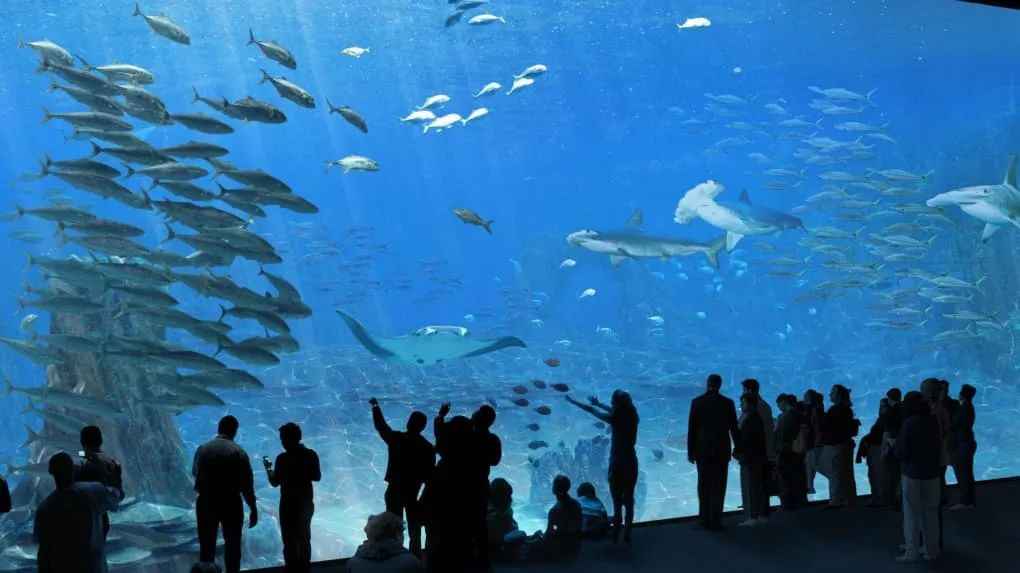
The aquarium’s crown jewel is the Grand Large exhibit, featuring Europe’s largest single tank at 10,000 cubic meters (2.6 million gallons). This colossal structure, modeled after Colombia’s Malpelo Island, recreates the open ocean ecosystem, allowing visitors to observe hammerhead sharks, manta rays, and schools of fish through a 20-meter-long, 5-meter-high viewing panel – the continent’s largest. An 18-meter transparent tunnel further enhances the experience, offering panoramic views of these majestic creatures in their simulated natural habitat.

Biodiversity and Conservation

Nausicaä’s commitment to marine preservation is evident in its European conservation programs, particularly for endangered species like African penguins and orange cup corals. The aquarium also collaborates with startups through its Blue Living Lab, testing eco-friendly solutions such as 3D-printed marine structures to combat coastal erosion.


Educational initiatives, including guided tours and interactive workshops, aim to raise awareness about climate change and sustainable ocean practices. A new 2024 exhibit, Destination Abyss, delves into the rarely seen deep-sea ecosystems, highlighting the fragility of these environments.

Visitor Experience

Open year-round, Nausicaä offers flexible visiting options, including discounted rates for families and educational groups. The Mankind and Shores exhibition traces humanity’s relationship with the sea, while the Eye of the Climate immersive space uses 430 square meters of screens to simulate climate impacts like hurricanes and rising sea levels.


For an extra thrill, visitors can don augmented reality headsets to “swim” alongside holographic giants like whale sharks and leatherback turtles in the Grand Large tank.

Practical Details

  • Location: Boulevard Sainte-Beuve, 62200 Boulogne-sur-Mer, France
  • Admission: €28.50–€30 for adults; €21.50–€23 for children (ages 3–12)
  • Hours: 9:30 AM–6:30 PM daily (extended hours in summer)
  • Access: Just 20 minutes from Calais Port or a 2.5-hour drive from Paris


Nausicaä isn’t merely an aquarium – it’s a call to action. By blending cutting-edge technology with heartfelt storytelling, it invites visitors to become stewards of the ocean, ensuring its wonders endure for generations. As UNESCO’s Center of Excellence for Marine Environmental Education, it continues to set a global standard for marine conservation and public engagement.
Latest Stories
Travel News2 minute readNestled in the French Pre-Alps, the Plateau du Vercors stands as a testament to nature’s raw power and humanity’s indomitable spirit. Rising abruptly from the valleys of Isère, this limestone plateau—dominated by peaks like Grand Veymont (2,346 meters)—features sheer cliffs and labyrinthine gorges that earned it the nickname "the Natural Great Wall". Its dramatic landscapes, shaped over millennia by erosion, have not only sculpted a geological marvel but also forged a theater of historical significance.
Cultural News1 minute readSpain’s tomato-throwing "La Tomatina" is wildly popular, but for those who prefer hurling something tangier, head to Italy in February. At the Ivrea Carnival, thousands of ripe oranges are pelted in a juicy battle during the festival’s highlight.
Cultural News1 minute readIn Wuppertal, Germany, there’s a pedestrian bridge that looks like it’s built from giant Lego bricks. Though it’s actually a concrete structure, artists have painted it to mimic the iconic toy blocks, creating a playful optical illusion.
Feline News2 minute readThe European Burmese cat, a breed born from careful crossbreeding in mid-20th century Europe, has captivated cat enthusiasts with its elegant physique and affectionate nature. Originating from the American Burmese stock imported to the UK, European breeders sought to diversify the gene pool by introducing Siamese and British Shorthair bloodlines, resulting in a distinct feline with refined features. Recognized by major associations like the CFA since 2002, this breed stands out for its sleek, muscular build and striking golden or amber almond-shaped eyes, which contrast sharply with the rounde
Feline News2 minute readIn recent years, the Scottish Fold cat has become an internet sensation, celebrated for its distinctive folded ears and owl-like appearance. However, behind the adorable facade lies a dark reality rooted in genetic abnormality and ethical debate. This breed, born from a spontaneous mutation in a Scottish barn cat named Susie in 1961, has sparked global controversy over its health implications and breeding practices.
Feline News1 minute readOriginating from a spontaneous genetic mutation in 1950, the Cornish Rex emerged in Cornwall, England, when a cream-colored kitten named Kallibunker was born with a dense, wavy coat resembling a lamb’s fleece1. Recognizing its uniqueness, owner Nina Ennismore collaborated with geneticists to establish the breed. Due to the recessive nature of the mutation, breeding two Cornish Rex cats guarantees curly-coated offspring13.
Health News1 minute readOn June 30, FBI Deputy Director Dan Bongino announced the dismantling of the largest healthcare fraud case in U.S. history, with revised to $14.6 billion. The investigation covered all 50 federal districts, indicting 324 individuals—including 96 medical practitioners—and seizing $245 million in assets.