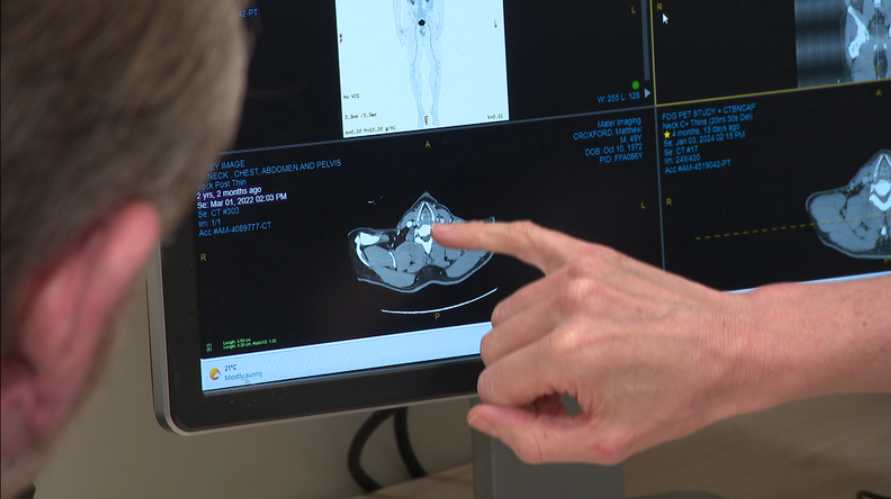
IT Home News on April 20 - A recent study has sounded the alarm on the excessive use of computed tomography (CT) scans, pointing out that approximately 5% of new cancer diagnoses each year may be associated with radiation exposure from CT scans. Since 2007, the usage of CT scans in the United States has increased by 30%.
The study was conducted by researchers from the University of California, San Francisco (UCSF). Through statistical modeling, they estimated that the 93 million CT examinations performed on 62 million patients in the United States in 2023 could potentially lead to more than 103,000 new cancer cases.
Dr. Rebecca Smith-Bindman, the first author of the study, a radiologist at UCSF and a professor of epidemiology, biostatistics, and obstetrics and gynecology, stated, "CT scans can save lives, but their potential harm is often overlooked. Given the high volume of CT scans in the US, if current usage habits don't change, a large number of cancer cases may emerge in the future." She added that the cancer risk from CT scans is comparable to other significant risk factors such as alcohol consumption and being overweight. "Reducing the number of scans and the radiation dose per scan can save lives."
However, for patients, while understanding this risk, they also need to recognize that the benefits of undergoing a CT scan still far outweigh the risks. Professor Stephen Duffy from Queen Mary University of London said, "The study estimates that there are about 100,000 cancer cases caused by radiation from CT scans, which means that each CT scan increases a patient's lifetime cancer risk by approximately 0.1%. Considering that the lifetime cancer risk in the general population is about 50%, this additional risk is relatively small."
As IT Home has learned, the researchers estimated the number of future cancer cases that could potentially be caused by the radiation from CT scans received by patients in 2023. CT scans use ionizing radiation, and high doses of radiation exposure have been associated with an increased risk of cancer. But the research team clearly pointed out that their model-based estimates do not indicate a causal relationship and do not establish a direct link between CT scans and cancer.
Nevertheless, this study does highlight the problem that Americans are receiving too many CT scans and being exposed to unnecessary radiation. Doreen Lau, a lecturer at Brunel University London, commented, "This is a well-conducted modeling study that uses reliable data from US hospitals and established methods to estimate the cancer risk caused by radiation exposure. It serves as a timely reminder that although CT scans are often life-saving and crucial for diagnosis, they do carry a small but real risk that could contribute to cancer over a lifetime, especially when used repeatedly, for young patients, or when not clinically necessary."
She added, "The study results do not mean that people should refuse CT scans when recommended by their doctors. In most cases, the benefits of detecting or ruling out serious diseases far exceed the very small risk of harm. What this study emphasizes is the need to minimize unnecessary imaging examinations and use the lowest possible dose whenever possible, especially in settings with a high volume of CT usage. When appropriate, clinicians can also consider using alternative imaging methods that do not involve ionizing radiation, such as magnetic resonance imaging (MRI) or ultrasound - especially for young patients or cases where repeated imaging is expected."
As emphasized in the paper, both the study authors and external reviewers agree that when there are other options available, efforts should be made to reduce the number of scans, rather than having people avoid CT scans based on predicted risks. Professor Richard Wakeford, an honorary professor of epidemiology at the Centre for Occupational and Environmental Health at the University of Manchester, pointed out, "When determining whether a CT scan is clinically necessary, the potential risks associated with low-dose radiation exposure should be considered, but this judgment should not be overly influenced by large but uncertain cancer prediction figures."
The original study was published in JAMA Internal Medicine.