Pumi: Hungary's Versatile Herding Dog Conquers Global Stages


Canine News
Pumi: Hungary's Versatile Herding Dog Conquers Global Stages

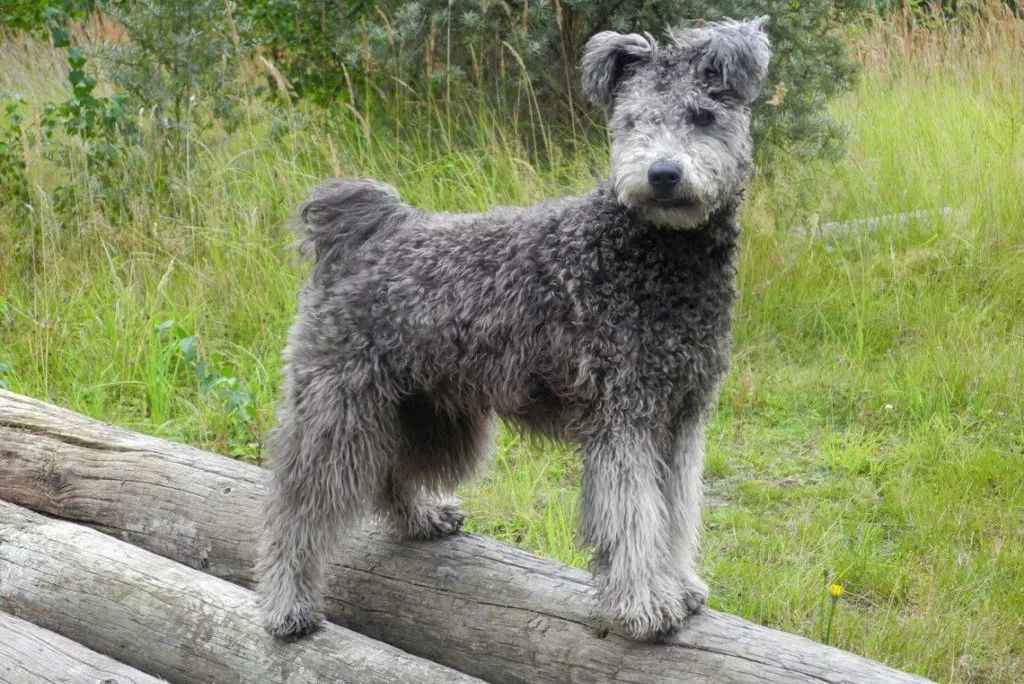
The Pumi, one of Hungary’s oldest herding breeds, has recently drawn international attention for its exceptional working abilities and lively demeanor. Originating in the 17th century, this breed was developed by crossing the Puli with European herding dogs and terriers, initially tasked with driving cattle and sheep through narrow pastures23. In 2016, the American Kennel Club (AKC) officially recognized the Pumi as its 190th breed, marking a significant milestone in its transition from traditional farms to the global spotlight1


A Perfect Blend of Playfulness and Intelligence
Standing at 43-45 cm (males) and 40-42 cm (females), the Pumi features a distinctive curly coat and upright "bunny-like" ears, giving it a whimsical appearance38. Its dense, non-shedding fur comes in solid colors like black, white, gray, or blended tones, requiring regular brushing to maintain its signature curls310. As a herder, the Pumi demonstrates remarkable agility and fearlessness, capable of independently managing livestock across challenging terrains313. While highly trainable and loyal to its family, it remains cautious with strangers, necessitating early socialization to foster friendliness39.


Dual Roles: Working Dog and Beloved Companion
In Hungarian rural areas, the Pumi continues to excel as an efficient livestock handler, using barking and gentle nipping to guide animals38. Its energetic nature has also made it a popular family pet, particularly in Nordic countries like Finland35. As a companion, the Pumi thrives on outdoor activities, excelling in agility training, frisbee chasing, and even swimming913. However, its herding instincts may lead to attempts to "control" children or other pets, requiring positive reinforcement training to curb such behaviors912.


Health and Care: A Long-Lived and Low-Maintenance Breed
With a lifespan of 12-14 years, the Pumi is generally healthy, though hip dysplasia and primary lens luxation are potential concerns1012. Grooming involves brushing every 3-6 weeks to preserve its curls, with minimal trimming needed1013. To prevent boredom-related issues, daily exercise—such as jogging or interactive play—is essential for channeling its boundless energy913.


Global Impact: From Westminster to Finnish Fame
Since AKC recognition, the Pumi has debuted at prestigious events like the Westminster Kennel Club Dog Show, captivating judges with its agility and charisma1. In Finland, it has become the most beloved Hungarian herding breed, celebrated equally for its working prowess and companionship35. As its unique appeal spreads, the Pumi is evolving from a regional specialty to a globally recognized versatile canine partner.
Latest Stories
Travel News2 minute readNestled in the French Pre-Alps, the Plateau du Vercors stands as a testament to nature’s raw power and humanity’s indomitable spirit. Rising abruptly from the valleys of Isère, this limestone plateau—dominated by peaks like Grand Veymont (2,346 meters)—features sheer cliffs and labyrinthine gorges that earned it the nickname "the Natural Great Wall". Its dramatic landscapes, shaped over millennia by erosion, have not only sculpted a geological marvel but also forged a theater of historical significance.
Cultural News1 minute readSpain’s tomato-throwing "La Tomatina" is wildly popular, but for those who prefer hurling something tangier, head to Italy in February. At the Ivrea Carnival, thousands of ripe oranges are pelted in a juicy battle during the festival’s highlight.
Cultural News1 minute readIn Wuppertal, Germany, there’s a pedestrian bridge that looks like it’s built from giant Lego bricks. Though it’s actually a concrete structure, artists have painted it to mimic the iconic toy blocks, creating a playful optical illusion.
Feline News2 minute readThe European Burmese cat, a breed born from careful crossbreeding in mid-20th century Europe, has captivated cat enthusiasts with its elegant physique and affectionate nature. Originating from the American Burmese stock imported to the UK, European breeders sought to diversify the gene pool by introducing Siamese and British Shorthair bloodlines, resulting in a distinct feline with refined features. Recognized by major associations like the CFA since 2002, this breed stands out for its sleek, muscular build and striking golden or amber almond-shaped eyes, which contrast sharply with the rounde
Feline News2 minute readIn recent years, the Scottish Fold cat has become an internet sensation, celebrated for its distinctive folded ears and owl-like appearance. However, behind the adorable facade lies a dark reality rooted in genetic abnormality and ethical debate. This breed, born from a spontaneous mutation in a Scottish barn cat named Susie in 1961, has sparked global controversy over its health implications and breeding practices.
Feline News1 minute readOriginating from a spontaneous genetic mutation in 1950, the Cornish Rex emerged in Cornwall, England, when a cream-colored kitten named Kallibunker was born with a dense, wavy coat resembling a lamb’s fleece1. Recognizing its uniqueness, owner Nina Ennismore collaborated with geneticists to establish the breed. Due to the recessive nature of the mutation, breeding two Cornish Rex cats guarantees curly-coated offspring13.
Health News1 minute readOn June 30, FBI Deputy Director Dan Bongino announced the dismantling of the largest healthcare fraud case in U.S. history, with revised to $14.6 billion. The investigation covered all 50 federal districts, indicting 324 individuals—including 96 medical practitioners—and seizing $245 million in assets.