The "Giant Panda of the Water": Yangtze Finless Porpoises


Marine Biology
The "Giant Panda of the Water": Yangtze Finless Porpoises

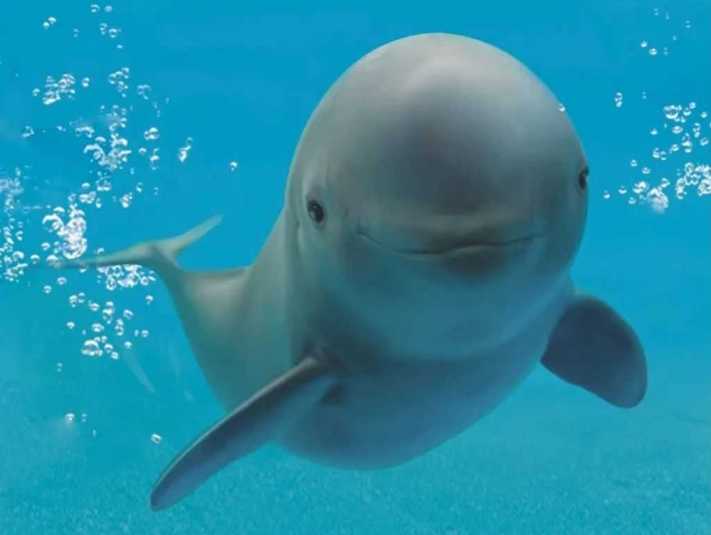
In the waters of the Yangtze River and its coastal regions dwells a diminutive cetacean known as the Yangtze finless porpoise, revered as the "giant panda of the water." Measuring about 1.5 meters in length, this critically endangered species is a national first-class protected animal, with its population teetering on the edge of survival. Its unique appearance and ecological significance make it a symbol of urgency for freshwater conservation.

Source: Images from the Internet, if there is any infringement, please contact the removal of


The porpoise’s most endearing traits lie in its rotund, spindle-shaped body and perpetually cheerful expression. Lacking a pronounced beak, its mouth curves upward naturally, forming a permanent "smile" that has charmed observers for decades. Its smooth, gray-black skin glistens as it twists and turns through the water, often leaping playfully at the surface—a behavior that highlights its agility and curious nature. This combination of plump form and spirited demeanor has solidified its reputation as one of China’s most beloved marine creatures.


Tragically, the Yangtze finless porpoise faces grave threats, including habitat degradation, water pollution, and accidental entanglement in fishing gear. With fewer individuals remaining than giant pandas, conservation efforts have intensified, including the establishment of protected reserves and bans on fishing in key habitats. Scientists and activists emphasize the species’ role as an indicator of Yangtze River health, warning that its decline reflects broader ecological crises in the region. As these "smiling ambassadors" of the water fight for survival, their story serves as a poignant reminder of humanity’s responsibility to protect Earth’s fragile biodiversity before it’s too late.

Latest Stories
Feline News2 minute readThe Oriental Longhair, a breed celebrated for its elegance and intelligence, traces its roots to mid-20th-century breeding programs aimed at expanding the color and pattern diversity of Siamese cats . Developed through crosses with breeds like Russian Blues and British Shorthairs, these cats gained recognition in the 1970s and were officially acknowledged by The International Cat Association (TICA) in 1979 and the Cat Fanciers' Association (CFA) in 1995 .
Feline News2 minute readThe Korat cat, originating from Thailand’s Nakhon Ratchasima province (formerly Korat), is a breed deeply rooted in history and cultural significance. Revered for centuries as a symbol of good luck and prosperity, these silver-blue felines have enchanted the world with their striking appearance and affectionate nature.
Feline News2 minute readA heartwarming tale of survival and companionship has thrust the Munchkin cat into the global spotlight, showcasing the breed’s unique charm and indomitable spirit. Mochi, an 8-month-old Munchkin rescued from a life-threatening illness, has become an international symbol of hope, embodying the resilience and playful nature that define these short-legged felines.
Travel News2 minute readPerched atop an 82-meter volcanic plug in Le Puy-en-Velay, France, the Chapelle Saint-Michel d’Aiguilhe stands as a testament to faith and engineering prowess. Built in 962 AD, this architectural marvel balances precariously on a basaltic rock formation, blending Romanesque austerity with Moorish-inspired ornamentation to create one of Europe’s most dramatic religious landmarks.
Feline News2 minute readRagamuffin cats, affectionately known as "muffins," have captured the hearts of cat lovers worldwide with their plush coats, docile personalities, and striking appearance. Originating in the United States in the 1990s, this breed emerged from a group of breeders seeking to expand the genetic diversity of Ragdoll cats. By crossing Ragdolls with Persians, Himalayans, and other long-haired breeds, they created a larger, more robust feline with a broader range of coat colors and patterns
Canine News2 minute readOriginating in the early 20th century, the American White Shepherd traces its lineage to the German Shepherd. Due to a recessive white coat gene, these dogs were long considered "flawed" in Germany and systematically culled from breeding programs12. However, North American breeders recognized their unique appeal and selectively developed them into a distinct breed, officially acknowledged by the United Kennel Club (UKC) in 199917
Canine News1 minute readAs the world's first operational vertical/short takeoff and landing (V/STOL) fighter jet, the British-developed Harrier, nicknamed the "Jump Jet," has left an indelible mark on aviation history through its groundbreaking design and combat prowess.