The Sea Pen: Ocean’s Feathery Colonial Wonder Filtering Plankton from the Depths


Marine Biology
The Sea Pen: Ocean’s Feathery Colonial Wonder Filtering Plankton from the Depths

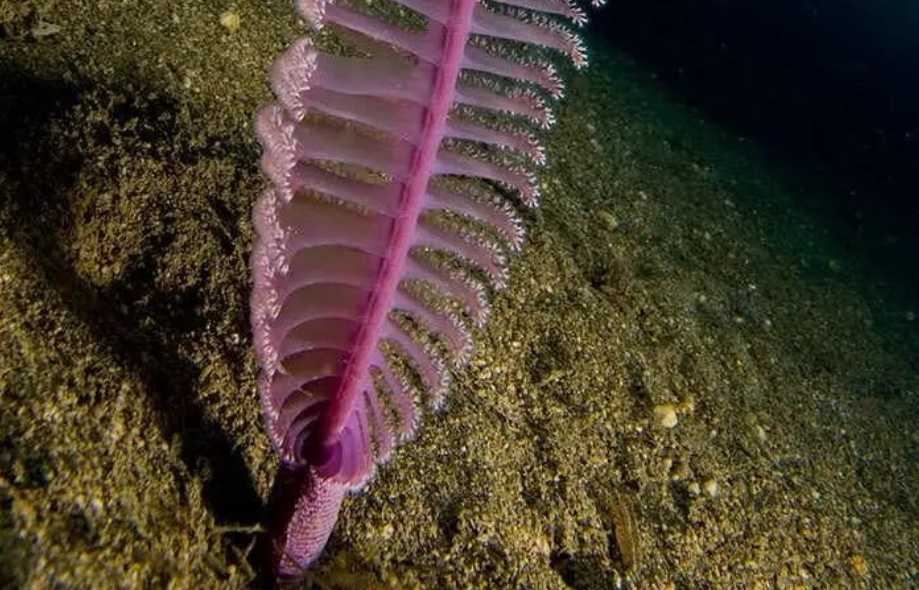
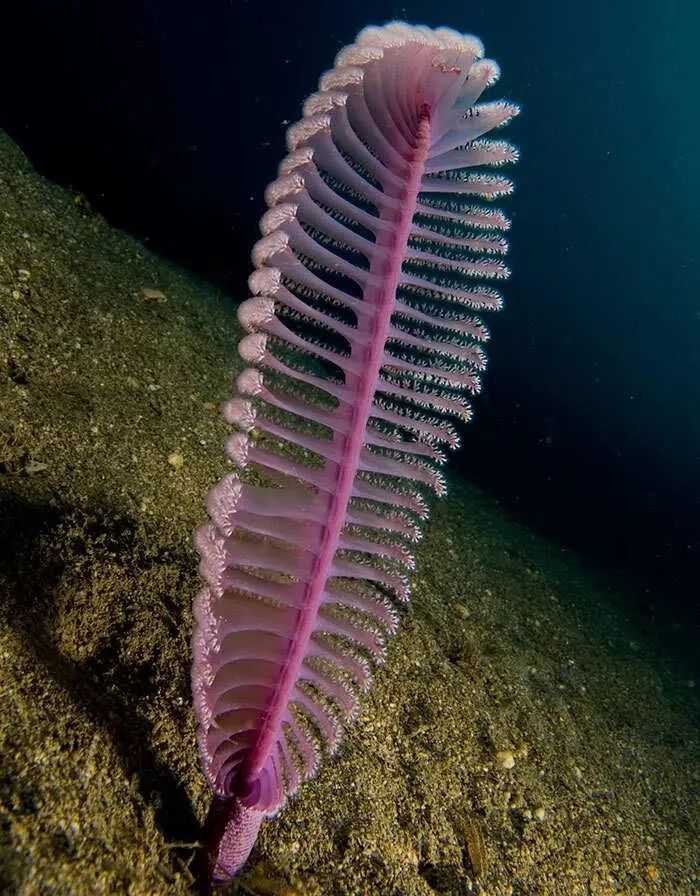
Recognized for its striking resemblance to a quill pen, the sea pen is a colonial marine invertebrate that thrives in shallow to deep ocean waters. Composed of hundreds to thousands of polyps, these colonial organisms form feather-like structures, using their unique anatomy to capture plankton and thrive in diverse marine environments.

Source: Images from the Internet, if there is any infringement, please contact the removal of


A Living Feather: Anatomy and Colonial Adaptations

  • Structure of a Sea Pen
    The sea pen features a central stalk (rachis) anchored in the seafloor by a bulbous holdfast. Along the rachis, lateral branches bear numerous polyps:
    • Autozooids: Larger feeding polyps with tentacles that sweep plankton from the water.
    • Siphonozooids: Smaller polyps that pump water through the colony, aiding feeding and waste removal.
      This colonial design allows sea pens to grow up to 1 meter tall, with colors ranging from pale yellow to red or purple based on species and habitat.
  • Bioluminescence in the Dark
    Many sea pens emit a blue-green light when disturbed, a defense mechanism thought to startle predators. The bioluminescent chemicals, produced by specialized cells in the polyps, add to their otherworldly allure in the ocean’s twilight zones.

Feeding and Life in the Ocean

  • Filter Feeding Strategy
    Sea pens extend their tentacles to capture microscopic plankton, using cilia to move prey toward their mouths. Each autozooid functions independently, while the colony shares nutrients through a common gastrovascular cavity for collective survival.
  • Habitat and Distribution
    Found in temperate to tropical seas, sea pens prefer soft sediments like sand or mud, where their holdfasts anchor securely. They thrive in areas with moderate water flow, which delivers a steady plankton supply. Some species inhabit deep waters, while others retract into sand during low tide in intertidal zones.

Ecological Role and Conservation

As filter feeders, sea pens clarify water and recycle nutrients. Their colonies provide habitat for small invertebrates, fish, and crustaceans, acting as oases in otherwise barren seafloors.


While not currently endangered, sea pens face threats from bottom trawling, coastal development, and ocean acidification. Their sensitivity to sediment disturbance makes them indicators of marine health. Protecting their habitats—from shallow estuaries to deep-sea plains—remains crucial for preserving these living "feathers" of the ocean, blending biological ingenuity with striking beauty.
Latest Stories
Feline News2 minute readThe Oriental Longhair, a breed celebrated for its elegance and intelligence, traces its roots to mid-20th-century breeding programs aimed at expanding the color and pattern diversity of Siamese cats . Developed through crosses with breeds like Russian Blues and British Shorthairs, these cats gained recognition in the 1970s and were officially acknowledged by The International Cat Association (TICA) in 1979 and the Cat Fanciers' Association (CFA) in 1995 .
Feline News2 minute readThe Korat cat, originating from Thailand’s Nakhon Ratchasima province (formerly Korat), is a breed deeply rooted in history and cultural significance. Revered for centuries as a symbol of good luck and prosperity, these silver-blue felines have enchanted the world with their striking appearance and affectionate nature.
Feline News2 minute readA heartwarming tale of survival and companionship has thrust the Munchkin cat into the global spotlight, showcasing the breed’s unique charm and indomitable spirit. Mochi, an 8-month-old Munchkin rescued from a life-threatening illness, has become an international symbol of hope, embodying the resilience and playful nature that define these short-legged felines.
Travel News2 minute readPerched atop an 82-meter volcanic plug in Le Puy-en-Velay, France, the Chapelle Saint-Michel d’Aiguilhe stands as a testament to faith and engineering prowess. Built in 962 AD, this architectural marvel balances precariously on a basaltic rock formation, blending Romanesque austerity with Moorish-inspired ornamentation to create one of Europe’s most dramatic religious landmarks.
Feline News2 minute readRagamuffin cats, affectionately known as "muffins," have captured the hearts of cat lovers worldwide with their plush coats, docile personalities, and striking appearance. Originating in the United States in the 1990s, this breed emerged from a group of breeders seeking to expand the genetic diversity of Ragdoll cats. By crossing Ragdolls with Persians, Himalayans, and other long-haired breeds, they created a larger, more robust feline with a broader range of coat colors and patterns
Canine News2 minute readOriginating in the early 20th century, the American White Shepherd traces its lineage to the German Shepherd. Due to a recessive white coat gene, these dogs were long considered "flawed" in Germany and systematically culled from breeding programs12. However, North American breeders recognized their unique appeal and selectively developed them into a distinct breed, officially acknowledged by the United Kennel Club (UKC) in 199917
Canine News1 minute readAs the world's first operational vertical/short takeoff and landing (V/STOL) fighter jet, the British-developed Harrier, nicknamed the "Jump Jet," has left an indelible mark on aviation history through its groundbreaking design and combat prowess.