A Delightful Discovery: Unveiling the "Adorable" Octopus


Marine Biology
A Delightful Discovery: Unveiling the "Adorable" Octopus

In 2015, a team of marine biologists from the Monterey Bay Aquarium Research Institute (MBARI) in the United States embarked on an expedition with a specific focus on exploring the rich marine life of the local waters. Equipped with state - of - the - art remotely operated vehicles (ROVs) and a wealth of scientific knowledge, they were ready to uncover the secrets hidden beneath the ocean's surface.


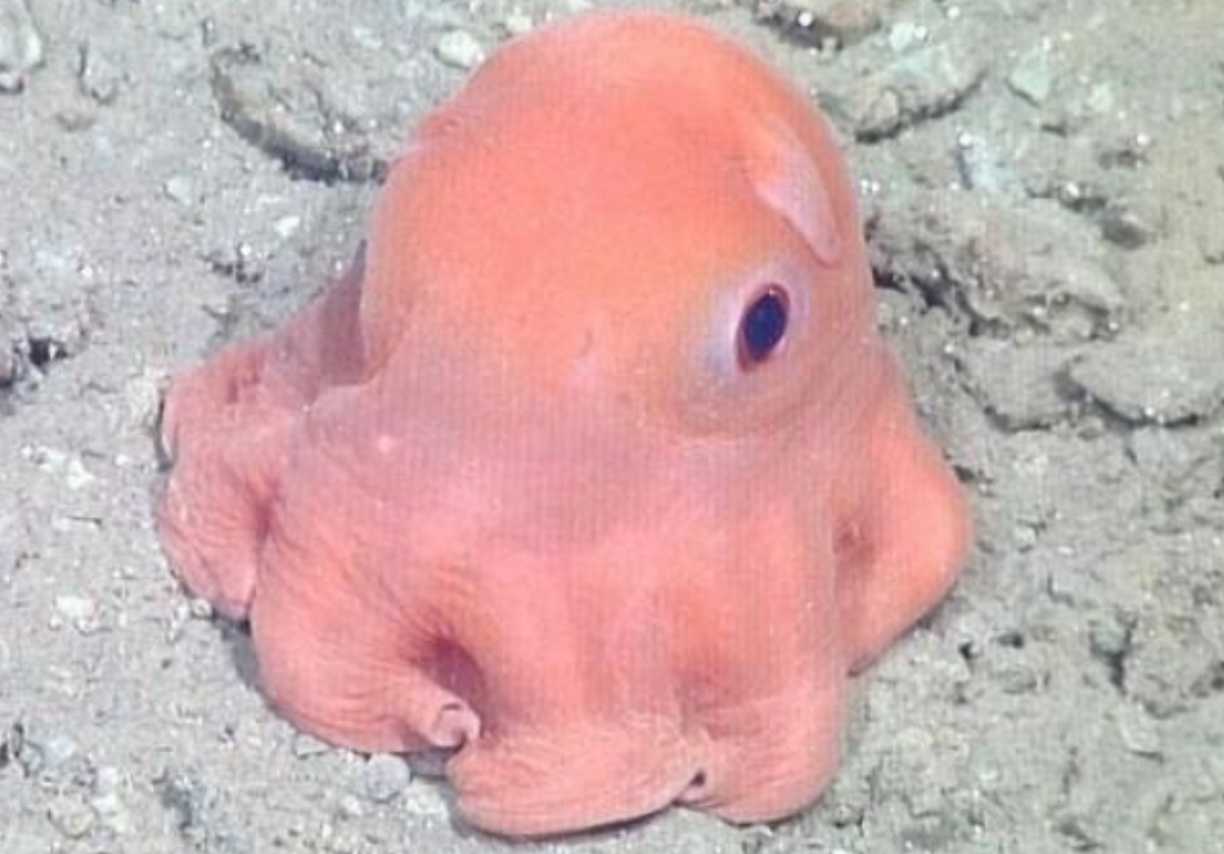
During one of their dives to a depth of around 450 meters, the ROV's high - definition cameras captured something extraordinary. There, in the dimly lit deep - sea environment, were several small octopuses with a distinct appearance. Their bodies were a soft, enchanting shade of pink, which immediately set them apart from the more commonly known octopus species. What was even more captivating were their large, puppy - like eyes that seemed to reflect the mystery of the deep.


The lead scientist, Dr. Stephanie Bush, was overseeing the operation from the research vessel. As soon as the images of these octopuses were relayed to the ship, she was astounded. "We had never seen anything like this before. Their cuteness was just overwhelming," she later recalled. The team carefully observed the behavior of these newfound creatures. They noticed that the octopuses had a pair of small, fin - like structures on their heads that flapped gently as they moved, adding to their charm. When they felt threatened by the presence of the ROV, they would instinctively bring their eight tentacles up to cover their faces, a behavior that made them even more endearing.


Back at the laboratory, the team analyzed the data collected from the ROV, including high - resolution images and video footage. They measured the size of these octopuses and found that they had a body diameter of approximately 18 centimeters. Their unique features and behavior indicated that they belonged to a species previously unknown to science. Given their irresistibly cute appearance, Dr. Bush proposed the name "adorable octopus," or in a more scientific context, they considered the name "Opisthotheusis Adorabilis."


These "adorable octopuses" were then transferred to a specially designed aquarium at the Monterey Bay Aquarium, where they could be studied more closely in a controlled environment. To mimic their natural deep - sea habitat, the aquarium was maintained at a low temperature, and a special lighting system was installed to replicate the dim light conditions of 450 - meter - deep waters. To everyone's delight, one of the octopuses soon laid eggs, providing further opportunities for research into their reproductive biology. Although it was estimated that the eggs would take a staggering three years to hatch, the discovery of these octopuses had already opened up new avenues for understanding the diversity of deep - sea life and the unique adaptations that allow creatures to thrive in such extreme environments.
Latest Stories
Feline News2 minute readThe Oriental Longhair, a breed celebrated for its elegance and intelligence, traces its roots to mid-20th-century breeding programs aimed at expanding the color and pattern diversity of Siamese cats . Developed through crosses with breeds like Russian Blues and British Shorthairs, these cats gained recognition in the 1970s and were officially acknowledged by The International Cat Association (TICA) in 1979 and the Cat Fanciers' Association (CFA) in 1995 .
Feline News2 minute readThe Korat cat, originating from Thailand’s Nakhon Ratchasima province (formerly Korat), is a breed deeply rooted in history and cultural significance. Revered for centuries as a symbol of good luck and prosperity, these silver-blue felines have enchanted the world with their striking appearance and affectionate nature.
Feline News2 minute readA heartwarming tale of survival and companionship has thrust the Munchkin cat into the global spotlight, showcasing the breed’s unique charm and indomitable spirit. Mochi, an 8-month-old Munchkin rescued from a life-threatening illness, has become an international symbol of hope, embodying the resilience and playful nature that define these short-legged felines.
Travel News2 minute readPerched atop an 82-meter volcanic plug in Le Puy-en-Velay, France, the Chapelle Saint-Michel d’Aiguilhe stands as a testament to faith and engineering prowess. Built in 962 AD, this architectural marvel balances precariously on a basaltic rock formation, blending Romanesque austerity with Moorish-inspired ornamentation to create one of Europe’s most dramatic religious landmarks.
Feline News2 minute readRagamuffin cats, affectionately known as "muffins," have captured the hearts of cat lovers worldwide with their plush coats, docile personalities, and striking appearance. Originating in the United States in the 1990s, this breed emerged from a group of breeders seeking to expand the genetic diversity of Ragdoll cats. By crossing Ragdolls with Persians, Himalayans, and other long-haired breeds, they created a larger, more robust feline with a broader range of coat colors and patterns
Canine News2 minute readOriginating in the early 20th century, the American White Shepherd traces its lineage to the German Shepherd. Due to a recessive white coat gene, these dogs were long considered "flawed" in Germany and systematically culled from breeding programs12. However, North American breeders recognized their unique appeal and selectively developed them into a distinct breed, officially acknowledged by the United Kennel Club (UKC) in 199917
Canine News1 minute readAs the world's first operational vertical/short takeoff and landing (V/STOL) fighter jet, the British-developed Harrier, nicknamed the "Jump Jet," has left an indelible mark on aviation history through its groundbreaking design and combat prowess.