American Bobtail: A Perfect Fusion of Wilderness and Domestic Affection


Feline News
American Bobtail: A Perfect Fusion of Wilderness and Domestic Affection

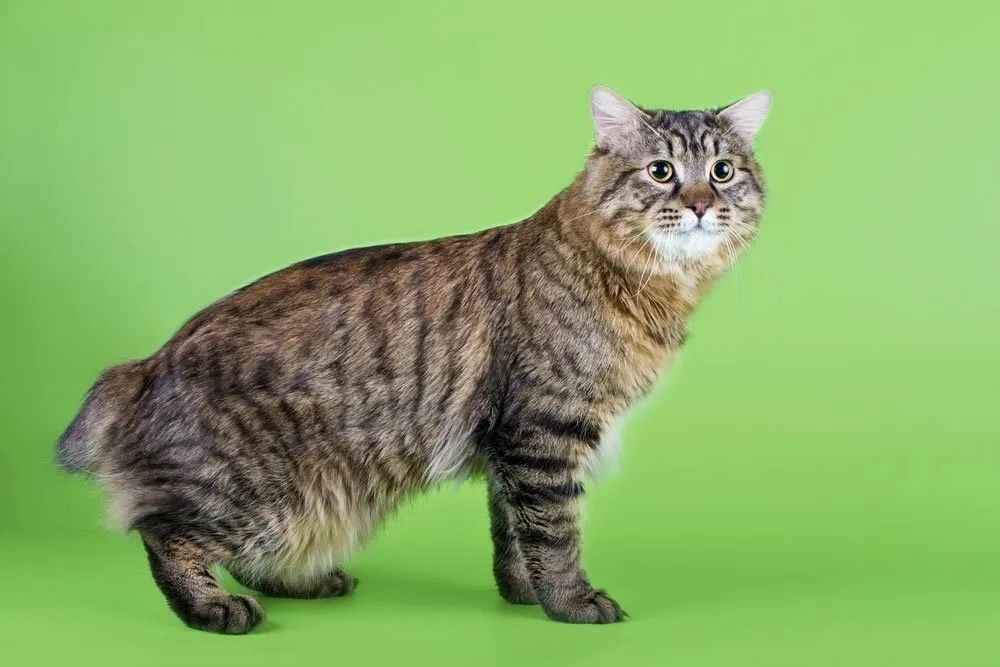
The American Bobtail, a breed cherished for its captivating wild aesthetics and loving disposition, has enchanted cat enthusiasts globally with its distinctive traits. Emerging from a natural genetic mutation in domestic cats, this medium-to-large breed traces its roots back to the late 1960s when a short-tailed cat named Yodie was found in Arizona. Breeders carefully crossed Yodie with a Siamese cat, establishing a lineage that merges the rugged charm of a bobcat with the gentle essence of a household pet

Unique Physical Attributes

The breed’s most defining feature is its namesake "bobbed" tail, measuring 1 to 4 inches long and varying in shape—straight, curved, or slightly kinked. This, paired with its muscular frame and broad chest, gives the American Bobtail a lynx-like appearance. Their coats, available in short or long lengths, showcase a diverse range of colors and patterns, often reminiscent of wild tabby cats. Almond-shaped eyes, accentuated by prominent brows, radiate intelligence and vigilance, while their rectangular build and strong legs highlight their athletic prowess .

Temperament and Behavior

Belying their wild appearance, American Bobtails are renowned for their dog-like loyalty and sociability. They form strong bonds with their human families, often greeting them at the door and shadowing them throughout the home. These intelligent and playful cats thrive on interactive games such as fetch and hide-and-seek. Their adaptability suits various households, including those with children or dogs. Notably, their intuitive nature makes them exceptional companions for individuals seeking emotional support .

Health and Maintenance

American Bobtails are generally hardy, living 13 to 15 years. Breeders must monitor for potential spinal or hip issues related to the tail mutation. Ethical breeders conduct genetic testing to screen for conditions like polycystic kidney disease. Grooming is low-maintenance, requiring weekly brushing to keep their semi-dense coats healthy. A protein-rich diet supports their active lifestyle, while routine veterinary care ensures early detection of health concerns .

Growing Demand and Adoption

In 2025, the American Bobtail remains a sought-after breed, with kittens priced between $600 and $1,200 based on lineage. Adoption fees range from $50 to $300, providing an accessible option for prospective owners. Their rarity and unique attributes have also positioned them in therapy roles, where their empathetic nature aids in anxiety and PTSD management .


For those considering an American Bobtail, reputable breeders stress early socialization and responsible care. Whether exploring outdoors on a leash or cozying up for a nap, these cats exemplify the ideal blend of wild elegance and domestic warmth.
Latest Stories
Travel News2 minute readNestled in the French Pre-Alps, the Plateau du Vercors stands as a testament to nature’s raw power and humanity’s indomitable spirit. Rising abruptly from the valleys of Isère, this limestone plateau—dominated by peaks like Grand Veymont (2,346 meters)—features sheer cliffs and labyrinthine gorges that earned it the nickname "the Natural Great Wall". Its dramatic landscapes, shaped over millennia by erosion, have not only sculpted a geological marvel but also forged a theater of historical significance.
Cultural News1 minute readSpain’s tomato-throwing "La Tomatina" is wildly popular, but for those who prefer hurling something tangier, head to Italy in February. At the Ivrea Carnival, thousands of ripe oranges are pelted in a juicy battle during the festival’s highlight.
Cultural News1 minute readIn Wuppertal, Germany, there’s a pedestrian bridge that looks like it’s built from giant Lego bricks. Though it’s actually a concrete structure, artists have painted it to mimic the iconic toy blocks, creating a playful optical illusion.
Feline News2 minute readThe European Burmese cat, a breed born from careful crossbreeding in mid-20th century Europe, has captivated cat enthusiasts with its elegant physique and affectionate nature. Originating from the American Burmese stock imported to the UK, European breeders sought to diversify the gene pool by introducing Siamese and British Shorthair bloodlines, resulting in a distinct feline with refined features. Recognized by major associations like the CFA since 2002, this breed stands out for its sleek, muscular build and striking golden or amber almond-shaped eyes, which contrast sharply with the rounde
Feline News2 minute readIn recent years, the Scottish Fold cat has become an internet sensation, celebrated for its distinctive folded ears and owl-like appearance. However, behind the adorable facade lies a dark reality rooted in genetic abnormality and ethical debate. This breed, born from a spontaneous mutation in a Scottish barn cat named Susie in 1961, has sparked global controversy over its health implications and breeding practices.
Feline News1 minute readOriginating from a spontaneous genetic mutation in 1950, the Cornish Rex emerged in Cornwall, England, when a cream-colored kitten named Kallibunker was born with a dense, wavy coat resembling a lamb’s fleece1. Recognizing its uniqueness, owner Nina Ennismore collaborated with geneticists to establish the breed. Due to the recessive nature of the mutation, breeding two Cornish Rex cats guarantees curly-coated offspring13.
Health News1 minute readOn June 30, FBI Deputy Director Dan Bongino announced the dismantling of the largest healthcare fraud case in U.S. history, with revised to $14.6 billion. The investigation covered all 50 federal districts, indicting 324 individuals—including 96 medical practitioners—and seizing $245 million in assets.