Cluny Abbey: Medieval Europe’s Spiritual Citadel and Modern Renaissance


Travel News
Cluny Abbey: Medieval Europe’s Spiritual Citadel and Modern Renaissance

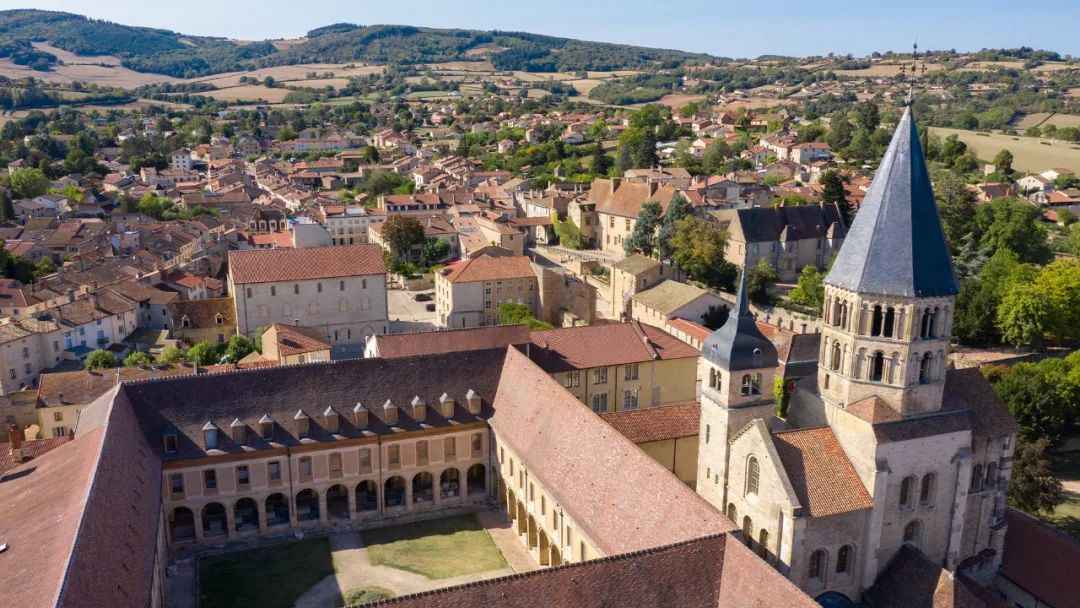
Nestled in the Saône-et-Loire department of Burgundy, France, the Abbey of Cluny (Abbaye de Cluny) stands as a testament to a millennium of history. Founded in 910 by William the Pious, Duke of Aquitaine, this Benedictine monastery was the spiritual and political epicenter of medieval Christendom. Its revolutionary "Cluniac Reforms" reshaped monastic life across Europe, emphasizing strict asceticism, autonomy from secular rule, and unwavering loyalty to the Pope, thereby revitalizing the Catholic Church.


Nestled in the Saône-et-Loire department of Burgundy, France, the Abbey of Cluny (Abbaye de Cluny) stands as a testament to a millennium of history. Founded in 910 by William the Pious, Duke of Aquitaine, this Benedictine monastery was the spiritual and political epicenter of medieval Christendom. Its revolutionary "Cluniac Reforms" reshaped monastic life across Europe, emphasizing strict asceticism, autonomy from secular rule, and unwavering loyalty to the Pope, thereby revitalizing the Catholic Church.

A Medieval Empire of Faith

Cluny’s innovation lay in its centralized network of monasteries. Under abbots Odilo and Hugh, its influence spanned France, Italy, Germany, and Spain, overseeing over 2,000 affiliated houses at its peak. Beyond worship, the abbey was a cradle of art and learning: its abbey church, at 187 meters long, was the largest Christian structure of its time, adorned with Romanesque sculptures and frescoes that defined medieval artistic excellence. Cluny’s meticulous liturgical traditions even spurred the growth of the Santiago de Compostela pilgrimage route.

Architectural Legacy: Ruins of Eternity

Despite severe damage during the French Revolution, the abbey’s remains—including the South Transept, Holy Water Bell Tower, and Gothic cloisters—still awe visitors. In 2023, the restored Jean de Bourbon Chapel reopened, featuring contemporary artworks by Sarkis that harmonize with the Flamboyant Gothic architecture, creating a dialogue between past and present. The virtual reconstruction project "Cluny III" uses 3D technology to revive the church’s original grandeur, offering a digital journey through medieval sacred spaces.

Modern Resonance: A Cultural Icon Reborn

Today, Cluny Abbey is a UNESCO-listed heritage site and a cultural magnet, attracting hundreds of thousands of visitors annually. In 2023, it ranked second in France’s "Monument Préféré des Français" television contest, underscoring its enduring appeal. The Musée d’Art et d’Archéologie showcases Romanesque masterpieces, medieval manuscripts, and collaborative exhibitions with Notre-Dame, revealing Cluny’s role as a medieval intellectual hub.


From its 910 founding to its 21st-century renaissance, Cluny Abbey remains a living witness to Christian civilization. It is not merely a pile of stones but the soul of an era—when visitors stand beneath the Holy Water Bell Tower, they can almost hear the chants of monks echoing through the ages.

Latest Stories
Feline News2 minute readThe Oriental Longhair, a breed celebrated for its elegance and intelligence, traces its roots to mid-20th-century breeding programs aimed at expanding the color and pattern diversity of Siamese cats . Developed through crosses with breeds like Russian Blues and British Shorthairs, these cats gained recognition in the 1970s and were officially acknowledged by The International Cat Association (TICA) in 1979 and the Cat Fanciers' Association (CFA) in 1995 .
Feline News2 minute readThe Korat cat, originating from Thailand’s Nakhon Ratchasima province (formerly Korat), is a breed deeply rooted in history and cultural significance. Revered for centuries as a symbol of good luck and prosperity, these silver-blue felines have enchanted the world with their striking appearance and affectionate nature.
Feline News2 minute readA heartwarming tale of survival and companionship has thrust the Munchkin cat into the global spotlight, showcasing the breed’s unique charm and indomitable spirit. Mochi, an 8-month-old Munchkin rescued from a life-threatening illness, has become an international symbol of hope, embodying the resilience and playful nature that define these short-legged felines.
Travel News2 minute readPerched atop an 82-meter volcanic plug in Le Puy-en-Velay, France, the Chapelle Saint-Michel d’Aiguilhe stands as a testament to faith and engineering prowess. Built in 962 AD, this architectural marvel balances precariously on a basaltic rock formation, blending Romanesque austerity with Moorish-inspired ornamentation to create one of Europe’s most dramatic religious landmarks.
Feline News2 minute readRagamuffin cats, affectionately known as "muffins," have captured the hearts of cat lovers worldwide with their plush coats, docile personalities, and striking appearance. Originating in the United States in the 1990s, this breed emerged from a group of breeders seeking to expand the genetic diversity of Ragdoll cats. By crossing Ragdolls with Persians, Himalayans, and other long-haired breeds, they created a larger, more robust feline with a broader range of coat colors and patterns
Canine News2 minute readOriginating in the early 20th century, the American White Shepherd traces its lineage to the German Shepherd. Due to a recessive white coat gene, these dogs were long considered "flawed" in Germany and systematically culled from breeding programs12. However, North American breeders recognized their unique appeal and selectively developed them into a distinct breed, officially acknowledged by the United Kennel Club (UKC) in 199917
Canine News1 minute readAs the world's first operational vertical/short takeoff and landing (V/STOL) fighter jet, the British-developed Harrier, nicknamed the "Jump Jet," has left an indelible mark on aviation history through its groundbreaking design and combat prowess.