Enigmatic Holy Ghost Orchid: A Symbol of Purity and Rarity


Plant Information
Enigmatic Holy Ghost Orchid: A Symbol of Purity and Rarity

The Holy Ghost Orchid, scientifically named Peristeria elata, is a botanical wonder that has long fascinated the world. Native to the tropical regions of Central and South America, including Panama, Costa Rica, Colombia, and Ecuador, this orchid holds a special place in both nature and culture.


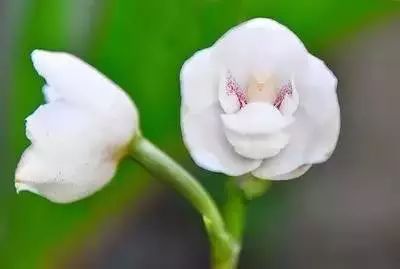
What makes the Holy Ghost Orchid truly stand out is its unique flower structure. When in bloom, the flower appears to have a small, white dove nestled within, which is where it gets its common name. The petals are a pristine white, often adorned with delicate purple speckles, adding to its allure. The plant itself has large, teardrop - shaped pseudobulbs from which emerge four to five broad, pleated leaves. The inflorescence, either pendulous or erect, can range from 6 inches (15 cm) to a remarkable 4 feet (120 cm) long, bearing 4 to 20 of these captivating flowers.


In Panama, the Holy Ghost Orchid is not just a beautiful plant; it is the national flower. Revered as a symbol of purity and a messenger of peace, it is known as "Espíritu Santo" in Spanish. However, despite its cultural significance, the orchid is facing numerous threats. Habitat destruction due to deforestation and illegal collection for the horticultural trade have led to a significant decline in its population. As a result, it is now a protected species under the Convention on International Trade in Endangered Species of Wild Fauna and Flora (CITES).


Botanical gardens and conservationists around the world are working hard to save this precious orchid. Through propagation programs and education initiatives, they aim to raise awareness about the importance of protecting the Holy Ghost Orchid and its natural habitat. Whether admired for its beauty, cultural significance, or its role in the ecosystem, the Holy Ghost Orchid remains a captivating symbol of nature's wonders, reminding us of the need to safeguard our planet's biodiversity.
Latest Stories
Feline News2 minute readThe Oriental Longhair, a breed celebrated for its elegance and intelligence, traces its roots to mid-20th-century breeding programs aimed at expanding the color and pattern diversity of Siamese cats . Developed through crosses with breeds like Russian Blues and British Shorthairs, these cats gained recognition in the 1970s and were officially acknowledged by The International Cat Association (TICA) in 1979 and the Cat Fanciers' Association (CFA) in 1995 .
Feline News2 minute readThe Korat cat, originating from Thailand’s Nakhon Ratchasima province (formerly Korat), is a breed deeply rooted in history and cultural significance. Revered for centuries as a symbol of good luck and prosperity, these silver-blue felines have enchanted the world with their striking appearance and affectionate nature.
Feline News2 minute readA heartwarming tale of survival and companionship has thrust the Munchkin cat into the global spotlight, showcasing the breed’s unique charm and indomitable spirit. Mochi, an 8-month-old Munchkin rescued from a life-threatening illness, has become an international symbol of hope, embodying the resilience and playful nature that define these short-legged felines.
Travel News2 minute readPerched atop an 82-meter volcanic plug in Le Puy-en-Velay, France, the Chapelle Saint-Michel d’Aiguilhe stands as a testament to faith and engineering prowess. Built in 962 AD, this architectural marvel balances precariously on a basaltic rock formation, blending Romanesque austerity with Moorish-inspired ornamentation to create one of Europe’s most dramatic religious landmarks.
Feline News2 minute readRagamuffin cats, affectionately known as "muffins," have captured the hearts of cat lovers worldwide with their plush coats, docile personalities, and striking appearance. Originating in the United States in the 1990s, this breed emerged from a group of breeders seeking to expand the genetic diversity of Ragdoll cats. By crossing Ragdolls with Persians, Himalayans, and other long-haired breeds, they created a larger, more robust feline with a broader range of coat colors and patterns
Canine News2 minute readOriginating in the early 20th century, the American White Shepherd traces its lineage to the German Shepherd. Due to a recessive white coat gene, these dogs were long considered "flawed" in Germany and systematically culled from breeding programs12. However, North American breeders recognized their unique appeal and selectively developed them into a distinct breed, officially acknowledged by the United Kennel Club (UKC) in 199917
Canine News1 minute readAs the world's first operational vertical/short takeoff and landing (V/STOL) fighter jet, the British-developed Harrier, nicknamed the "Jump Jet," has left an indelible mark on aviation history through its groundbreaking design and combat prowess.