Loyal Companions and Family Guardians: The Unique Allure of Basset Hounds


Canine News
Loyal Companions and Family Guardians: The Unique Allure of Basset Hounds

Originating in 16th-century France, the Basset Hound—derived from the French word "bas" meaning "low"—was selectively bred by monks for hunting small game like rabbits. Their short legs, elongated ears, and loose skin evolved to trap scents close to the ground, making them exceptional trackers 113. By the 19th century, the breed gained popularity in Britain and the U.S., with George Washington receiving a pair as a gift after the American Revolution 114. Recognized by the American Kennel Club (AKC) in 1885, Bassets became beloved family pets for their gentle demeanor and comical appearance 13.

Physical Traits and AKC Standards

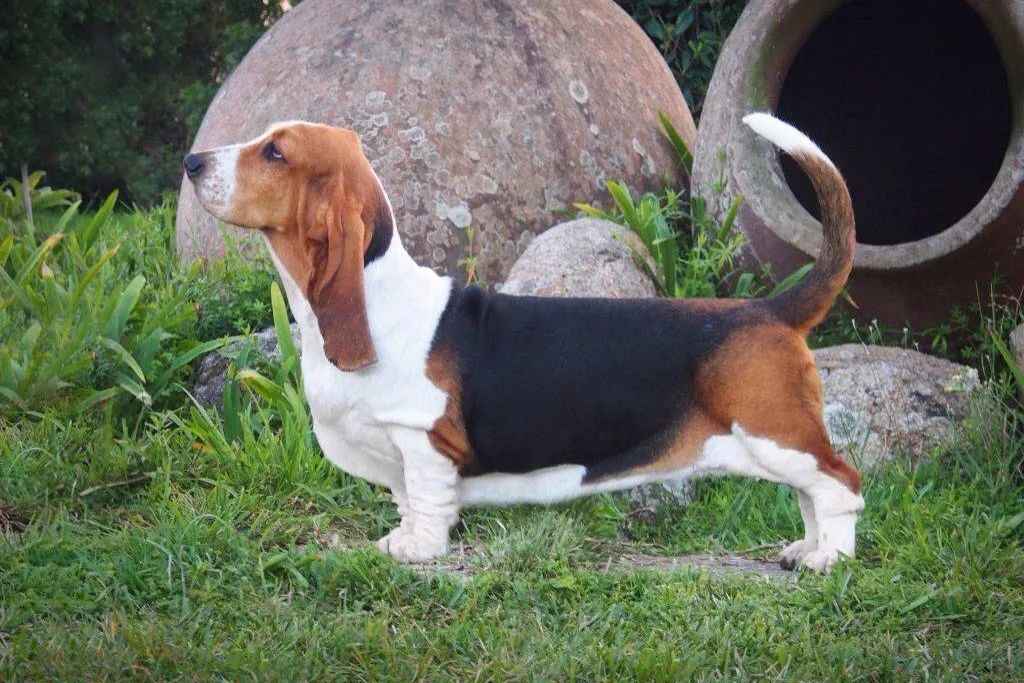
The Basset Hound’s iconic features include a large, domed skull with deep-set, soulful eyes, and ears so long they reach past the nose when drawn forward 3. Their short legs and heavy bone structure (weighing 40–65 pounds) enable endurance in rough terrain, while their loose skin and deep chest aid scent collection 312. The AKC standard emphasizes a smooth, hard coat in tri-color (black, white, tan) or bi-color (e.g., lemon and white) patterns 4. Standing no taller than 14 inches, Bassets move with deliberate grace, nose-to-ground, in a gait that combines power and precision 3.

Health and Care Considerations

While Bassets are generally hardy, they face breed-specific challenges. Hip dysplasia affects nearly one-third of the breed, though their weight distribution (70% on front legs) may mitigate severe arthritis 78. Regular veterinary checkups and controlled exercise are critical. Ear infections are common due to poor airflow in floppy ears, requiring weekly cleaning with vet-approved solutions 519. Obesity, exacerbated by low activity levels, worsens joint strain; a balanced diet and 30–60 minutes of daily exercise (e.g., scent games, swimming) are essential 1924.

Temperament and Training

Known for loyalty and patience, Bassets thrive in family environments but can be stubborn due to their hunting instincts. Positive reinforcement—using treats and praise—yields the best results, as harsh methods trigger anxiety 1722. Early socialization prevents shyness, and crate training helps manage separation anxiety. Their keen sense of smell makes them excellent scent work partners, but owners must leash them outdoors to avoid distraction 1621.

Cultural Impact and Legacy

Bassets have left an indelible mark on pop culture. The Hush Puppies brand adopted a Basset as its mascot in 1958, while Disney’s The Aristocats (1970) featured a Basset named Lafayette. The comic strip Fred Basset (1963) humorously highlights their quirks, and they’ve appeared in films like The Sweetest Thing 1323. Despite health challenges, Bassets remain cherished for their unwavering devotion, with lifespans averaging 10–12 years when cared for properly 1520.


In essence, the Basset Hound embodies a rare blend of historical significance, unique physiology, and timeless charm. Whether trailing scents in the field or napping by the hearth, these "low-riders" continue to win hearts as loyal companions and cultural icons.
Latest Stories
Travel News1 minute readA climate specialist stated that the May just concluded ranks as the second warmest May globally since meteorological record-keeping began. Over the past month, temperatures across Europe surged sharply from below-average levels to fuel one of the continent’s most ferocious heatwaves. This year’s heatwave arrived earlier than any previously documented, shattering dozens of May temperature benchmarks, with France, the United Kingdom, Ireland and Portugal bearing the brunt of the extreme heat.
Feline News1 minute readMinuet cats, also known as Napoleon cats, are a delightful and relatively new feline breed that have been winning the hearts of cat lovers around the world with their adorable appearance and friendly personalities.
Feline News1 minute readThe Balinese cat, also known as the Bali cat or Java cat, is a charming medium - sized long - haired cat. It originated in the United States and is a long - haired mutant of the Siamese cat. It is named the Balinese cat because its movements are 酷似 those of the native Balinese dancers.
Feline News2 minute readThe Exotic Shorthair, often dubbed the "lazy man’s Persian," has solidified its status as one of the most beloved cat breeds globally, blending the elegance of Persians with the low-maintenance charm of American Shorthairs. Developed in the 1960s by American breeders aiming to create a short-haired Persian variant, this breed has since captivated cat lovers with its round face, plush coat, and laid-back demeanor 28.
Travel News2 minute readNestled along the cliffs of the French Riviera (Côte d'Azur), the Trois Corniches de Nice—three coastal roads ascending from sea level to mountain heights—offer some of Europe’s most dramatic views. Stretching eastward from Nice, the Lower Corniche (Corniche Inférieure), Middle Corniche (Moyenne Corniche), and Upper Corniche (Grande Corniche) each provide a unique perspective of the Mediterranean, making them a pilgrimage for road-trippers and photographers alike.
Travel News2 minute readThe soul of Colmar lies in its half-timbered houses, dating back to the 16th century. These whimsical structures feature exposed wooden frames in geometric patterns, their facades painted in vibrant hues like buttercup yellow and sky blue. Flower-boxed windows and playful figurines adorn the facades, while their reflections dance on the Lauch River, creating the iconic Petite Venise (Little Venice) district. Here, fishermen pilot flower-decked boats, and riverside bistros serve Alsatian specialties like choucroute garnie, evoking scenes from Hayao Miyazaki’s Howl’s Moving Castle.
Feline News2 minute readThe Oriental Longhair, a breed celebrated for its elegance and intelligence, traces its roots to mid-20th-century breeding programs aimed at expanding the color and pattern diversity of Siamese cats . Developed through crosses with breeds like Russian Blues and British Shorthairs, these cats gained recognition in the 1970s and were officially acknowledged by The International Cat Association (TICA) in 1979 and the Cat Fanciers' Association (CFA) in 1995 .