Mysterious 'Poodle Moth' Captivates Scientists After 2009 Venezuelan Discovery


Insect Information
Mysterious 'Poodle Moth' Captivates Scientists After 2009 Venezuelan Discovery

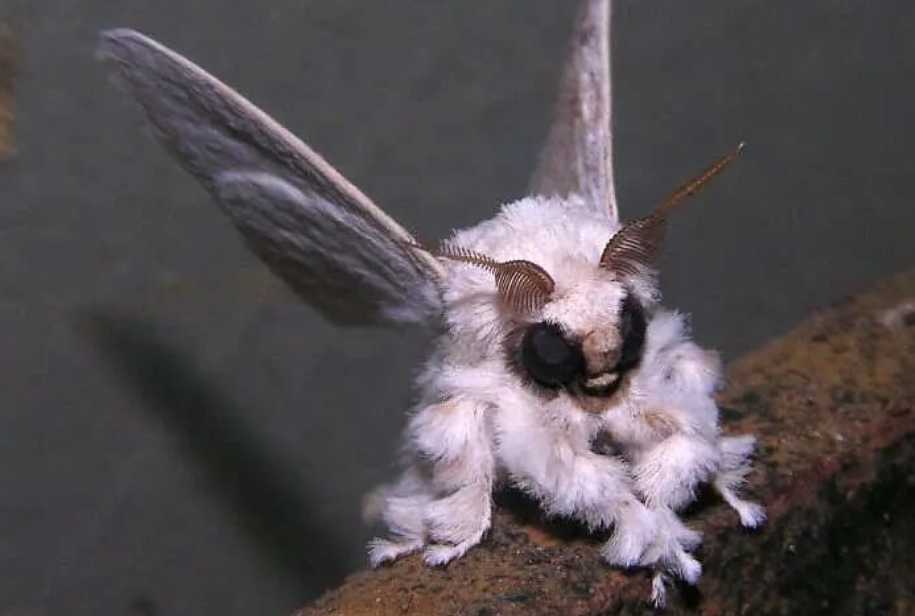
A bizarre moth with a fluffy, poodle-like appearance has perplexed entomologists since its 2009 discovery in Venezuela’s Gran Sabana region. Named the Venezuelan poodle moth (Artace sp.), the species remains taxonomically unresolved due to limited specimens and conflicting theories about its evolutionary origins. Its dense, cottony fur and large, reflective eyes have sparked viral fascination, yet its behavior, habitat requirements, and ecological role remain shrouded in mystery .


Discovered by Kyrgyzstani zoologist Dr. Arthur Anker during an expedition, the moth’s unique morphology initially suggested a link to the Arctiidae family, though recent analysis points to the Lasiocampidae family and the genus Artace 15. Measuring approximately 2.5 cm in length, its white-gray fur—composed of chitin, a sound-absorbing material—likely evolved to evade bat echolocation. The moth’s bulbous eyes and elongated antennae add to its otherworldly appearance, though its diet (presumed to include nectar or plant sap) and lifecycle stages remain undocumented.


While the moth’s single confirmed sighting in Canaima National Park has fueled speculation about its rarity, deforestation and climate change threaten its fragile rainforest habitat. Scientists emphasize the need for further research to clarify its classification and conservation status, as the species may represent a new genus or a regional subspecies of Artace cribraria . Meanwhile, the Venezuelan poodle moth has become an internet sensation, with viral images often mislabeled or confused with other furry moth species . Its enigmatic existence underscores the critical importance of preserving biodiverse hotspots like the Gran Sabana, where countless undiscovered species may still await scientific scrutiny 

Latest Stories
Feline News2 minute readThe Oriental Longhair, a breed celebrated for its elegance and intelligence, traces its roots to mid-20th-century breeding programs aimed at expanding the color and pattern diversity of Siamese cats . Developed through crosses with breeds like Russian Blues and British Shorthairs, these cats gained recognition in the 1970s and were officially acknowledged by The International Cat Association (TICA) in 1979 and the Cat Fanciers' Association (CFA) in 1995 .
Feline News2 minute readThe Korat cat, originating from Thailand’s Nakhon Ratchasima province (formerly Korat), is a breed deeply rooted in history and cultural significance. Revered for centuries as a symbol of good luck and prosperity, these silver-blue felines have enchanted the world with their striking appearance and affectionate nature.
Feline News2 minute readA heartwarming tale of survival and companionship has thrust the Munchkin cat into the global spotlight, showcasing the breed’s unique charm and indomitable spirit. Mochi, an 8-month-old Munchkin rescued from a life-threatening illness, has become an international symbol of hope, embodying the resilience and playful nature that define these short-legged felines.
Travel News2 minute readPerched atop an 82-meter volcanic plug in Le Puy-en-Velay, France, the Chapelle Saint-Michel d’Aiguilhe stands as a testament to faith and engineering prowess. Built in 962 AD, this architectural marvel balances precariously on a basaltic rock formation, blending Romanesque austerity with Moorish-inspired ornamentation to create one of Europe’s most dramatic religious landmarks.
Feline News2 minute readRagamuffin cats, affectionately known as "muffins," have captured the hearts of cat lovers worldwide with their plush coats, docile personalities, and striking appearance. Originating in the United States in the 1990s, this breed emerged from a group of breeders seeking to expand the genetic diversity of Ragdoll cats. By crossing Ragdolls with Persians, Himalayans, and other long-haired breeds, they created a larger, more robust feline with a broader range of coat colors and patterns
Canine News2 minute readOriginating in the early 20th century, the American White Shepherd traces its lineage to the German Shepherd. Due to a recessive white coat gene, these dogs were long considered "flawed" in Germany and systematically culled from breeding programs12. However, North American breeders recognized their unique appeal and selectively developed them into a distinct breed, officially acknowledged by the United Kennel Club (UKC) in 199917
Canine News1 minute readAs the world's first operational vertical/short takeoff and landing (V/STOL) fighter jet, the British-developed Harrier, nicknamed the "Jump Jet," has left an indelible mark on aviation history through its groundbreaking design and combat prowess.