The Glasswing Butterfly: Nature’s Transparent Wonder Hunted for Its Elusive Beauty


Insect Information
The Glasswing Butterfly: Nature’s Transparent Wonder Hunted for Its Elusive Beauty

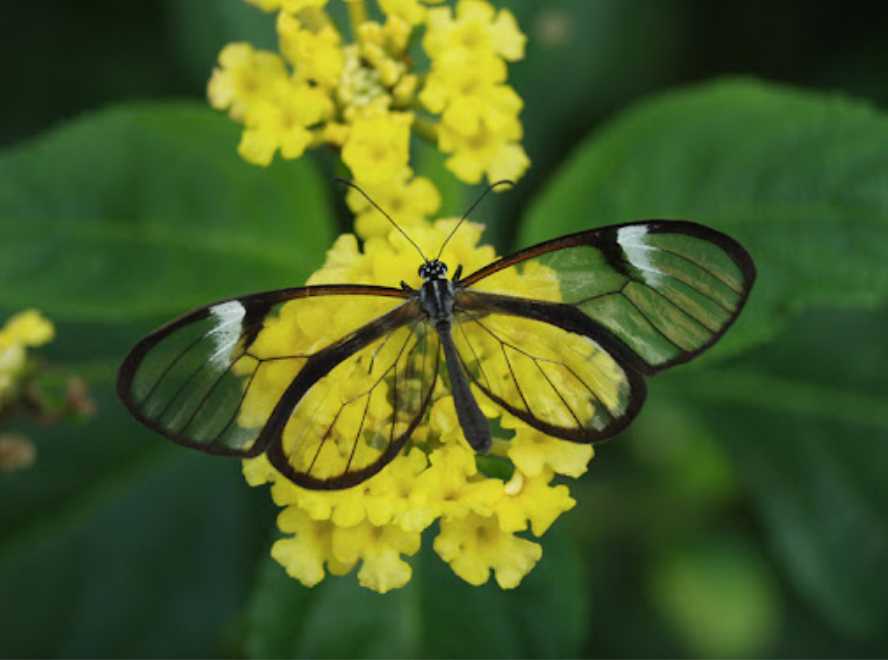
Scientifically named Greta oto, the glasswing butterfly belongs to the family Nymphalidae, subfamily Danainae, tribe Ithomiini, and subtribe Gretae. Renowned for its ethereal, translucent wings, this Central and South American species has evolved a survival strategy that paradoxically draws human attention—turning its natural defense against predators into a curse.


Transparency as a Survival Mechanism

The glasswing’s wings are nearly invisible in flight, thanks to a lack of pigmentation and a membrane so thin it scatters minimal light. This "crystal clear" design allows it to blend with sunlit foliage, evading birds and insects that rely on vision to hunt. Veins reinforced with chitin provide structural support, while tiny bumps on the wing surface reduce light reflection, enhancing transparency.


Native to rainforests from Mexico to Panama, the butterfly thrives in forest edges and gardens. Its caterpillars feed on toxic plants like Cestrum, storing alkaloids in their bodies to deter predators—a trait shared by many clear-winged butterflies. Adults sip nectar from flowers, using their transparency to approach blooms undetected.

From Natural Adaptation to Human Target

While transparency evolved to avoid predation, the glasswing’s unique appearance has made it a prized specimen for collectors and a symbol in art and fashion. Illegal trafficking of its wings, often used in jewelry or decor, threatens local populations. Additionally, habitat loss from deforestation and climate change compounds risks, as the butterfly relies on specific host plants for reproduction.


Conservationists emphasize the need to protect its ecosystem rather than targeting the species alone. Organizations like the Rainforest Alliance promote sustainable tourism, where visitors can observe glasswings in the wild without disturbing them. Scientifically, the butterfly’s wing structure inspires innovations in optics and renewable energy, with researchers studying its anti-reflective properties for solar panel design.


In the lush canopies of the Neotropics, the glasswing butterfly embodies nature’s delicate balance: a creature whose survival hinges on invisibility, now forced to navigate human desire for its beauty. Its transparent wings serve as a reminder that even the most ingenious evolutionary traits offer no protection against human greed—and that preservation of wild spaces remains the only way to keep such wonders alight.
Latest Stories
Travel News2 minute readNestled in the French Pre-Alps, the Plateau du Vercors stands as a testament to nature’s raw power and humanity’s indomitable spirit. Rising abruptly from the valleys of Isère, this limestone plateau—dominated by peaks like Grand Veymont (2,346 meters)—features sheer cliffs and labyrinthine gorges that earned it the nickname "the Natural Great Wall". Its dramatic landscapes, shaped over millennia by erosion, have not only sculpted a geological marvel but also forged a theater of historical significance.
Cultural News1 minute readSpain’s tomato-throwing "La Tomatina" is wildly popular, but for those who prefer hurling something tangier, head to Italy in February. At the Ivrea Carnival, thousands of ripe oranges are pelted in a juicy battle during the festival’s highlight.
Cultural News1 minute readIn Wuppertal, Germany, there’s a pedestrian bridge that looks like it’s built from giant Lego bricks. Though it’s actually a concrete structure, artists have painted it to mimic the iconic toy blocks, creating a playful optical illusion.
Feline News2 minute readThe European Burmese cat, a breed born from careful crossbreeding in mid-20th century Europe, has captivated cat enthusiasts with its elegant physique and affectionate nature. Originating from the American Burmese stock imported to the UK, European breeders sought to diversify the gene pool by introducing Siamese and British Shorthair bloodlines, resulting in a distinct feline with refined features. Recognized by major associations like the CFA since 2002, this breed stands out for its sleek, muscular build and striking golden or amber almond-shaped eyes, which contrast sharply with the rounde
Feline News2 minute readIn recent years, the Scottish Fold cat has become an internet sensation, celebrated for its distinctive folded ears and owl-like appearance. However, behind the adorable facade lies a dark reality rooted in genetic abnormality and ethical debate. This breed, born from a spontaneous mutation in a Scottish barn cat named Susie in 1961, has sparked global controversy over its health implications and breeding practices.
Feline News1 minute readOriginating from a spontaneous genetic mutation in 1950, the Cornish Rex emerged in Cornwall, England, when a cream-colored kitten named Kallibunker was born with a dense, wavy coat resembling a lamb’s fleece1. Recognizing its uniqueness, owner Nina Ennismore collaborated with geneticists to establish the breed. Due to the recessive nature of the mutation, breeding two Cornish Rex cats guarantees curly-coated offspring13.
Health News1 minute readOn June 30, FBI Deputy Director Dan Bongino announced the dismantling of the largest healthcare fraud case in U.S. history, with revised to $14.6 billion. The investigation covered all 50 federal districts, indicting 324 individuals—including 96 medical practitioners—and seizing $245 million in assets.