The Ladybug (Coccinellidae): Nature's Spotted Predator and Winter Intruder


Insect Information
The Ladybug (Coccinellidae): Nature's Spotted Predator and Winter Intruder

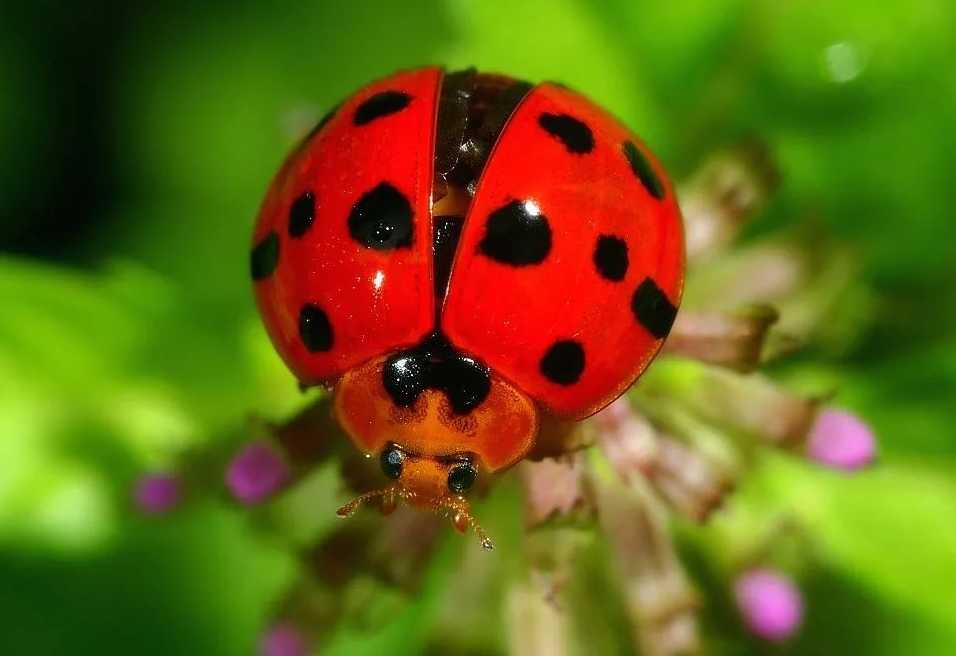
Ladybugs, members of the family Coccinellidae, are iconic insects recognized worldwide for their distinctive spotted exteriors. Typically adorned with red or yellow backs dotted in black, these beetles blend aesthetic appeal with remarkable ecological utility, serving as natural pest controllers in gardens and agricultural fields.

Morphology and Feeding Habits
Their rounded, dome-shaped bodies are adapted for agility and protection, with elytra that shield delicate wings. While the classic red-and-black pattern is most familiar, species vary in coloration—some display yellow, orange, or even black backgrounds with red spots. This diversity often signals chemical defenses: many ladybugs secrete a yellow, foul-smelling hemolymph from their leg joints when threatened, a behavior called reflex bleeding that deters predators. As voracious feeders, adults and larvae consume aphids, mealybugs, and mites, with a single ladybug capable of devouring up to 50 aphids daily—making them invaluable allies in biological pest control.


Seasonal Behavior and Human Interactions
When winter approaches, ladybugs exhibit mass aggregation behavior, seeking shelter in human dwellings to escape the cold. These clusters, sometimes numbering in the hundreds, can invade homes through cracks and crevices, earning them a reputation as unwelcome seasonal guests. While their presence is harmless, the reflex bleeding can stain surfaces, prompting homeowners to seal entry points. In some cultures, ladybugs are considered symbols of good luck, a belief that stems from their role in protecting crops—though their winter invasions often test this sentiment.


Ecological and Cultural Significance
Beyond pest control, ladybugs play a role in pollination and serve as prey for birds and spiders, anchoring food web dynamics. Their life cycle, from egg to larva to pupa to adult, showcases complete metamorphosis, captivating both children and entomologists. In popular culture, they inspire art, literature, and even fashion, while gardeners actively attract them by planting aphid-rich flowers or purchasing them for biological control. Despite their occasional winter intrusions, ladybugs remain beloved icons of nature’s balance—proof that beauty and functionality can coexist in the smallest of creatures.
Latest Stories
Feline News2 minute readThe Oriental Longhair, a breed celebrated for its elegance and intelligence, traces its roots to mid-20th-century breeding programs aimed at expanding the color and pattern diversity of Siamese cats . Developed through crosses with breeds like Russian Blues and British Shorthairs, these cats gained recognition in the 1970s and were officially acknowledged by The International Cat Association (TICA) in 1979 and the Cat Fanciers' Association (CFA) in 1995 .
Feline News2 minute readThe Korat cat, originating from Thailand’s Nakhon Ratchasima province (formerly Korat), is a breed deeply rooted in history and cultural significance. Revered for centuries as a symbol of good luck and prosperity, these silver-blue felines have enchanted the world with their striking appearance and affectionate nature.
Feline News2 minute readA heartwarming tale of survival and companionship has thrust the Munchkin cat into the global spotlight, showcasing the breed’s unique charm and indomitable spirit. Mochi, an 8-month-old Munchkin rescued from a life-threatening illness, has become an international symbol of hope, embodying the resilience and playful nature that define these short-legged felines.
Travel News2 minute readPerched atop an 82-meter volcanic plug in Le Puy-en-Velay, France, the Chapelle Saint-Michel d’Aiguilhe stands as a testament to faith and engineering prowess. Built in 962 AD, this architectural marvel balances precariously on a basaltic rock formation, blending Romanesque austerity with Moorish-inspired ornamentation to create one of Europe’s most dramatic religious landmarks.
Feline News2 minute readRagamuffin cats, affectionately known as "muffins," have captured the hearts of cat lovers worldwide with their plush coats, docile personalities, and striking appearance. Originating in the United States in the 1990s, this breed emerged from a group of breeders seeking to expand the genetic diversity of Ragdoll cats. By crossing Ragdolls with Persians, Himalayans, and other long-haired breeds, they created a larger, more robust feline with a broader range of coat colors and patterns
Canine News2 minute readOriginating in the early 20th century, the American White Shepherd traces its lineage to the German Shepherd. Due to a recessive white coat gene, these dogs were long considered "flawed" in Germany and systematically culled from breeding programs12. However, North American breeders recognized their unique appeal and selectively developed them into a distinct breed, officially acknowledged by the United Kennel Club (UKC) in 199917
Canine News1 minute readAs the world's first operational vertical/short takeoff and landing (V/STOL) fighter jet, the British-developed Harrier, nicknamed the "Jump Jet," has left an indelible mark on aviation history through its groundbreaking design and combat prowess.