The Satanic Leaf-Tailed Gecko: A Master of Camouflage Named for Its Dead-Leaf Tail


Insect Information
The Satanic Leaf-Tailed Gecko: A Master of Camouflage Named for Its Dead-Leaf Tail

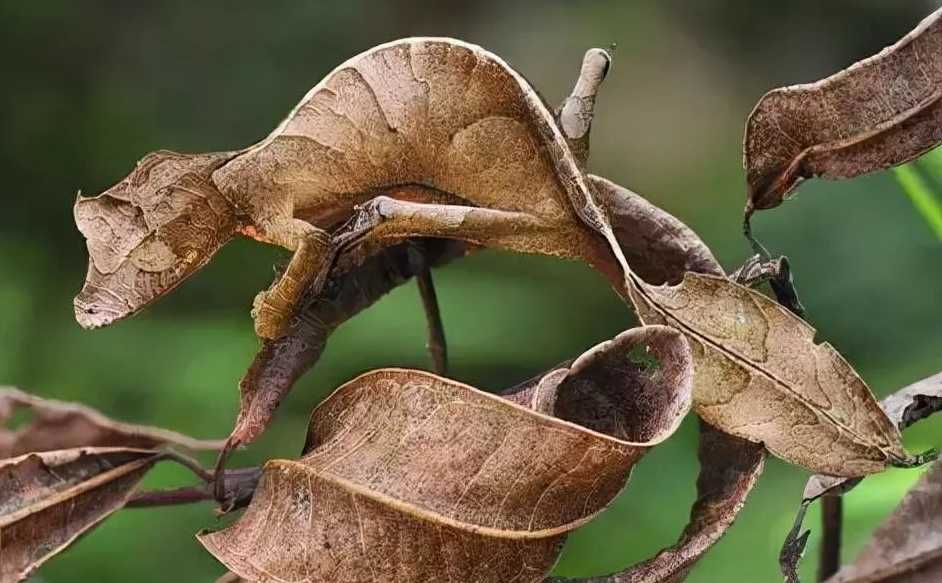
Native to the rainforests of Madagascar, the Satanic leaf-tailed gecko (Uroplatus phantasticus) earns its dramatic name from a tail that perfectly mimics a decaying leaf—ripped edges, veins, and even brownish "spots" that blend seamlessly with forest litter. This nocturnal reptile, one of the most iconic examples of evolutionary camouflage, has captivated herpetologists and nature enthusiasts with its otherworldly appearance and cryptic lifestyle.


A Tail That Defies Reality: Adaptations for Deception

The gecko’s most striking feature is its broad, flattened tail, which mirrors the texture, color, and shape of a dried leaf. Jagged edges resemble tears from insect bites, while pigmentation ranges from olive-green to reddish-brown, often with blotches that mimic fungal growth. This tail, combined with a body covered in rough, bark-like scales, allows the gecko to cling to tree trunks or lie motionless on the forest floor, invisible to predators and prey alike. Large, lidless eyes with vertical pupils enhance night vision, while toe pads equipped with microscopic hairs let it climb smooth surfaces without a sound.

Nocturnal Hunter and Cryptic Behavior

Active at night, the Satanic leaf-tailed gecko preys on insects, spiders, and small vertebrates, using its camouflage to ambush unsuspecting prey. During the day, it rests motionless, often positioned at an angle to resemble a fallen leaf, with its tail curled to complete the illusion. If threatened, it may open its bright red mouth, hiss, or drop its tail (which regenerates over time) to distract predators. Despite its ominous name, it is harmless to humans, relying entirely on stealth for survival. Females lay just two eggs per clutch, burying them in leaf litter or under bark—a risky strategy that underscores the importance of perfect camouflage for offspring.

Conservation Challenges in Madagascar’s Rainforests

Endemic to Madagascar, this gecko is listed as Endangered by the IUCN, facing grave threats from deforestation and habitat fragmentation. Logging, agriculture, and charcoal production destroy its forest home, while illegal collection for the pet trade compounds the crisis. Conservation organizations work to protect remaining rainforests and promote sustainable practices, emphasizing that the gecko’s survival is tied to the health of Madagascar’s unique ecosystems. Its remarkable camouflage, evolved over millions of years, serves as a reminder of nature’s ingenuity—but also of the fragility of species that depend on specific, threatened habitats.


For biologists, the Satanic leaf-tailed gecko is a living testament to natural selection’s power to craft perfection in disguise. Its leaf-like tail, once thought to inspire its "Satanic" moniker due to its eerie realism, now serves as a symbol of Madagascar’s irreplaceable biodiversity. As deforestation threatens to turn this living leaf into a mere fossil, the gecko’s silent presence in the rainforest canopy stands as both a marvel of adaptation and a urgent call to protect the wild places where such evolutionary wonders still thrive.
Latest Stories
Feline News2 minute readThe Oriental Longhair, a breed celebrated for its elegance and intelligence, traces its roots to mid-20th-century breeding programs aimed at expanding the color and pattern diversity of Siamese cats . Developed through crosses with breeds like Russian Blues and British Shorthairs, these cats gained recognition in the 1970s and were officially acknowledged by The International Cat Association (TICA) in 1979 and the Cat Fanciers' Association (CFA) in 1995 .
Feline News2 minute readThe Korat cat, originating from Thailand’s Nakhon Ratchasima province (formerly Korat), is a breed deeply rooted in history and cultural significance. Revered for centuries as a symbol of good luck and prosperity, these silver-blue felines have enchanted the world with their striking appearance and affectionate nature.
Feline News2 minute readA heartwarming tale of survival and companionship has thrust the Munchkin cat into the global spotlight, showcasing the breed’s unique charm and indomitable spirit. Mochi, an 8-month-old Munchkin rescued from a life-threatening illness, has become an international symbol of hope, embodying the resilience and playful nature that define these short-legged felines.
Travel News2 minute readPerched atop an 82-meter volcanic plug in Le Puy-en-Velay, France, the Chapelle Saint-Michel d’Aiguilhe stands as a testament to faith and engineering prowess. Built in 962 AD, this architectural marvel balances precariously on a basaltic rock formation, blending Romanesque austerity with Moorish-inspired ornamentation to create one of Europe’s most dramatic religious landmarks.
Feline News2 minute readRagamuffin cats, affectionately known as "muffins," have captured the hearts of cat lovers worldwide with their plush coats, docile personalities, and striking appearance. Originating in the United States in the 1990s, this breed emerged from a group of breeders seeking to expand the genetic diversity of Ragdoll cats. By crossing Ragdolls with Persians, Himalayans, and other long-haired breeds, they created a larger, more robust feline with a broader range of coat colors and patterns
Canine News2 minute readOriginating in the early 20th century, the American White Shepherd traces its lineage to the German Shepherd. Due to a recessive white coat gene, these dogs were long considered "flawed" in Germany and systematically culled from breeding programs12. However, North American breeders recognized their unique appeal and selectively developed them into a distinct breed, officially acknowledged by the United Kennel Club (UKC) in 199917
Canine News1 minute readAs the world's first operational vertical/short takeoff and landing (V/STOL) fighter jet, the British-developed Harrier, nicknamed the "Jump Jet," has left an indelible mark on aviation history through its groundbreaking design and combat prowess.