The Resilient Return of the Lord Howe Island Stick Insect


Insect Information
The Resilient Return of the Lord Howe Island Stick Insect

The Lord Howe Island stick insect, scientifically known as Dryococelus australis, is a remarkable insect that has captured the attention of the scientific community and nature enthusiasts alike. This species, often referred to as the "land lobster" due to its large size and robust appearance, has a unique and compelling story of near - extinction and subsequent rediscovery.


Once thought to be extinct, the Lord Howe Island stick insect was last seen on its namesake island in 1920. The introduction of black rats to Lord Howe Island in 1918, likely via shipwrecks, had a devastating impact on the local ecosystem. These invasive rodents preyed on the stick insects, leading to their presumed disappearance. However, in 2001, a small population of these insects was astonishingly rediscovered on Ball's Pyramid, a volcanic rock located about 23 kilometers southeast of Lord Howe Island.


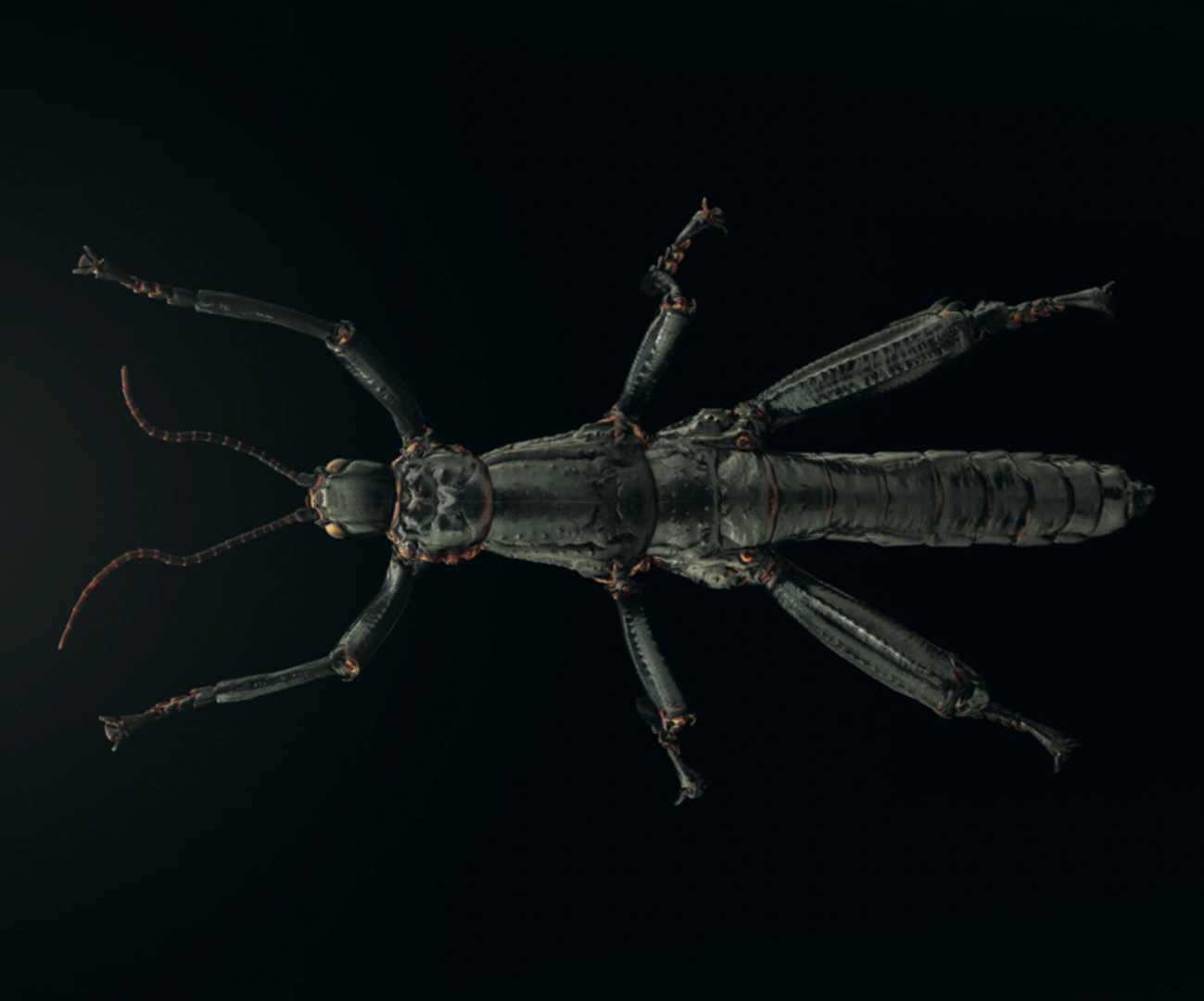
The Lord Howe Island stick insect is an impressive creature. Adults can reach lengths of up to 15 centimeters, making them one of the largest stick insects in the world. They have a shiny, black exoskeleton and a somewhat stocky build, lacking wings. Their bodies are well - adapted for their environment, with strong legs that allow them to navigate the rocky terrain where they live. Females are generally larger than males.


In terms of reproduction, these stick insects lay eggs in a rather unique way. They use their ovipositors to dig holes in the soil, where they deposit their eggs. The eggs are cylindrical and lack the "false head" structures that some other stick insect eggs have. After an incubation period, the nymphs hatch and begin their growth process, molting several times as they develop into adults.


The rediscovery of the Lord Howe Island stick insect has spurred conservation efforts. Scientists are working to protect the remaining population on Ball's Pyramid and also attempting to breed them in captivity. In 2003, a breeding program was established at Melbourne Zoo, and since then, other institutions have joined in this effort. The goal is not only to increase the population numbers but also to potentially reintroduce them to Lord Howe Island once the rat problem has been eradicated. This would help restore the ecological balance on the island, as the stick insects play an important role in the local food chain, being both a prey item for some species and a consumer of plant material. Their return to Lord Howe Island would be a significant victory for conservation, symbolizing the resilience of nature and the importance of protecting endangered species.
Latest Stories
Feline News2 minute readThe Oriental Longhair, a breed celebrated for its elegance and intelligence, traces its roots to mid-20th-century breeding programs aimed at expanding the color and pattern diversity of Siamese cats . Developed through crosses with breeds like Russian Blues and British Shorthairs, these cats gained recognition in the 1970s and were officially acknowledged by The International Cat Association (TICA) in 1979 and the Cat Fanciers' Association (CFA) in 1995 .
Feline News2 minute readThe Korat cat, originating from Thailand’s Nakhon Ratchasima province (formerly Korat), is a breed deeply rooted in history and cultural significance. Revered for centuries as a symbol of good luck and prosperity, these silver-blue felines have enchanted the world with their striking appearance and affectionate nature.
Feline News2 minute readA heartwarming tale of survival and companionship has thrust the Munchkin cat into the global spotlight, showcasing the breed’s unique charm and indomitable spirit. Mochi, an 8-month-old Munchkin rescued from a life-threatening illness, has become an international symbol of hope, embodying the resilience and playful nature that define these short-legged felines.
Travel News2 minute readPerched atop an 82-meter volcanic plug in Le Puy-en-Velay, France, the Chapelle Saint-Michel d’Aiguilhe stands as a testament to faith and engineering prowess. Built in 962 AD, this architectural marvel balances precariously on a basaltic rock formation, blending Romanesque austerity with Moorish-inspired ornamentation to create one of Europe’s most dramatic religious landmarks.
Feline News2 minute readRagamuffin cats, affectionately known as "muffins," have captured the hearts of cat lovers worldwide with their plush coats, docile personalities, and striking appearance. Originating in the United States in the 1990s, this breed emerged from a group of breeders seeking to expand the genetic diversity of Ragdoll cats. By crossing Ragdolls with Persians, Himalayans, and other long-haired breeds, they created a larger, more robust feline with a broader range of coat colors and patterns
Canine News2 minute readOriginating in the early 20th century, the American White Shepherd traces its lineage to the German Shepherd. Due to a recessive white coat gene, these dogs were long considered "flawed" in Germany and systematically culled from breeding programs12. However, North American breeders recognized their unique appeal and selectively developed them into a distinct breed, officially acknowledged by the United Kennel Club (UKC) in 199917
Canine News1 minute readAs the world's first operational vertical/short takeoff and landing (V/STOL) fighter jet, the British-developed Harrier, nicknamed the "Jump Jet," has left an indelible mark on aviation history through its groundbreaking design and combat prowess.