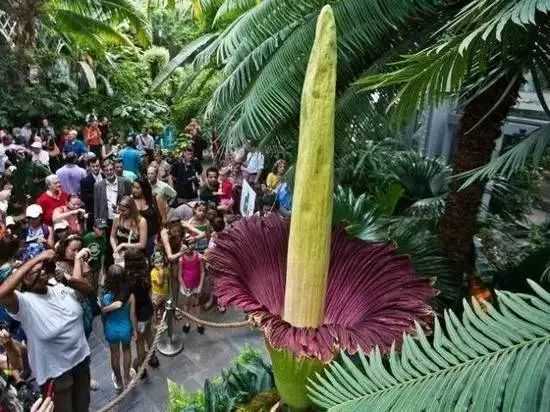
The Titan Arum, scientifically known as Amorphophallus titanum, is a plant that never fails to captivate the world with its extraordinary features. Native to the rainforests of Sumatra, Indonesia, this botanical wonder has become a symbol of nature's most astonishing creations.
What makes the Titan Arum truly stand out is its colossal size. Its inflorescence, one of the largest unbranched ones in the plant kingdom, can reach staggering heights of up to 3 meters or more. The structure consists of a central spadix, surrounded by a large, frilly spathe. The spadix, often likened to a towering, phallic - shaped column, is where the magic truly happens. As the plant blooms, the spathe unfurls, revealing a deep red interior that, combined with its putrid odor, creates a remarkable spectacle.
Yes, the Titan Arum is also infamous for its smell. Nicknamed the "corpse flower," it emits a pungent stench similar to that of rotting meat. This odor is a clever evolutionary adaptation. In its natural habitat, it attracts carrion beetles and flies, which are lured by the scent of decay. These insects, expecting a meal, crawl inside the flower. In the process, they inadvertently pick up and transfer pollen, enabling the plant to reproduce. The flowering process is a rare event. A young Titan Arum can take anywhere from 7 to 10 years to store enough energy to bloom for the first time. Even after that, it may only flower every few years. Each bloom typically lasts for a short period, usually around 24 to 36 hours, adding to the plant's allure and the sense of occasion when it finally does open.
The Titan Arum's growth cycle is equally fascinating. In between blooms, it devotes its energy to growing a single, massive leaf. This leaf can be as large as a small tree, with a petiole that can reach several meters in height. The leaf is divided into numerous smaller leaflets, creating an umbrella - like structure that captures sunlight for photosynthesis. All the energy produced is stored in a large, underground corm, which can weigh up to 100 kilograms or more. This corm serves as the plant's energy reservoir, fueling the growth of both the leaf and, eventually, the spectacular inflorescence.
However, the Titan Arum is facing significant threats in the wild. Deforestation in Sumatra, driven by logging, agriculture, and human settlement, is rapidly destroying its natural habitat. As a result, the plant is now listed as endangered on the IUCN Red List. Conservation efforts are underway, with many botanical gardens around the world playing a crucial role. These institutions cultivate the Titan Arum, study its biology, and raise public awareness about the importance of protecting this unique species. When a Titan Arum blooms in a botanical garden, it often attracts large crowds of visitors eager to witness this rare and remarkable event. It serves as a reminder of the beauty and complexity of the natural world, and the need to safeguard it for future generations. Whether it's the allure of its size, the intrigue of its smell, or the significance of its conservation, the Titan Arum remains a plant that continues to amaze and inspire.