Bracco Italiano: The Timeless Guardian of Italy’s Hunting Legacy


Canine News
Bracco Italiano: The Timeless Guardian of Italy’s Hunting Legacy

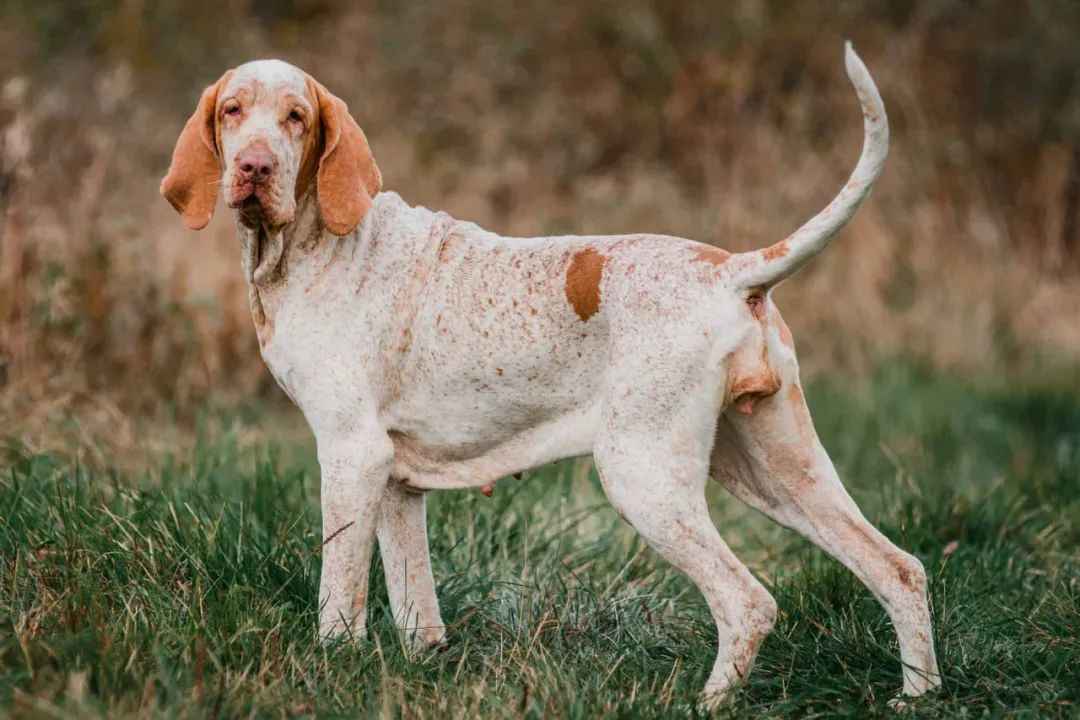
The Bracco Italiano, one of Europe’s oldest pointing dog breeds, traces its origins back to the 4th–5th century BCE46. Developed in northern Italy through crosses between Segugio Italiano hounds and Asiatic mastiffs, this versatile breed excels in tracking, pointing, and retrieving game37. Revered by Renaissance nobility like the Medici family, it was prized as a diplomatic gift and spread across Europe before facing near-extinction in the 19th century. Thanks to dedicated Italian breeders, the Bracco was revived mid-20th century and gained full AKC recognition in 2022 as a Sporting Group memb


Physical Characteristics
With a square, athletic build (55–67 cm tall, 25–40 kg), the Bracco features a long, sculpted head with drooping, wrinkled ears and soulful amber/brown eyes26. Its short, dense coat combines white with orange, chestnut, or amber markings, often with symmetrical facial masks26. Traditionally docked to 15–25 cm, the tail aids balance in rugged terrains23.


Temperament & Work Ethic
Known for loyalty and sensitivity, Braccos seamlessly transition from focused hunters to gentle family companions68. They thrive on human interaction, displaying patience with children but requiring early socialization with smaller pets due to prey drive210. Daily exercise—including scent work or long hikes—is essential to prevent restlessness610.


Health & Care
Living 12–13 years, Braccos face hereditary risks like kidney disease (amyloidosis), hip dysplasia, and ear infections210. Regular veterinary checkups, joint supplements, and ear cleaning are critical. Preventive gastropexy surgery is recommended to reduce bloat/GDV risks in deep-chested individuals10. Their low-maintenance coat needs weekly brushing, paired with high-protein diets for muscle health10.


Cultural Impact & Modern Status
Symbolizing Italy’s hunting heritage, the Bracco gained global attention at the 2025 Westminster Kennel Club Dog Show1. While still rare, its fanbase grows among sporting dog enthusiasts. Preservation efforts by organizations like the Bracco Italiano Society focus on genetic diversity1114. From medieval castles to modern competitions, this noble breed continues to embody Italy’s rich canine legacy with grace and grit.

Latest Stories
Travel News2 minute readNestled in the French Pre-Alps, the Plateau du Vercors stands as a testament to nature’s raw power and humanity’s indomitable spirit. Rising abruptly from the valleys of Isère, this limestone plateau—dominated by peaks like Grand Veymont (2,346 meters)—features sheer cliffs and labyrinthine gorges that earned it the nickname "the Natural Great Wall". Its dramatic landscapes, shaped over millennia by erosion, have not only sculpted a geological marvel but also forged a theater of historical significance.
Cultural News1 minute readSpain’s tomato-throwing "La Tomatina" is wildly popular, but for those who prefer hurling something tangier, head to Italy in February. At the Ivrea Carnival, thousands of ripe oranges are pelted in a juicy battle during the festival’s highlight.
Cultural News1 minute readIn Wuppertal, Germany, there’s a pedestrian bridge that looks like it’s built from giant Lego bricks. Though it’s actually a concrete structure, artists have painted it to mimic the iconic toy blocks, creating a playful optical illusion.
Feline News2 minute readThe European Burmese cat, a breed born from careful crossbreeding in mid-20th century Europe, has captivated cat enthusiasts with its elegant physique and affectionate nature. Originating from the American Burmese stock imported to the UK, European breeders sought to diversify the gene pool by introducing Siamese and British Shorthair bloodlines, resulting in a distinct feline with refined features. Recognized by major associations like the CFA since 2002, this breed stands out for its sleek, muscular build and striking golden or amber almond-shaped eyes, which contrast sharply with the rounde
Feline News2 minute readIn recent years, the Scottish Fold cat has become an internet sensation, celebrated for its distinctive folded ears and owl-like appearance. However, behind the adorable facade lies a dark reality rooted in genetic abnormality and ethical debate. This breed, born from a spontaneous mutation in a Scottish barn cat named Susie in 1961, has sparked global controversy over its health implications and breeding practices.
Feline News1 minute readOriginating from a spontaneous genetic mutation in 1950, the Cornish Rex emerged in Cornwall, England, when a cream-colored kitten named Kallibunker was born with a dense, wavy coat resembling a lamb’s fleece1. Recognizing its uniqueness, owner Nina Ennismore collaborated with geneticists to establish the breed. Due to the recessive nature of the mutation, breeding two Cornish Rex cats guarantees curly-coated offspring13.
Health News1 minute readOn June 30, FBI Deputy Director Dan Bongino announced the dismantling of the largest healthcare fraud case in U.S. history, with revised to $14.6 billion. The investigation covered all 50 federal districts, indicting 324 individuals—including 96 medical practitioners—and seizing $245 million in assets.