The Banded Dark Fishfly: Nigronia fasciata


Insect Information
The Banded Dark Fishfly: Nigronia fasciata

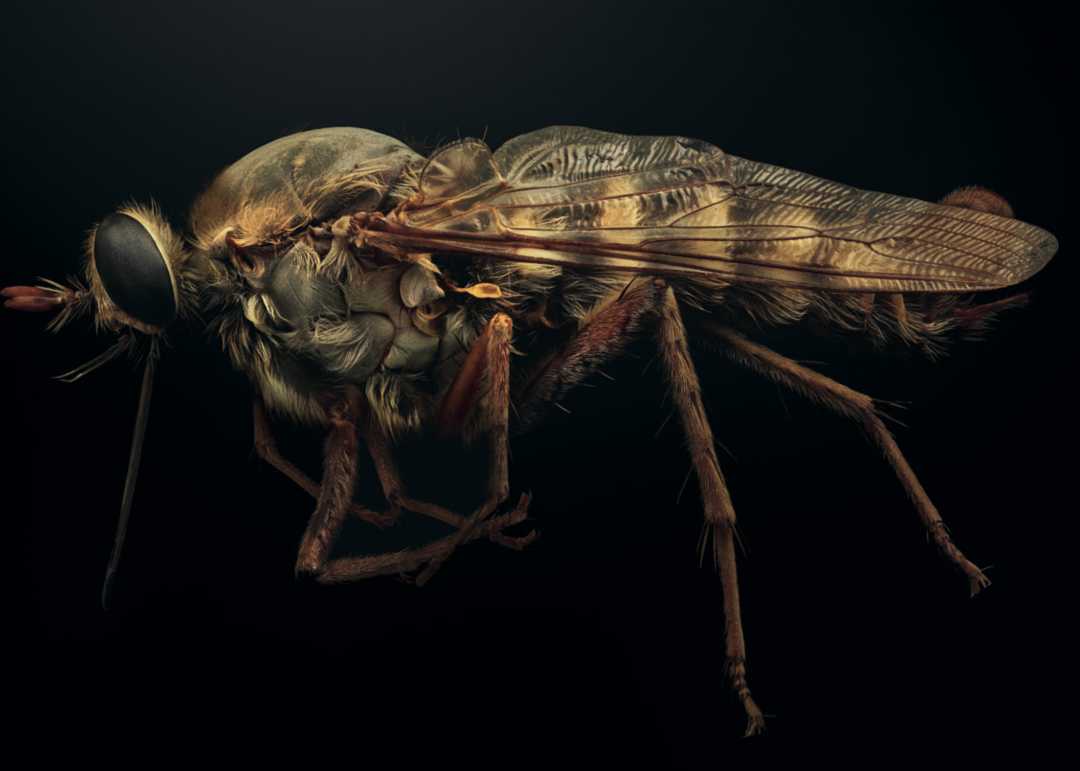
The banded dark fishfly, scientifically known as Nigronia fasciata, is a member of the family Corydalidae within the order Megaloptera. Here is a detailed account:


  • Physical Characteristics: The body length of females ranges from 23 to 30 mm, while that of males is 10 to 25 mm, and the larvae are 26 to 33 mm long1. The wings are dark brown, featuring an off - white stripe across the middle that extends from the outer edge (costa) to just before the inner wing margin. This stripe is always spotted with several brown patches, especially on its basal half, and also has a dip at the center of its base margin1. There is a small off - white patch on the outer edge near the wing tip, along with some white flecks1. The hind wings also have an off - white stripe in the middle, with white at the base and white flecks on the lower half1.
  • Habitat and Distribution: The larvae of the banded dark fishfly inhabit small streams that have sandy bottoms, few rocks, and good water quality1. In terms of distribution, it is found in the eastern United States, reported from 23 states but not from the upper Midwest, and is absent in Canada1.
  • Life Cycle and Behavior: From May to early June, females lay large egg masses on the underside of leaves of branches overhanging streams1. After hatching in about 14 days, the larvae drop into the water and feed mainly on isopods and caddisflies, and may even resort to cannibalism1. As adults, they may feed on nectar and drink sugar water in the laboratory1.

Latest Stories
Travel News2 minute readNestled in the French Pre-Alps, the Plateau du Vercors stands as a testament to nature’s raw power and humanity’s indomitable spirit. Rising abruptly from the valleys of Isère, this limestone plateau—dominated by peaks like Grand Veymont (2,346 meters)—features sheer cliffs and labyrinthine gorges that earned it the nickname "the Natural Great Wall". Its dramatic landscapes, shaped over millennia by erosion, have not only sculpted a geological marvel but also forged a theater of historical significance.
Cultural News1 minute readSpain’s tomato-throwing "La Tomatina" is wildly popular, but for those who prefer hurling something tangier, head to Italy in February. At the Ivrea Carnival, thousands of ripe oranges are pelted in a juicy battle during the festival’s highlight.
Cultural News1 minute readIn Wuppertal, Germany, there’s a pedestrian bridge that looks like it’s built from giant Lego bricks. Though it’s actually a concrete structure, artists have painted it to mimic the iconic toy blocks, creating a playful optical illusion.
Feline News2 minute readThe European Burmese cat, a breed born from careful crossbreeding in mid-20th century Europe, has captivated cat enthusiasts with its elegant physique and affectionate nature. Originating from the American Burmese stock imported to the UK, European breeders sought to diversify the gene pool by introducing Siamese and British Shorthair bloodlines, resulting in a distinct feline with refined features. Recognized by major associations like the CFA since 2002, this breed stands out for its sleek, muscular build and striking golden or amber almond-shaped eyes, which contrast sharply with the rounde
Feline News2 minute readIn recent years, the Scottish Fold cat has become an internet sensation, celebrated for its distinctive folded ears and owl-like appearance. However, behind the adorable facade lies a dark reality rooted in genetic abnormality and ethical debate. This breed, born from a spontaneous mutation in a Scottish barn cat named Susie in 1961, has sparked global controversy over its health implications and breeding practices.
Feline News1 minute readOriginating from a spontaneous genetic mutation in 1950, the Cornish Rex emerged in Cornwall, England, when a cream-colored kitten named Kallibunker was born with a dense, wavy coat resembling a lamb’s fleece1. Recognizing its uniqueness, owner Nina Ennismore collaborated with geneticists to establish the breed. Due to the recessive nature of the mutation, breeding two Cornish Rex cats guarantees curly-coated offspring13.
Health News1 minute readOn June 30, FBI Deputy Director Dan Bongino announced the dismantling of the largest healthcare fraud case in U.S. history, with revised to $14.6 billion. The investigation covered all 50 federal districts, indicting 324 individuals—including 96 medical practitioners—and seizing $245 million in assets.